Collette Stevenson: 'You have to learn resilience - and how to laugh at yourself'
"I put my hands up”, Collette Stevenson says, “I know I made an absolute mistake.”
It’s been a couple of weeks since the East Kilbride MSP’s transport committee gaffe made her into a meme and she’s returning to work after the chest infection she blames for a “momentary lapse” in concentration which saw her ask if Transport Scotland was a registered charity. Signed off sick in the days afterwards, she’s been on a course of antibiotics and steroids.
“I made a blooper – I’m mortified about it”, she sighs, and shares regret that other questions she asked in the session about safety on the railways for women and girls did not have the same level of attention as this one.
Her tai chi-practising dad Brian has been driven to anger by the pelters flung his daughter’s way, and Stevenson herself has been “taken aback” by its volume and tone.
“Some of the memes have been pretty bad,” she says. “As a politician you should always be held to scrutiny, but the level of abuse… I didn’t go out and hit a child – it was human error.”
Held up by critics as an example of all that’s wrong with Holyrood and the SNP, it hasn’t been the best period of her career. But then again, Stevenson has faced far tougher circumstances. “You have to learn resilience,” she says, “and how to laugh at yourself.”
Stigma has always been a big thing for me – the stigma that poverty carries
A self-described “fifth generation daughter of East Kilbride”, Stevenson has always lived in the town she represents and traces her lineage back through generations of farm workers to Donegal. At the age of 43 she became the first in her family to earn a degree after juggling evening studies with full-time work, and grew up with uncles, aunts and cousins on both sides of the family. That network was vital when she was growing up in poverty as the eldest of three children being raised by a single father.
Stevenson was 11 when her mother left, and while her dad took casual, cash-in-hand work to keep the lights on, the schoolgirl often found herself literally holding the baby, helping to feed and change her 18-month-old sister Lianne and look after their middle brother, Brian.
In adulthood Brian would succumb to drug addiction and lose his life in a car park far from home, having relapsed after a sore-won period of sobriety and come across a “bad batch” of heroin.
Stigma attached to her family in both cases, she says, and it’s an issue she’s raised repeatedly in parliament. “Stigma has always been a big thing for me – the stigma that poverty carries. Addiction is born of poverty.”
There were lots of single mothers on their road, Stevenson recalls, but hers was the only single dad she knew of. He would go on to marry a further three times and Stevenson – convener of the Social Justice and Social Security Committee in the last parliament – nicknamed herself and her siblings “the pinball kids” because there was so much change in their lives.
She remains close to her dad, who helps her with DIY and who she considers “absolutely amazing”. “He’s very proud of me,” she says.
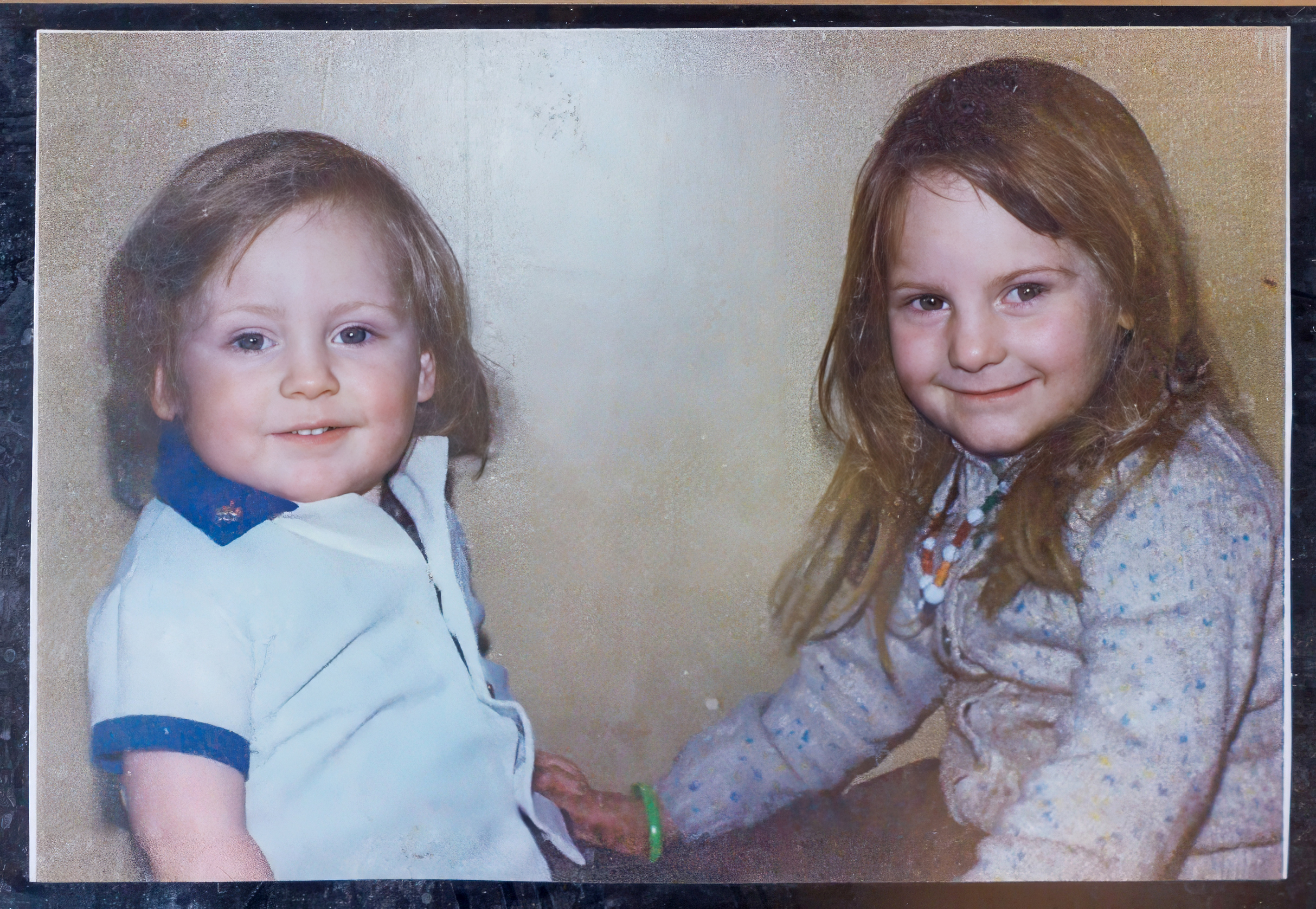 A young Stevenson with brother Brian
“Growing up, we didn’t have very much at all. I remember my dad going to social security during the Thatcher years because our washing machine had broken, and they said that if you had hot running water and a bath you didn’t qualify for a loan for a washing machine, so we didn’t get one. I remember the stigma of going for free school dinners, having to pick up your ticket, not even being able to take a packed lunch. I had a lot of responsibility on my shoulders in terms of looking after the family.”
They were hardly the only family struggling to make ends meet, she says, and she’s mindful of the deprivation still in effect in parts of her constituency, where the affluence of leafy Thorntonhall and Jackton – the preserve of footballers and lawyers – is contrasted against the want of Greenhills and The Murray, where health and employment suffer.
Her extended family rallied round and filled her life with music – acts like Led Zepplin and Gerry Rafferty – and one uncle, Mick, used his tailoring skills to make the young siblings matching clothes. Stevenson remembers dungarees decorated with peace symbols. “We used to run around going, ‘peace, man’,” she laughs. “The amount of people who would come and go in our house was incredible. That’s what’s kind of shaped me and built up a kind of resilience.”
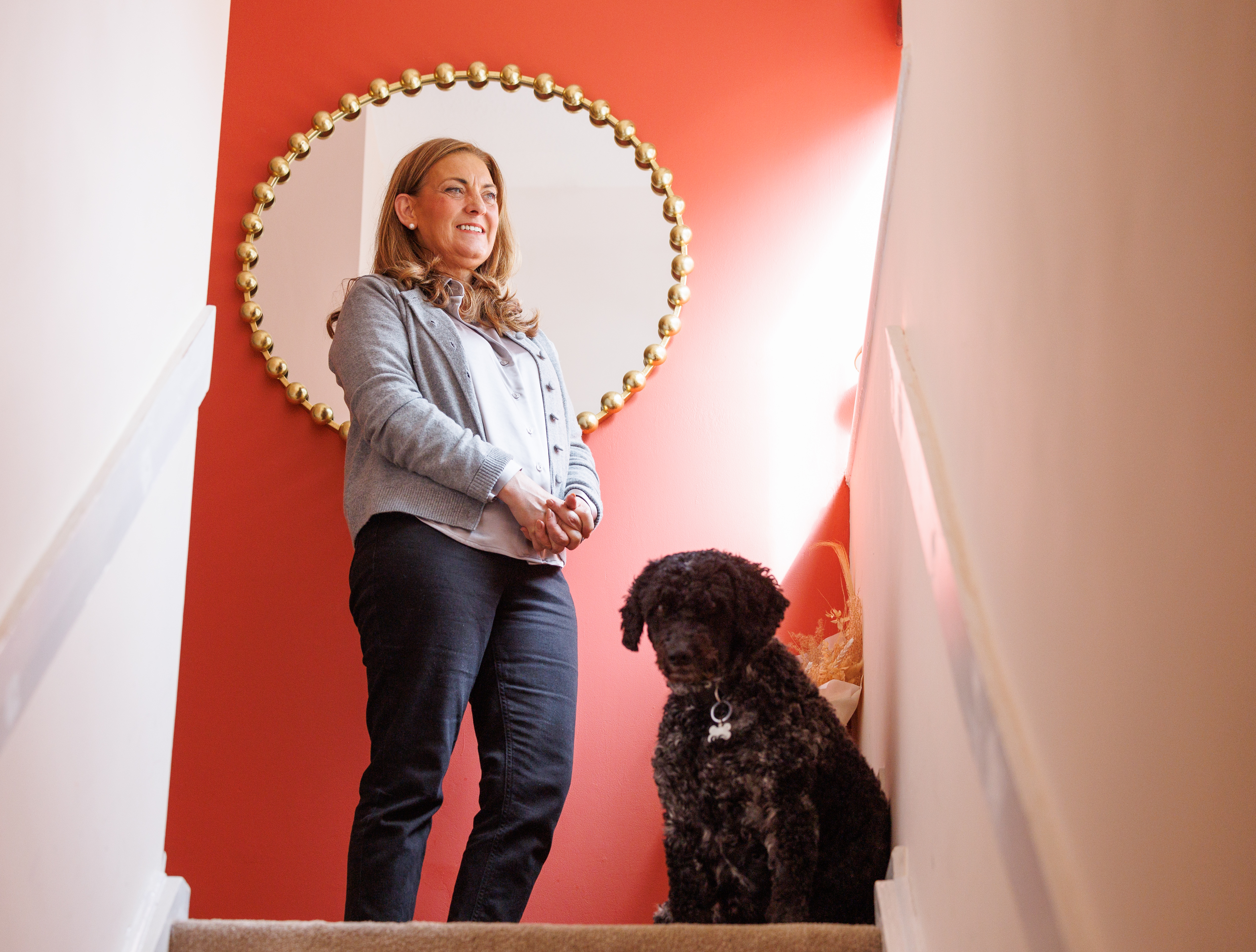
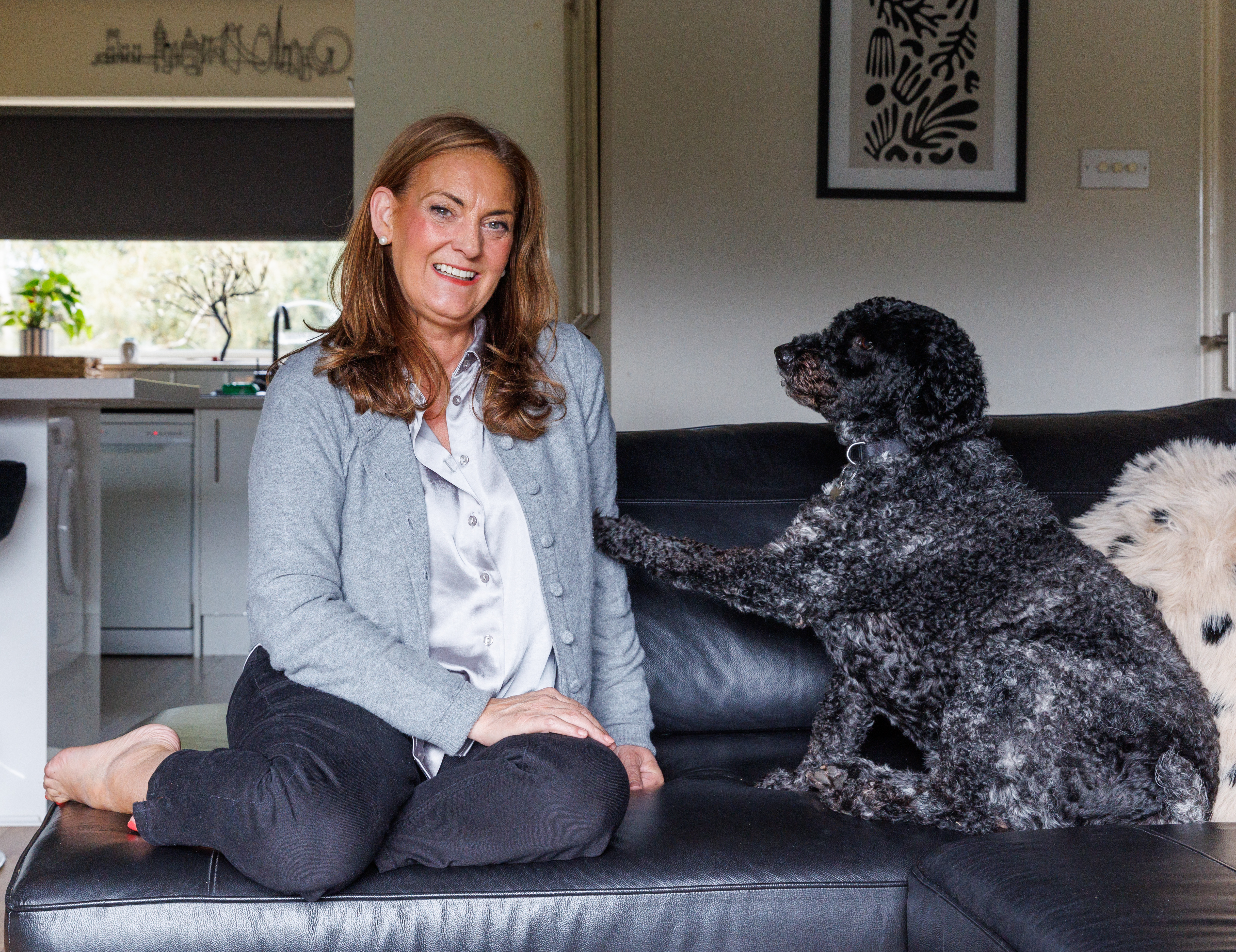
Speaking at home with her dog Sadie by her side, Stevenson is groomed and glamourous, despite the gravel in her voice lingering from her chest infection. Her style is due in part to growing up without a lot, she says, though many of her outfits are picked up from charity shops.
Her living room and kitchen are decorated in black and white, and while she’s happy for photographs to be taken inside, we cannot do so outside for fear of vandalism, or worse. “I have security cameras around the place because there have been incidents,” she says, with paint poured over her car and its tyres slashed around two years ago. Yet more happened over the summer, she says, but it’s a police matter and she can’t talk about it now. What she will say, though, is that at one point her daughter told her she was “too scared” to stay there and so moved in with her dad, from whom Stevenson is divorced.
That was all before the row over her Transport Scotland question began and a flood of social media commentary ensued. Stevenson has said this was “misogynistic” in tone. “It was mostly men,” she says when asked for examples, but she “never read all the comments”. “My staff were looking at them and some of the stuff was almost like a pile-on from mostly men, mostly male journalists, and a lot of probably bots. A lot of it was nasty. They were challenging my intellect, telling me to step down.
My election agent this year said to me, ‘you actually do have a personal vote – you know hundreds of folk’
“I don’t doubt for a moment that male politicians get held to the same scrutiny but some of the comments were really bad.”
Stevenson’s ‘lapse’ came after transport minister Stephen Flynn was jeered for his own performance before the same committee, when as explanation for why he couldn’t answer one question he said he had been FaceTiming his children. That started a run of committee clangers for the SNP which, aside from Stevenson, saw Gillian Martin seem to forget that the Scottish Government owns crofting land and Simita Kumar labour unconvincingly to set out the government’s understanding of gender.
Varying levels of outcry followed each and Stevenson says she recognises that “there seems to be a lot of anger with politicians in general, whether that stems from what’s happening down at Westminster with the amount of changes in prime ministers or what’s happening up here with Peter Murrell”, her party’s former chief executive and current inhabitant of HMP Dumfries. “That has sparked a lot of anger and affected public confidence in politicians,” Stevenson says.
“Politicians should be held to the highest scrutiny in what we do”, she goes on, “but we make mistakes”.
Partymate Emma Roddick was amongst those to back Stevenson, saying that there is “a huge difference between holding to account and bullying”. “It’s not even that thin a line,” she tweeted. “The memes and the pile-on are misogyny, no doubt about it. Plus a bit of deflection.”
While the pair are on the same benches, they’re not ordinarily close, and Stevenson names Marie McNair as her best friend in the chamber. She’s also had support from the likes of transport committee convener Willie Rennie and Fulton MacGregor, who she says is “a gem”. The first minister, too, has been in touch. “I am sorry to hear you have not been well and also that you have had such a hard time,” he told her. “Just a note from me to say that I hope you are getting better and that you are much valued in the SNP team.”
The FM’s message was appreciated, Stevenson says, and she disputes suggestions that she is an embodiment of what is wrong with Scottish politics. “I have a really good rapport with people,” she says. “Maybe it doesn’t come across in the chamber but I do get on with people, I understand that when people come to me it’s their last resort, and the amount of work that we do in my office at a constituency level, whether that be housing or benefits – we do a lot of good stuff.
“I’m pushing for a people’s panel on violence against women and girls. I’m pushing for a cross-committee on it like we had for drug and alcohol deaths, but the constituency stuff is what we get elected for,” she continues. “I’ve always lived here; I know the issues. My election agent this year said to me, ‘you actually do have a personal vote – you know hundreds of folk’.”
The first time Stevenson was elected was 2017, when she joined South Lanarkshire Council. Entry to Holyrood came in 2021, by which time she had become deputy provost.
A former rep for the Unite union, Stevenson had become politically active in the run-up to the 2014 referendum, when she found herself exercised about the tax system. She would help to found her local chapter of campaign group Women for Independence and became treasurer of her SNP branch.
Now in her second term as an MSP, she’s been impressed so far by Holyrood newcomers Alison Thewliss, Pauline Stafford and Hannah Mary Goodlad, who she sees as a potential future party leader. “She knows her stuff and she takes people with her,” Stevenson says.
David Linden, too, is “one to watch”, she says, and the entry of ex-MPs like him, Thewliss, Flynn and others mean that the division that did exist between the SNP’s Holyrood and Westminster groups has gone. “The whole dynamic has completely changed. It’s very much about Team SNP now. You can see the step-change in how folk are feeling.”
I don't feel that slagging off your competition does you any good
That Westminster group once included Lisa Cameron as East Kilbride MP. Cameron defected to the Conservatives in 2023 in the face of a selection battle after Stevenson and others backed a rival, party staffer Grant Costello, for the forthcoming election.
Stevenson resisted being drawn into a public spat on the matter and has little to say about Cameron now. “I don’t do politics that way,” she says. “Even your Joani Reids and your Joe Fagans,” she says of the current local Labour MP and regional MSP, “I could call them out on a lot of stuff but I don’t feel that slagging off your competition does you any good. I’ll hold Labour or the UK Government to account but I don’t particularly want to go down the route of naming names.”
Still, it doesn’t always take words to work out what Stevenson thinks about something, because her expression – brow furrowed, lips pursed – often tells the story. “I don’t have a neutral face,” she admits, though it’s something she tries to be conscious of in the chamber.
Something she does find hard to take, year after year, is the publication of national drugs-related death figures.
This year an 11 per cent increase took cases to 1,133, including 830 men and 303 women. “It hits hard,” she says of the annual update.
Her brother was a 32-year-old father when he died. Stevenson remains close to his daughter, who herself now has a family. “She’s amazing,” Stevenson says, “and her boys are all absolutely brilliant.”
A picture of herself and Brian sits in a gold frame in her living room, and he is often in her thoughts. In fact, Brian lived with Stevenson at times as she tried to support him through his addiction.
As a young man, he’d been into music and started taking party drug ecstasy, which ultimately led him to heroin. He would achieve six weeks of abstinence before the offer of a security job at Reading Festival, made by a company that recruited through his Salvation Army accommodation, took him into an environment which was, Stevenson says, “like a sweetie shop for an addict”. He overdosed in a car park with another man who was resuscitated and in the inquest that followed it transpired that the pair had used a toxic batch of the class A drug.
Stevenson travelled to identify his body and attended the inquest, where she remembers the coroner repeatedly having to ask expert witnesses to provide the answers that her family needed.
The family tried many avenues for help for Brian, she explains, and the experience remains bitter, and one she knows will resonate with others facing similar challenges. “I got told ‘the only way you are going to help him is if he reaches rock bottom’,” she recalls. “He was more or less homeless.
“I went to the chemist the other day to collect my prescription and there was a guy in the waiting room with his mum. The eyes were pinned – you can spot these things a mile away, I could tell he was waiting on his methadone. His mum came up to me and said, ‘are you Collette?’ I had spoken to her about support for families. She told me, ‘I’m still looking after my son – if I give up on him, then who else has he got?’
“What I am getting at is, they tried to say to us that the only way Brian would get any help was if we stopped trying to help him. They would say, ‘you’re not doing him any favours, you’re feeding his habit’.
I went to a lot of places to try and get help
“Brian was well-known in East Kilbride for having been a heroin addict and the whole family had to carry that, but he had to carry it as well when he was trying to get clean.”
Annual statistics prove that, almost 25 years on from her brother’s death, “we are not getting this right”, Stevenson says. “Why are we not doing better?
“I have been along to The Beacons [recovery services], I have met with lots of folk, I have done the cross-party stuff to do with drug deaths and drug harms. I could talk about it all day.
“We have got The Thistle [safer drug consumption room in Glasgow] but we also need rehab places, and we need family support to help the people round about the person with addiction. I went to a lot of places to try and get help – I went to local councillors.
“When he died, he had been doing really, really well.”
All of this has contributed to what Stevenson says is a “strong moral sense” which places value on social justice and on family, including sister Lianne, who emigrated to Australia. “It was the best thing for her, because she really could have gone down the same road [as Brian],” Stevenson says, adding that her sister has instead “done really well” in life.
There is to be no flitting for the MSP, whose sights remain fixed on East Kilbride, where she’s just had to hold a surgery outside because the keyholder forgot to unlock the local hall. Rather than complain, she laughs it off. “Everyone makes mistakes,” she says.
Holyrood Newsletters
Holyrood provides comprehensive coverage of Scottish politics, offering award-winning reporting and analysis: Subscribe