Gillian Martin: Hats off to anyone who wants to be leader - it's not for me
So-called ‘lived experience’ is a much-valued commodity in modern day policy-making parlance. And it would be hard to find a more fervent champion of a ‘just transition’ for Aberdeen as it moves from an economy rooted in fossil fuels to one rooted in renewables than energy secretary, and Aberdeenshire East MSP, Gillian Martin. But far from being a born and bred northeast quine, Martin’s early childhood was rooted in the industrial heartland of Clydebank where her father, William Taylor, and most of their extended family worked in the shipyards. Martin was nine when her engineer father saw the writing on the wall for the area’s heavy industries and moved the family – his wife, Irene, and three young children, Gillian, Ewan and baby Lindsay – lock, stock and barrel to Aberdeenshire, where he found work in the oil and gas sector, initially offshore. The deindustrialisation of the late 1960s and early 1970s meant families across Clydebank faced tough decisions as the shipyards closed and the main source of employment disappeared.
“I was really young when the job losses started and I think like any child I was protected from some of the realities of what that meant and I probably didn’t appreciate what my parents were going through with the job insecurity aspect of things. But what I do remember is my parents looking to emigrate to Canada. There were brochures lying around the house at the time with all these glossy pictures of this other place which was so far away. This was a big area of discussion, because quite a lot of my dad’s workmates and their friends were doing just that. And it was Canada that was the place that they were all going. In fact, my mum and dad’s closest friends at the time, Gus and Sandra, are still out there. My dad and Gus both worked at John Brown’s yard and as they were thinking about emigrating, my mum and dad were considering the same thing, and obviously that would have been seismic because we were, we are, a very close-knit family. Both sets of grandparents were nearby and we had uncles, aunts, whatever, all in Clydebank and the surrounding areas. When my dad made the decision – or rather, mum and dad made the decision – not just for my dad to be working offshore, because he was a planning engineer so usually working from an office, but to actually move us to the northeast of Scotland, in my head it felt just like emigrating because it was all so different and we were leaving everything behind. It was a very, very big deal for us. Loads of my dad’s friends and workmates obviously didn’t make those types of decisions and stayed in Clydebank hanging on for something to change, something to come along, and some of them were never employed again which was heartbreaking for them, their families and the community.
“I’d never been to Aberdeen before even though my grandmother’s parents were from Aberdeen in the distant past. I had no real connection there. But to be honest, I was excited about moving – really excited – because I had been shown pictures of lovely beaches and open spaces and frankly, coming from Clydebank, where, you know, a beach was going to Helensburgh and having a dip in the open-air pool or something, this felt very exotic. At that point in my life I’d never been abroad or anything, so Aberdeen with its beaches and the countryside scenes that I had been shown just hugely excited me.
“But despite that, I did find the move of school difficult. I had some bullying issues when we started off in Inverurie. There were some lassies who bullied me because I had a ‘weegie’ accent, and that was difficult. But being in Inverurie was only temporary until our house got built in Newburgh, and then once we moved to Newburgh we settled in a small country school, made lots of friends, and we never looked back.
“From my perspective, it was the best decision my dad ever made. I keep wanting to say my dad – but actually, it was my mum and dad that jointly made that decision and the pressures on either of them would have been different. I know that now as an adult and a parent myself, and I know that they would have had us kids at the fore of their minds as they weighed up everything; employment, housing, family, friends, all of that.
“But living in Newburgh, what a childhood I had, what a brilliant nature-filled childhood with so much freedom. Okay, it was a little bit annoying as a teenager that the last bus in Aberdeen was at seven o’clock so you couldn’t even go to the pictures, but I made so many friends and Newburgh was a small village at that time but it was burgeoning because there were so many international families coming in because of the oil industry. I had Danish friends, American friends, friends from England. There was a real bunch of us all linked by that common thread of having moved there with our families because of the work in oil and gas and you were being exposed to different cultures and ways of doing things.
“I definitely had a different childhood because of the move from Clydebank, a wider experience in many respects, which might sounds strange when you are talking about moving from a big urban area to a small, rural one, but I think when you’re living in Clydebank, you were just living amongst all the other Bankies and there wasn’t much in terms of different types of people or different experiences. There’s no doubt moving from an urban area to a rural one is massive in terms of culture and I’m laughing remembering this now, but this is an example, the lads in my class in Clydebank were all interested in tanks and fighter jets and all that sort of stuff. The lads in my classroom in Newburgh all had posters of John Deere tractors on their walls. And I am not joking. That was their thing. I’m not being glib or anything, it was just different, rural kids, different interests, and a different vibe. I felt that our life improved for sure, and I’m sure that my parents would say economically it improved for them. And it sounds bizarre that going from an urban environment to a rural environment that your world was opened up a little bit, but actually that was the case because I had new experiences of being somewhere that was on the coast, on the beach, and the families that lived in Newburgh were from all over the world, so your horizons were lifted.
“In terms of the standard of living that we had when my dad started working in oil and gas, we went from a council house in Clydebank to owning our own house. So that brought a big improvement from that perspective. And of course, although I wouldn’t have been aware of it, my dad probably had felt that unease of job insecurity for many, many years leading up to that point and it was probably very, very worrying for them. But I don’t remember feeling any of that because I was dead young, and the reality is that your parents have these conversations when you are tucked up in bed.
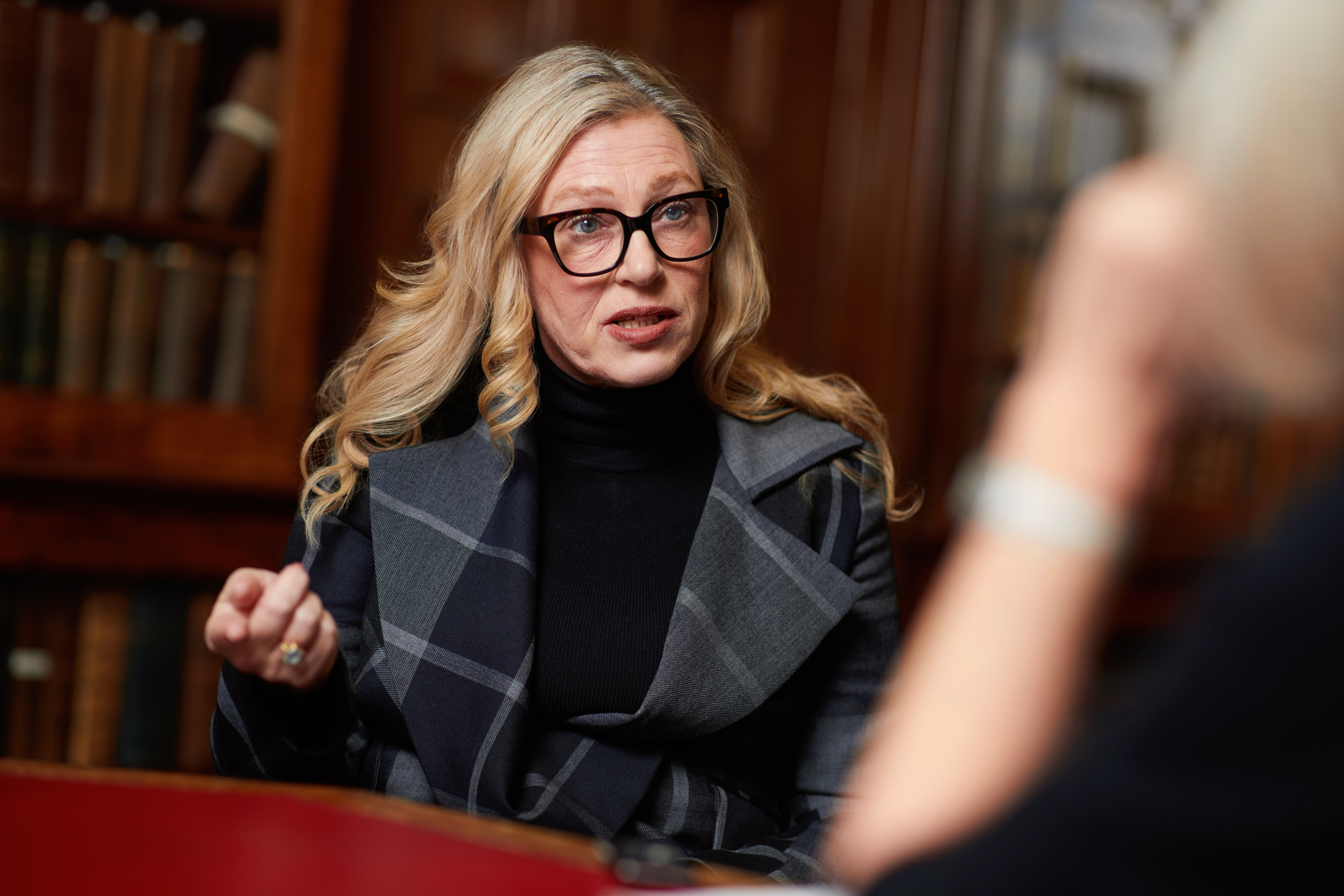 Martin photographed for Holyrood by Andrew Perry
“I think what sticks with me to this day is that most people generally want to stay where they’re from and live out their lives there. And when you’re put into a situation where that’s not viable like it was for us – and listen, I know it worked out for my family, we had a great life and off the back of being in oil and gas for my dad who had massive opportunities, we lived in Brazil for a year, he worked in Norway, got to own our home, and we had a widening of our opportunity as a result of that move, it was at the expense of our family being broken up.
“I look back on my parents’ experience and say that obviously our experience overall was a very good one, but as a microcosm of the consequences of deindustrialisation, what happened in Clydebank was not a just transition. That was the opposite of a just transition, because nothing replaced those employment opportunities for that town. Nothing did for decades and decades, probably not even still. Things go on in Clydebank, but nowhere near the scale of the industry that was there before when everyone’s dad either worked at John Brown’s or one of the other areas of heavy industry, whether it be Clydebank or elsewhere along the Clyde, and for that just to be taken out wholesale and nothing else replacing it, it affected families in a way that was horrendous for many of them and they never recovered.
“I mentioned my mum and dad’s friends who left to go to Canada. We lost that family to Canada, and as you know, skilled people, good people, many of them left Scotland and they’ve never come back and they left family networks behind. I think that there’s the wider aspect of this, you take a major employer out of any town, and there’s all the knock-on effect on the shops, on the pubs, on the whatever, and then there’s the look of the place. And I would go back for many, many years because my grandparents still lived in Clydebank, and there would be closed up shops and empty houses and the high street that I remember, which John Brown’s actually sat on, which also had the library and the swimming pool and the shops and all the rest of it – which, in my head as a young girl, used to be bustling – was dead. So there’s the psychological impact of a lack of opportunity when deindustrialisation happens, but it also rips the guts out of a community. So yeah, the start of it is about jobs, but the knock-on effect is massive, and it’s generations and generations of impact as well. I feel so strongly about a just transition for other areas of Scotland now as we go through necessary change.”
It is that ‘just’ element of the so-called ‘just transition’ that politicians are chasing in the race towards net zero that weighs heavily on Martin’s shoulders. She brings a passion born of personal experience and is determined to learn lessons from the past and apply them in her role of cabinet secretary for climate action and energy that she was appointed to permanently in June last year, having previously covered it on an interim basis during Mairi McAllan’s maternity leave.
And while her own father’s experience of leaving behind one industry for another and the impact that had on her own family has helped some of her thinking in government, what becomes abundantly clear when speaking to Martin is just how important family is to her in general. And it is family that also helped shape her politics. She says that she suspects most of her family going back would have been Labour voters until around the 1980s, although her grandparents were of a generation that were unlikely to reveal who they actually voted for. But her dad made no bones about where his allegiances lay. He joined the SNP at just 16 and she describes him as “a bit of a political outlier” in terms of Clydebank. She laughs that he likely “wore down” the rest of the family, who now largely vote SNP. Her father and his friends were all nationalists and very involved in the local folk music scene, with politics and culture very much wrapped into one.
“They were a great bunch of musicians, pipers and such, and they used to do things like have weekends away at Loch Lomond where all the families piled in, and the banjos and guitars would come out, the pipes would come out, and everyone had their song that they sung, and all the rest of it. It was great for us kids and, looking back at the time, I didn’t appreciate how cool they were. But looking back, they were quite a happening bunch.”
Martin says that, politically, she was always an SNP supporter and voter but given her role in media – she was a college lecturer, videographer and published a blog – she made a decision on the advice of a relative to never join a political party.
“I don’t know what the reticence was really because everyone probably knew where my politics lay, but this relative described how sometimes an employer could be quite prejudicial when it came to your politics being known and that seemed to be particularly the case if these were for the SNP. I think that I also thought if I wanted a career in the media, my personal politics should remain private.”
However, in the run up to the 2014 independence referendum the group behind the nascent political organisation Women for Independence was looking for a north east representative; Martin’s online blog in which she wrote about her own life and made a number of political observations had come to their attention and the group asked her to come on board as a founding member. That proved to be what she describes as a “life changing” experience, one in which she says being with a group of like-minded women was “unique, life affirming and inspiring”. That experience of solidarity and collective action among women set her on the path to Holyrood, but ironically also stopped her joining the SNP at that time.
“It seemed to me that people would dismiss you as a member of Women for Independence by saying, ‘oh well, you’re just an SNP mouthpiece’ or something, whatever that may be. I was able to say that I didn’t take my direction from anyone, that Women for Independence was an organisation, a movement, and not a political party. Not belonging to one party gave me freedom to not be tied to one policy or other and to talk about the wider benefits of independence.”
Martin finally joined the SNP hours after the results came in and ‘No’ had won. With tears in her eyes and at about four in the morning “my finger stopped hovering over the ‘send’ button and I joined up and felt I had come home”, she says.
Martin’s experience as part of Women for Independence didn’t just cement her relationship with the SNP, it gave her a deeper bond with her younger sister, Lindsay, and other women that she says she would not have missed “for the world”.
“I remember for the first meeting I basically put a call-out on my blog and my Facebook for women to come along. We met in the Belmont Cinema in Aberdeen and there was probably about eight or nine women turned up and I just felt, ‘oh my God, this is my tribe’. We went through a lot together and more joined and we’d go to town halls; we’d go to debates. It was amazing. I think that’s probably the first time that I’d ever been involved in an all-woman thing. I mean, I’d done a bit of fundraising for various organisations like Rape Crisis and the like but never been so actively involved. I loved it and I just loved the way we lifted each other up. Women do that. Wonderful women like Jeane Freeman, who obviously later became my colleague in parliament, but at that stage was such a generous mentor to me politically. I was in awe. I still am of people like Jeane. I just felt like it was a really supportive, empowering, wonderful, formidable, gang of women, my gang, and I loved it.
“None of us wanted it to end and in fact, one of the most incredible days I’ve ever had in politics was the meeting of Women for Independence, I think it might have been the week after the independence referendum, maybe two, in a church in Perth and there must have been close to about 700 women there. We’d lost, but the women just kept coming. There was an open mic type thing for women to express their thoughts and all sorts of sessions. And it just felt like, my goodness, we have started something here. It will remain one of the most inspiring days of my life ever, probably for many of the people that were there. It was incredible.
“I knew I couldn’t go back to being passive and just having an opinion. I had to go and be part of something but still hadn’t thought of standing for election. And I’ve told the story many times before, that Maureen Watt [former SNP minister and now SNP president] saw me at an SNP meeting, one of my first as a newly-joined member, and walked as fast as I’ve ever seen anyone actually walk without breaking into a run across a crowded town hall in New Deer to tell me that I had to stand. She basically said that I had spent the last however long telling women that they need to be throwing themselves into politics and now this was my time to step up. I didn’t have a suitable answer for her, and that was the real moment that I thought, I’m going to have to do something about this now.”
That first opportunity was the 2015 general election when she stood, unsuccessfully, for Westminster and then won her Holyrood seat in 2016, a seat previously held by one Alex Salmond who was by then back at Westminster. I asked her how it felt going from not even being a member of the party two years previously to stepping into those big shoes.
“Daunting… You’ve got a membership that are used to going to meetings with one of the best orators around, a titan of politics and who has represented them forever, and then there was me. I would go into meetings thinking they are looking at me and anything I say will be inconsequential compared to anything that Alex had to say and also wondering if people were looking at me as just the one that got Alex’s seat. But you know, he was incredibly supportive, he might not have necessarily wanted me as the candidate initially but that soon wore off and he was nothing other than generous to me with his time and advice. He would also be the first person to tell me if he thought I had messed up…
“It’s funny, I remember there was a front-page story confected from something I had said years back calling him smug, along the lines of he might be smug, but he’s our smug, and that became a news story. I was beside myself. I’d never had any real press attention before, and I was in tears thinking about how he would react, but he phoned me up and he was laughing about it and completely put me at ease.”
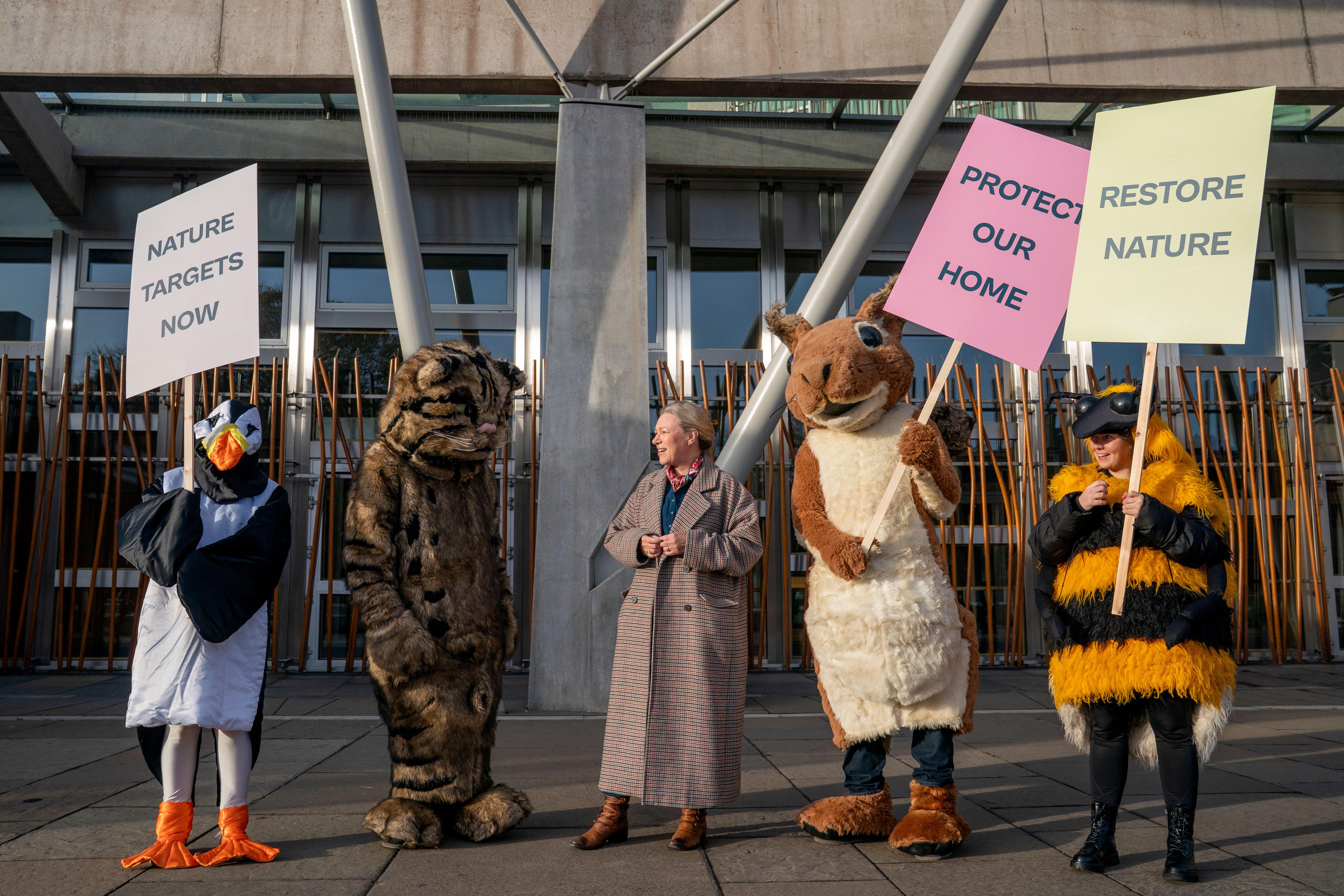 Martin meets campaigners at the Scottish Parliament | Alamy
Like other women who were drawn into politics as a result of the referendum, including Jeane Freeman, Martin’s rise through the political ranks was swift. Just four years after her political awakening and two years after entering Holyrood she was to be made a minister in Nicola Sturgeon’s team. However, without going over well-trodden ground, the promotion was rescinded at the 11th hour when offensive comments about transgender people that Martin had made in the very blog that first brought her into politics surfaced. At the time, it was devastating. Her family were on the way to parliament to see her appointed and all plans were cancelled. Martin apologised for what she had said, put the head down, and used the affair to help advise young people about the use of social media. But the chastening experience, like so many episodes in her life, would become a strength, a turning point that put her on a new and more positive direction. She was appointed convener of the Environment, Climate Change and Land Reform Committee in September 2018 and poured her energies into that role, which inevitably led to her being appointed as minister for climate action in 2023 before stepping up to cover maternity leave for the then Cabinet Secretary for Net Zero and Energy, Mairi McAllan, in 2024. The role was made permanent when McAllan returned to government in 2025 into the new role of housing secretary.
As this session of the parliament reaches its end, I mention to Martin that she is one of the few SNP women who were elected in 2016 to still be in the parliament and standing again. In fact, in the year she was elected, there were three women party leaders: Nicola Sturgeon, Ruth Davidson and Kezia Dugdale. Given that it was campaigning with an all-women group that got her into politics, does the exit of so many women concern her?
“I think it makes a difference in terms of the perception of the parliament more than the actual nuts and bolts, because I think policies and the way people conduct themselves are the most important thing, not necessarily their gender or otherwise. But I think in terms of the perception of the parliament more widely, particularly to women that might want to come into politics, I think that if we do see a tailing off of women in the next cohort and more men appearing, people might feel like things are going back the way. I think it’s a perception thing but it’s also, I have to say, a motivation for staying for me. I’ve been made cabinet secretary, and no one really talks about the fact that this cabinet is actually a majority of women, because the first minister doesn’t make a song and dance about it. It just is. But I feel it’s important that, as a woman, you’ve reached cabinet secretary level and you’ve got that experience in government, I feel a responsibility to stay there. You know, I’m 57, I could say, well, maybe I’ll just call it a day and I’ll do something else, or retire, whatever, but I think it’s important for me, and that’s no reflection on anyone else, but for me, I want to stay, and I want to continue to be a woman at the top end of Scottish politics and show it can be done.”
I mention that Nicola Sturgeon had said that she looks around the parliament and doesn’t see a woman becoming a party leader any time soon.
“I saw the response to that, but I didn’t necessarily hear the context around it. But do I think there are women in parliament who could lead? Yes, there are women in there, but I’m not one of them… absolutely not. I give what I’m prepared to give at cabinet secretary level and absolutely hats off to anyone that wants to go to be a party leader, but it’s not for me.”
It’s a refreshingly honest answer from Martin that will disappoint some. She is considered one of the most capable ministers in John Swinney’s team. She is not a career politician and has a hinterland rooted in her previous professional life and upbringing that brings an insight to her government responsibilities. Industry insiders talk about her work ethic and in-depth grasp of the energy brief. She has worked collegiately with her opposite number at Westminster, Michael Shanks, despite their political differences and has impressed political opponents by her less tribal approach in the chamber. But perhaps that is it: she has known life outside politics and she has also experienced the bruising side of political life and recognises it isn’t the be all and end all. But she has also been given a different perspective on life through the tragic death of her beloved younger sister, Lindsay, who died last year from bowel cancer, five years after being diagnosed. Martin says it has changed who she is and what she considers important.
“Lindsay and I thought we would grow old together and that when I was an old lady she would be an old lady, and we would spend our days going to the cinema and having nice lunches. My gran would always talk about the best days of her life being when it was wartime and she got to go dancing. And Lindsay would say that our ‘wartime’ was our time together in Women for Independence and that one day we would bore our grandchildren to death talking about our best year of our lives because we had such fun and we got to do it together.
“You know, there were three people in my life that were all going through cancer treatment at the same time: my sister; Ruth McGuire [MSP], who’s my closest friend in parliament; and a close colleague, Christina [McKelvie, former SNP minister]. Ruth is now thankfully back from her treatment and doing so well but I didn’t realise that Christina was as ill as she was and her death happened so quickly after Lindsay’s and really floored me. I actually got a message from Christina when Lindsay died, telling me how sorry she was, and I don’t know but I think at that point Christina was probably in the hospice herself and died just weeks after Lindsay. Just so sad but so kind, right up to the end.
“I came back to work about a week after Lindsay’s funeral because I just wanted to be busy. And then news of Christina came through, and I just couldn’t do it. I needed space to be able to burst into tears without worrying that people are going to see me cry and the first minister was the first to tell me to take some time to grieve. It was a reminder to me that we are all human, even politicians.
“Life changes after you experience things like this. You change. For instance, I don’t think I am funny any more. There’s a sadness. Losing Lindsay has been the tragedy of my life, of my family’s life, and puts any political nonsense into perspective. So, of course it’s a febrile time and there’s people obviously wanting to go for my seat, and there’s opposition MSPs and whatever doing the very personal stuff, and yes, there might have been a time when I would have been fussed about it all but not now, not now that the worst has already happened to me.”
Holyrood Newsletters
Holyrood provides comprehensive coverage of Scottish politics, offering award-winning reporting and analysis: Subscribe