Marie Macklin: I could easily have become one of those left-behind kids
When Diageo announced in 2009 that it was to close the Johnnie Walker bottling plant in the Ayrshire town of Kilmarnock, it was just another blow to a local economy that had been repeatedly hit by deindustrialisation on, if you’ll pardon the pun, an industrial scale.
Once known as the ‘light-industry capital’ of Scotland, from the late 1960s onwards it suffered a series of devastating blows. First, there was the closure of the surrounding coal mines, followed by the loss of a whole host of manufacturing jobs in its world-renowned carpet industry, in its engineering sector and its shoe manufacturers. Having once been famous as the town that wove the red carpet for the late Queen Elizabeth’s wedding day in 1947, it was fast becoming infamous as an economic blackspot.
When the Massey Ferguson tractor factory which once produced in excess of 4,000 vehicles a year closed in 1980 with the loss of 1,800 jobs after production moved to France, the then local MP Willie McKelvey said in a speech in the House of Commons that the “cost in misery and humiliation” was “incalculable”.
This was closely followed by the closure of two shoemaking factories where about 1,200 workers were employed, supplying 200 branches of Saxone across the UK advertising its products as being “made of honest British leather by British workers at Kilmarnock” and went on to claim that these Kilmarnock-made shoes would last three times longer than any other brand. Notwithstanding that boast of longevity, the factory shut in the mid-1980s and was later demolished.
I would see all this wealth in Aberdeen and I’d then come back home and see that we had nothing
For decades Kilmarnock had also been known as the home of Johnnie Walker whisky, whose slogan was ‘Born in 1820 – still going strong’. But again, historic roots didn’t stop the announcement of its closure. And when it came in 2009, it came out of the blue, not just for the workforce but for the then first minister Alex Salmond, and it fired him up enough to take part in a march of 20,000 people through Kilmarnock pledging “we’re not going to walk away”. But despite the first minister’s efforts, Diageo did walk away along with 700 jobs when the plant was finally wound down and shut in 2012, opening a fresh wound in the local community and another glaring gap site.
Husbands and wives, brothers and sisters, had all worked side by side at the plant for generations and for Kilmarnock this was deeply personal, with whole families now out of work. With unemployment soaring to unprecedented levels, shops had begun to shut, leisure facilities closed, empty properties boarded up, and the decay set in.
What had once been an industrial powerhouse had started its descent into a post-industrial wasteland and in 2013, the year before the independence referendum, Kilmarnock was awarded the dubious title of the least desirable place to live in Scotland in Crap Towns Returns, a book that names and shames what its authors perceive as the worst towns in the UK.
But the disintegration wasn’t only evident in the town’s infrastructure, its people felt the effects and Ayrshire has the dubious accolade of housing some of the worst areas of social deprivation in Scotland according to the Scottish Index of Multiple Deprivation.
Growing up in the 1970s on the council housing estate of Onthank – which became infamous years later as the setting for the BBC’s The Scheme – Marie Macklin acutely felt the pain that unemployment brought to the town and while this was still to formulate in her mind as a political question, she remembers relatives coming back to visit having emigrated to America in search of a better life and how they would talk about Richard Nixon and the Vietnam war and she would just take it all in and reflect on how different their life sounded to the one that they had left behind.
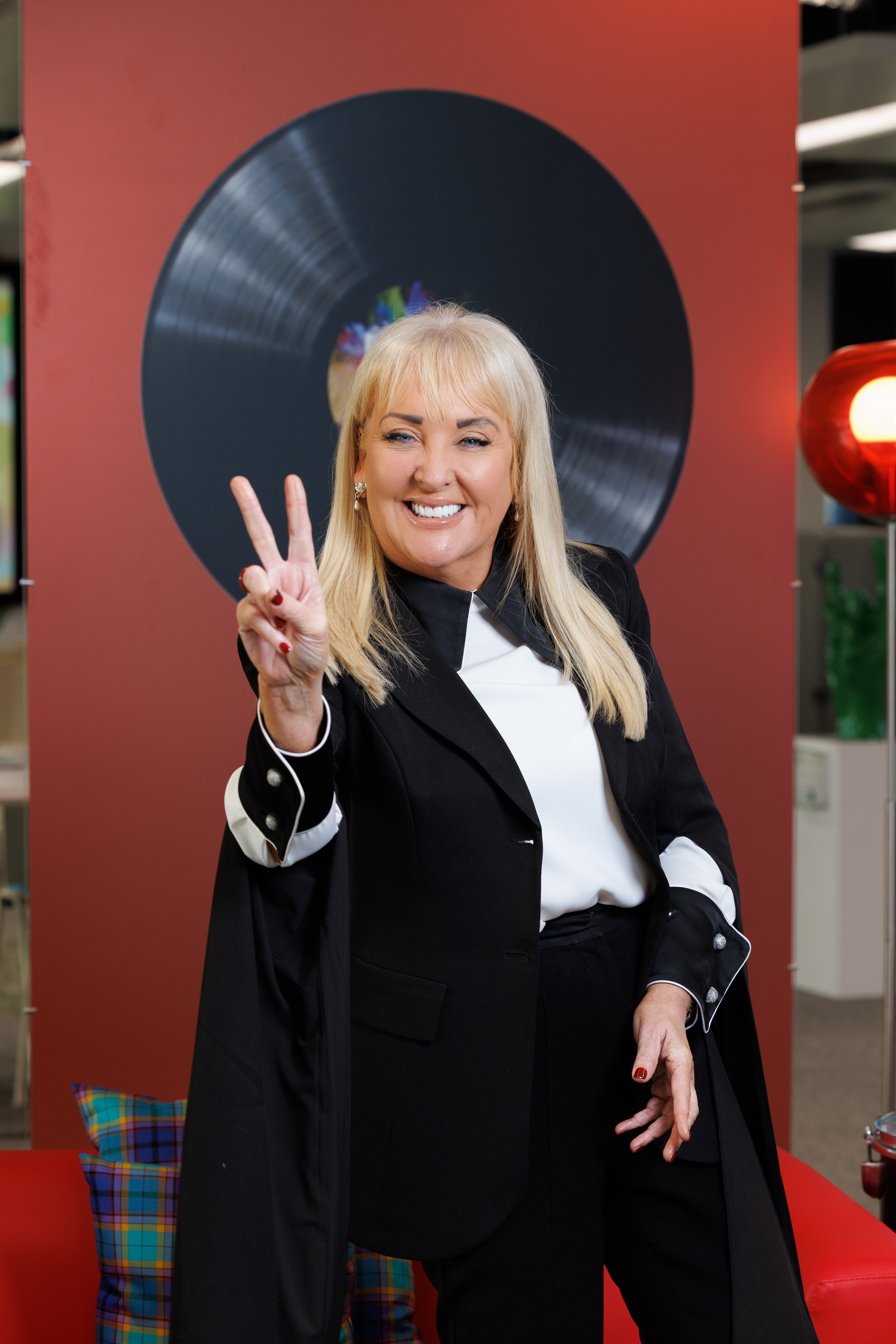
She also vividly remembers going on holiday every year to Aberdeen to stay in a static caravan and seeing American oil men walking about wearing Stetsons and cowboy boots and it feeling like a different world to Ayrshire with its derelict factories and boarded-up shops.
“I think about that now and obviously I now know that it was all about oil but I truly think that was my first introduction to what politics was about because I would see all this wealth in Aberdeen and I’d then come back home and see that we had nothing, that people were down and out, and they were surrounded by empty buildings which sort of reflected the mood of the place. It felt like a forgotten area and with a lost generation, and I knew that imbalance of wealth wasn’t right and that something should have been done.
“We weren’t a political family in terms of heated debate around the kitchen table; life was probably too busy for that. I wouldn’t say my mum was political in the party sense, not like my dad. He was a Labour man and a trade unionist. He was brought up with a lot of the guys who’d been in the factories and became councillors, and there were MPs too, with Willie McKelvey [Labour MP for Kilmarnock from 1979 to 1983] and the likes of Bobby Stirling who worked for Massey Ferguson’s and then became a councillor and then provost. So, I was brought up in a very much Labour household, because in those days it was Labour or Conservative – either, or, that was it.
“My dad was pals with folk like [trade unionist] Jimmy Knapp who was obviously a bit older than him but well-known in this area. You know, that’s why I get frustrated at politics just now, because I listen to stories about Jimmy and the likes of Willie Ross and the characters of those days, the Harold Wilsons, James Callaghans, Barbara Castle and even Margaret Thatcher and so on and whether you agreed with their politics or not, these were a different types of politician from what we have now. They were quality operators who debated and were not career politicians, they’d usually had a job before they went into politics, and they lived and worked and breathed in their community, whatever their political angle was.
My dad’s politics were all about wanting a better life for all of us
“I remember that my dad was a also huge funder of the Des Browne [former Labour MP and Secretary of State for Scotland, now Lord Browne] election campaign down here and I remember him telling me quite early on to go out in the campaign van with all of its balloons, streamers and the Tannoy blasting and I’m like, ‘really?’ but you do what your dad tells you and while I might not have been voting for that party, it was character building, and there might be an SNP van out at the same time and you would get banter between the two and proper debate, and somewhere along the lines that changed over the years and the good humour and the respect went. Politics changed. Politicians changed.
“My dad’s politics were all about wanting a better life for all of us. He wanted to buy his own wee house, and we had one penny left in the bank when we moved from Onthank to Symington to a wee cottage that he could say was ours. This was in the ‘70s, and you had a high cost of living, food prices had gone up, you had the industrial action going on with strikes everywhere and the electricity blackouts so you had candlelight to do your homework, the bins were not being collected, and that lack of hope which for me slips back to the future of where we currently are.
“I remember my mum really making do with what we had and they grew vegetables and stuff, but she would go without. We never felt poor though because we had that much love in the house, but I think my passion for everything I now do comes from that working class upbringing from Kilmarnock, my tight family unit and really seeing people and community helping one another and having a really strong work ethic. I guess I was also made to believe that being on benefits was not something for us.”
Macklin’s father, John Dick, was a bricklayer, a trade unionist and a fervent Labour supporter who aspired to have a white-collar job. He believed in the power of the trade unions but having taken his construction colleagues out on strike with promises of them being paid out of their union dues to seeing them go hungry and with no pay, that faith was sorely tested. Fired by what he saw as an injustice, he struck a side deal with another building company for all of his workers and they went back to work.
I could easily have become one of those left-behind kids that I now work with, but I had a drive in me
But the experience soured his view of the trade union movement’s ability to protect the workers that had supported it. Macklin says that was a seminal moment for him with the hard realisation that to get on in life, you could ultimately only rely on yourself. He went into contract management, rising to become the managing director of a big construction business and then started his own construction business in 1988 which later grew into the property and development business, the Klin Group.
But that was far into the future for a teenage Marie Macklin, whose early 1980s was playing out to the protest soundtrack of ska bands, UB40, Madness and The Jam, and the demise of her hometown felt very personal. She cites The Jam’s A Town Called Malice as ringing most true. Most of her family were affected by the job losses in Kilmarnock and for her, it cemented the idea that to get on in life she had to move, first to Glasgow which, while only a 45-minute train journey away in those days, felt like a million miles away from Kilmarnock.
“I used to watch a TV programme called Capital City about a group of investment bankers in London and that was my two things: I wanted to go to London to work in financial services and to own a Porsche, and I knew to do that, I had to work really hard.
“I struggled at school because I was dyslexic and suffered from being bullied. I could easily have become one of those left-behind kids that I now work with, but I had a drive in me to do something different and a family that supported me. I left home at 17, moved to Glasgow for the music scene, to be educated and yeah, for the bright lights.
“I knew to get the things I wanted I had to work hard and study hard. I stayed on the south side of Glasgow, went to college to study accountancy and worked in shoe shops. I worked in three different shoe shops, and then when I was 18, I worked in the cocktail bars, and it was the time of Duran Duran and Spandau Ballet and it was a great place to be. It still is. I love Ayrshire, I love my community, but I knew that there was something better for me, bigger, and that first step was Glasgow to get a chance.”
Macklin went to the then Glasgow Technical College where she studied accountancy but left education before gaining her degree because she was offered a job with Morrison Construction which she believed was too good an opportunity to turn down, and she later moved to London to work in financial services.
“Before I made the move to Glasgow, I would get the train up and down and I remember coming out the train one night and walking past an old building across there, Bartley House, and it was derelict, semi-derelict, and meanwhile in Glasgow, it was the Glasgow’s Miles Better campaign, and then it was the Garden Festival campaign, and you had this shiny light of hope going on, and yet 45 minutes down the track, we were left behind.
“And it didn’t matter that as much as politicians or political parties were saying ‘it’s going to be better, it’s going to be better,’ I truly believe we [Kilmarnock] never recovered from that time, from the ‘80s, and because we’ve created repetitive governments at UK level who have followed a boom, bust, boom, bust, boom, bust approach, even when we were having the booms in Glasgow and the booms in London and in Manchester, and I’ve worked in them all, there was no boom here in Ayrshire.
“It didn’t really hit me at the time, but it hit me more when I went and worked in London, and I knew what I was going into. I was going into a wealth-driven economy. It was the big bang time. And I loved it.”
Life as I knew it ended for me then
For a time, Macklin was living the life she had dreamed of while watching Capital City. She had the job in the City, was driving the fast car – her much-wanted Porsche, was married to Drew Macklin, a boy from home whom she had first met at 19, was on the fast track at work helping to set up new banking facilities for RBS in Glasgow and living happily between London during the week and flying back to Glasgow at weekends. She gave little thought to going back to Ayrshire. But aged 32 she suffered a near-death experience and, as she says, “my old life ended and a new one began”.
She hadn’t been feeling well with what she describes as “women’s problems” when she collapsed in a public toilet in the St Enoch’s Centre and was rushed into the Royal Infirmary. It was a weekend with a skeleton staff, and she was left on a trolley for hours before being wheeled into surgery for what the weekend doctor understood to be acute appendicitis. She told her father that she believed she was dying.
When they opened her up, the surgeon discovered what Macklin describes as “an absolute mess”. Previously undiagnosed endometriosis had caused various organs to be stuck to each other and multiple cysts on her ovaries had basically been bursting, causing the eventual collapse. She woke from surgery to learn she had gone into cardiac arrest on the operating table and that she had been given a full abdominal hysterectomy. What followed were various complications that led to a 14-day hospital stay and a complete reassessment of her life.
“Life as I knew it ended for me then because I had, at that point, a promising career in the City of London. I had a plan, we [her and her husband] had a plan. We were going to have kids, move into a bigger house. We had things mapped out. And just like that, it’s all gone and it did feel like my life had ended. It wasn’t just the illness itself, or the hysterectomy and the choice about children being taken from me, but there were more operations, more complications, and it basically went on for about two years.
The big story, the breakthrough, was we did a deal and introduced Morrisons food stores to Scotland, the first one
“Work was brilliant and they kept my job open for me, but I lost all my confidence and just felt I couldn’t go back. I now know that I was suffering from post-traumatic stress disorder, but I got no support. I now help veterans with PTSD but in those days you just got on with it. You are given this life-changing prognosis but no help, no psychological help, to get you through it. But we human beings are unique, aren’t we? You get an inner strength and a fight from somewhere fundamental that basically says that you can lie down and roll over and just accept what has happened or you can find the strength to do something with this change and all that comes with it and channel all your energies into something else and make a difference.”
With her husband working full-time, Macklin moved back in with her parents so they could care for her as she slowly recovered. As she regained her health, she started working part-time for her father in the Klin Group and when her father became ill with a heart condition in 2003, she eventually bought the company over with a view to moving it away from predominantly housing construction and into areas of regeneration.
“We worked in low-cost housing in some of the most challenging areas in Scotland, and I needed a big deal to take things forward. I started packaging up brownfield sites and old buildings in Kilmarnock for redevelopment and the big story, the breakthrough, was we did a deal and introduced Morrisons food stores to Scotland, the first one, and that gave me the money and the opportunity to then take that cash and put it into listed buildings, my community projects, and invest in people that were less fortunate than I had been. And that was how this journey, this new life, my regeneration, and really my rebirth started.”
Amid this, came the announcement from Diageo, Kilmarnock’s last big employer, that they were closing the Johnnie Walker site. Macklin understood the devastation this would wreak on the town, and she joined the task force ‘Make it Kilmarnock’ set up to try and minimise the economic impact the closure would have.
Along with Salmond, she was at the front of that march of 20,000 people to try and save the factory, but while this was one battle she could not win and the factory closed in 2012, she wasn’t done. Macklin negotiated a deal with Diageo which sold the 28-acre site for £1.
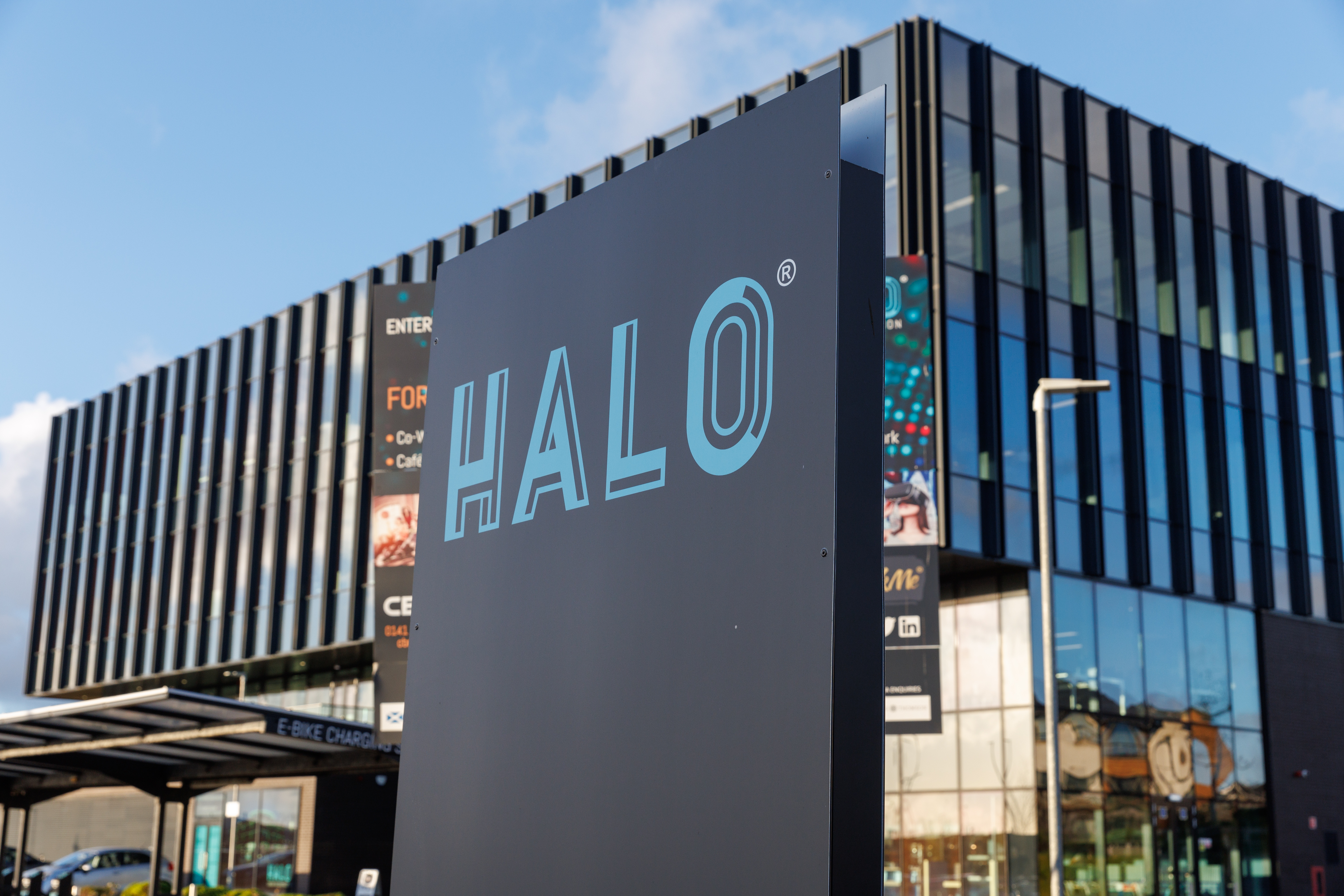
A third of the land was used for a new £50m college which merged three local colleges and following local consultations the rest of the land was redeveloped and used to house the ambitious HALO Digital, Cyber and Innovation Park devised by Macklin which is bringing millions of pounds of investment and thousands of jobs to a once derelict site that had become symbolic of Scotland’s industrial past but now acts as a beacon to a brighter future.
Macklin is a powerhouse of energy. Tiny and always immaculately dressed, she has incredible powers of persuasion and refuses to compromise on things she believes in. Whether it be her economic development work, speaking on women’s issues, particularly around the debilitating effects of endometriosis and why that hasn’t been properly recognised, or supporting young people and veterans, she brings unbridled passion. Macklin’s story personally, professionally, and politically is all about regeneration and renewal.
And the thread running through all that she has done has been about meeting challenge head-on, whether that be her dyslexia, the devastating consequences of endometriosis, or her community’s threatened economic and social disintegration, and turning it into an opportunity not just herself but for all.
And to do what she has achieved, Macklin has worked across political divides. You don’t need to look hard to find pictures of her with every party leader at one time or another at openings, party conferences, and campaigns, she is a doer, but politically, Macklin is hard to pin down. She describes herself as being “centre-right with [an interest in] social justice”.
She joined the Conservative party in her 20s because she thought that fitted with the image she had of herself working in finance in the City of London, and she admired the party for its approach to “aspiration and enterprise”. She campaigned for the late Phil Gallie when he stood for Westminster in 1992 and remembers knocking on doors in parts of Kilmarnock and being told she was the first Tory to have ever visited but says she is not “your typical Tory” and is no longer a card-carrying member.
On the flip side, she was also a poster girl for the Yes campaign during the 2014 referendum, having been inspired by the hope that Salmond spoke of. But says now that she would need to be presented with an updated business case for voting for independence again and she is still to see one.
Meanwhile, her good friend Malcolm Offord has just become the leader of Reform in Scotland and I ask her if she is tempted by the same message of hope that Farage purports to offer that she so frequently quotes.
She says that she has had approaches by “pretty well” every political party to join their ranks, but “so far” she prefers to engage from the outside.
Holyrood Newsletters
Holyrood provides comprehensive coverage of Scottish politics, offering award-winning reporting and analysis: Subscribe