Ruth Dreifuss: You don't tackle the drugs crisis by arresting the victims
Touring Scotland’s safer drug consumption room, Switzerland’s former president talks to Holyrood about her life’s work: harm reduction
Ruth Dreifuss, the former president of Switzerland, is talking to a heroin user in a small room in Glasgow’s east end.
He has left his black Labrador tied up outside and chats easily with staff. “Do you like it here?” Dreifuss asks him. He replies without hesitation: “It saved my life.”
Dreifuss is visiting The Thistle, the first safer drug consumption facility in the UK. Linked in with dentists and other specialists, the pebbledashed clinic sits nestled behind a pram showroom and is utterly unique in Britain. But it’s far from novel to Dreifuss, who spearheaded a revolution in Swiss domestic drugs policy which moved the focus from criminalisation to harm reduction, and which has had a global impact.
Switzerland opened its first official drug consumption facility 40 years before Scotland. Located in Bern, it was a world first and came amidst a spiralling overdose and HIV crisis, with open injecting prevalent and obvious. It was followed by further reforms led by Dreifuss which are credited with cutting both death and crime rates. That includes the introduction of heroin-assisted therapy, which led to similar moves across Europe and North America.
And now she’s standing outside The Thistle as a woman with a tight ponytail comes rushing through the door and tells her: “I don’t know what I’d do without this place.” Hurrying off, she says it again.
Dreifuss is here as a guest of the Scottish Drugs Forum (SDF) and in her capacity as a founding member and former chair of the Global Commission on Drug Policy (GCDP), which advocates for a shift from prohibition to legal regulation. It’s far from the only such centre she’s visited, but she likes the atmosphere and the quality of what she’s seen. “I’m in an elegant, comfortable place,” she says. “Wow,” she tells the staff explaining the housing and health help on offer, “this is very impressive.”
The feeling is mutual. Councillor Allan Casey, convener of Glasgow City Council’s addiction services, is also on site today and admits to “fangirling” over the visitor, who despite warning that English is one of her weaker languages converses with the dexterity of a Scrabble champion. “She’s amazing”, Casey says. The work done under Dreifuss is an “inspiration”, says SDF chief executive Kirsten Horsburgh. “Switzerland is always a country that we look to as an example of good practice,” she goes on. “The Swiss really led the way in terms of creating policy that was compassionate, and she was a real driver for that.”
“It’s been a long life”, Dreifuss reflects. “It would be strange if it hadn’t seen any change in the world. And it really is another world now. It was nice not to live in it only passively.”
Born in the north east of Switzerland in 1940, Dreifuss was a toddler when her Jewish family moved south to get further away from the border with Germany. She worked as a secretary after leaving school, studying social work before picking up economics at the University of Geneva. She became deputy editor of Cooperation, the weekly publication of the Swiss Union of Cooperatives, and worked for almost a decade in the Swiss Ministry of Foreign Affairs.
Elected as the first woman secretary of the Swiss Federation of Trade Unions in 1981, she won a place on Bern City Council in 1989 and entered the seven-member Swiss Federal Council in 1993. A near 10-year stretch as minister for home affairs followed, during which she advanced reforms across social security, pension services, higher education and healthcare. Then came the vice presidency, and in 1999 she became the first woman president of the Swiss Confederation.
The top job came less than a decade after women gained full voting rights. The change came in stages. Enfranchisement at federal level happened in 1971, which was after some cantons granted the right to vote in their local elections and before others finally relented in 1991.
It was a landscape, Dreifuss says, which taught her “to fight from the beginning”. She recalls casting her first vote, at local level, at the age of 20, and was “angry” to live in a country which denied her full rights on the grounds of her sex. “I went with my mother – she was 55,” she says. “That my mother, who was a smart woman, who had great wisdom, had lived all this time without participating in political decisions, I found it so unjust.
“We continued campaigning for votes at federal elections because we could not take no for an answer.”
She remembers how the government had tried to fudge the issue by ratifying the UN Convention on Human Rights with a caveat against the provision of political rights for women. “That was such an outrage in the country among women. It’s not possible to try to claim a position with other European countries and make such a reservation. The international pressure of the convention helped us to make the change.”
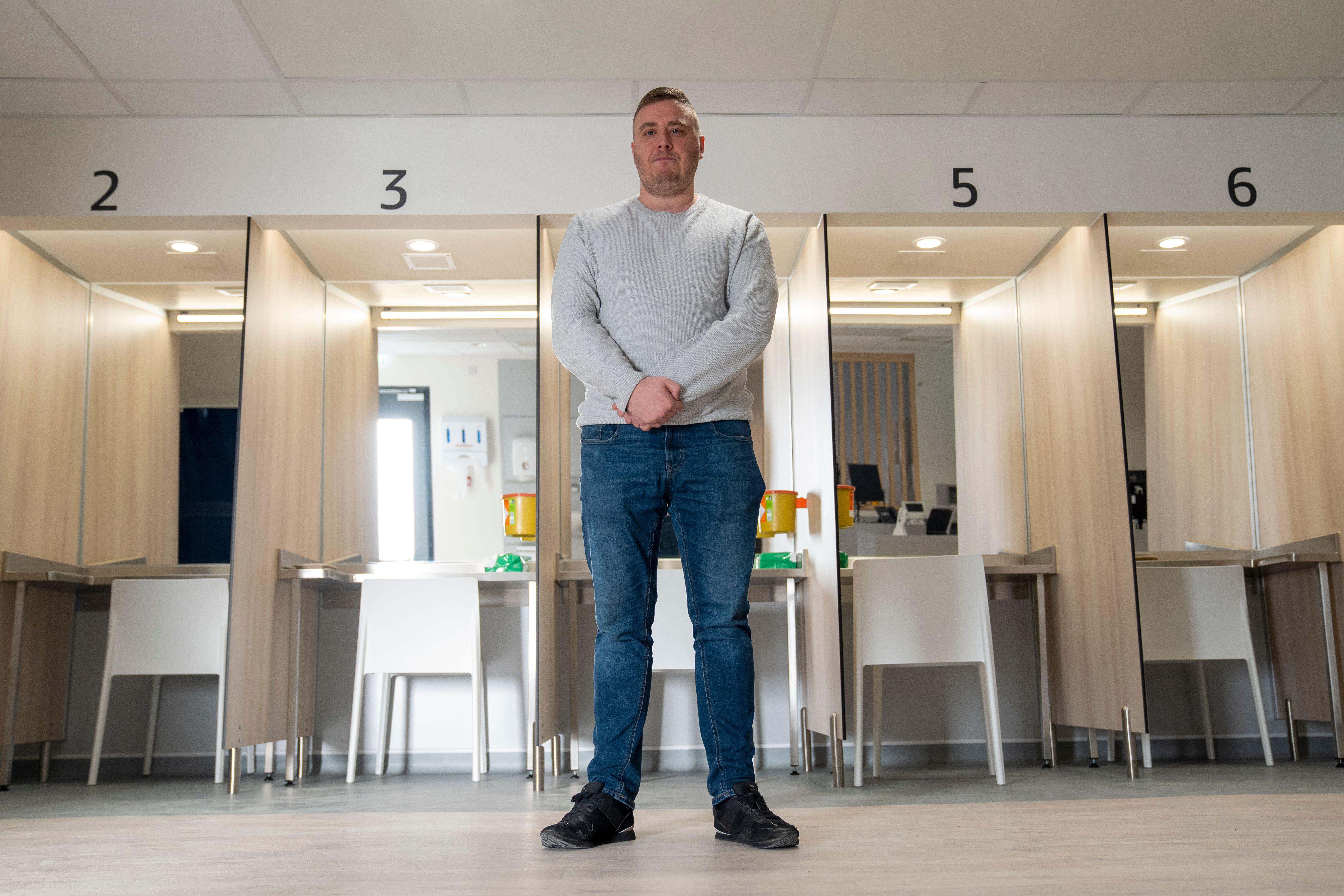 Councillor Allan Casey at The Thistle | Alamy
There are few nations which give their citizens as many chances to vote as Switzerland, a direct democracy in which several issues go to the polls every year. While steered by Dreifuss, who would back yet further change to reflect changing consumption patterns, the country’s shift to a harm reduction model in drug policy is the result of several of these ballots and is based around a “four pillar approach” – prevention, therapy, harm reduction and repression.
And now as a GCDP commissioner she advocates for the regulation of drug markets to reduce social and health harms. It’s a position which is far from universally popular, even where trialled. A health-focused decriminalisation pilot programme in the Canadian province of British Columbia was launched in 2023 with much interest, but its three-year run ended prematurely amidst concerns about public disorder. Elsewhere, drug consumption rooms in Ontario have been repurposed as recovery hubs for addiction and homelessness.
In Scotland, Annemarie Ward, the head of rehab-focused drug charity FavorUK, is amongst the most vocal critics of The Thistle, arguing that it is harmful to recovery and encourages users to “surrender” to their addiction.
September is Recovery Month, and across Scotland agencies are sharing the message that it is possible to break with an addiction. Meanwhile, a public health alert about nitazenes, new types of synthetic opioids which carry a substantial risk of overdose and death, is ongoing and updated drugs death figures were due to be published as Holyrood went to press.
Dreifuss, a Geneva resident, has a “passion for drug policy and political rights” and is “very sorry about the backlash” in Canada and elsewhere. Reverting to full criminalisation, she says, will simply eat up justice resources. “It’s Sisyphean work,” she says, comparing the arrest and prosecution of drug users to the Greek myth of the man condemned to push a rock up a mountain for eternity.
“The police have to fine and arrest people one day to do it again the day after. Even to arrest a little dealer, they will be in the same place the day after. This is not helping to fight against criminal organisations. These small dealers are proletarians who can be thrown away immediately and replaced immediately by organisations. They are like handkerchiefs; you can use them, throw them away and take another.
“You fight criminality through laws against money laundering, about financial fraud. This is helping nobody. For the user, it just interferes with a life that’s the victim of a black market system that you let flourish. On the other side, it’s not helping to make our communities better to live in.”
Drug law is a class issue, she says. “If you consume in your apartment and if it’s in a nice area of the city you will never be arrested or fined,” she says, whereas those on the margins are visible and criminalised. She gives an example of administrative fines levied in Switzerland against those found with drugs in public. Often, they can’t pay the charge, she says, and “end up incarcerated not because they have been caught but because they are poor”.
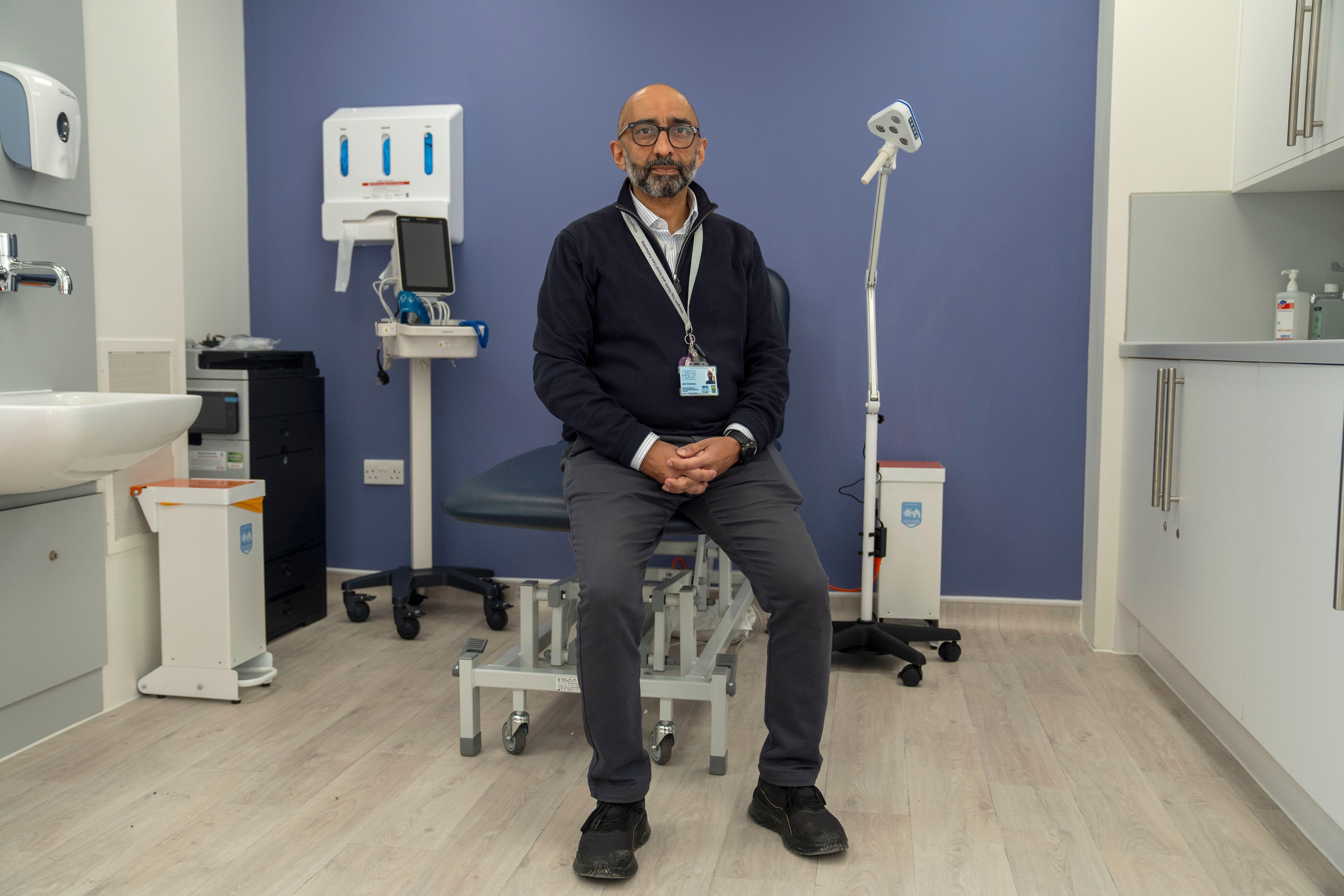 Dr Saket Priyadarshi at The Thistle | Alamy
Easily walkable from the city centre, The Thistle is in one of Glasgow’s poorest areas and there has been opposition from locals who feel their community has drawn the short straw. Reps from community groups have been invited into regular meetings to try to close the gap. Evaluation of the centre’s impact is ongoing, and provisional findings show a reduction in “injection-related litter” in the Calton area, relative to the city as a whole, since the inception of Thistle-related initiatives like needle bins and the deep cleaning of public injection hotspots.
Protected at night by locked gates, the clinic is close to a several such spots and illegal dealing remains rife. “The market is all around,” says Dr Saket Priyadarshi, the associate medical director of alcohol and drug recovery services at NHS Greater Glasgow and Clyde, “you don’t have to walk five minutes from here to find it.” There has been one death in the grounds, which happened outside opening hours, but none inside. There have, however, been 195 overdoses on the premises across more than 20,000 visits, and thanks to immediate medical care all patients survived.
In July, the number of medical emergencies there fell to a nine-month low of eight across 1,103 separate “injecting episodes” – the second highest monthly total it has recorded. Cocaine use far outweighs that of heroin.
The figures come against the backdrop of stubbornly high drugs deaths. There were 1,146 suspected cases in 2025, a rise of 81 on the previous year. Three in four cases were men and most – 66 per cent – were people aged 35-54. More occurred in Greater Glasgow than in any other region.
Glasgow City Council began its call for a safer drug consumption room in 2016 after research linked drug injecting to a mass outbreak of HIV. At the time there were an estimated 400-500 people injecting in public spaces daily, but it wasn’t until 2023 that the final hurdle was lifted in a directive from the lord advocate.
The project is a three-year pilot costing up to £2.3m a year to run, and a similar facility for Edinburgh is under consideration. The SDF hopes to avoid a repeat of the situation in Sydney, where Australia’s first safer drug consumption room had pilot status for 10 years, and Horsburgh warns against over-estimating The Thistle’s capabilities. “It’s one service, it’s not going to solve the drugs death crisis in Scotland. Even for the Greater Glasgow and Clyde area, I wouldn’t expect one of the outcomes of that service to show a massive reduction in drug deaths.
“I think we can become fixated on one measure of success,” she goes on, arguing that the lack of fatal overdoses in the premises and the greater engagement of users with other services – more than 1,000 such referrals have been made – and increased contact with their families should also be considered.
Dreifuss recalls the impetus for law-change in Switzerland. “There are always some people who think that junkies, as they call them, are not worth helping, but we were living in Switzerland through a very great crisis, and one that had some similar aspects to now in the UK and Scotland – overdoses, people dying in the street, infections, blood-borne diseases. It was so severe that there was a spirit of despair. This was in people’s homes; families were losing loved ones.
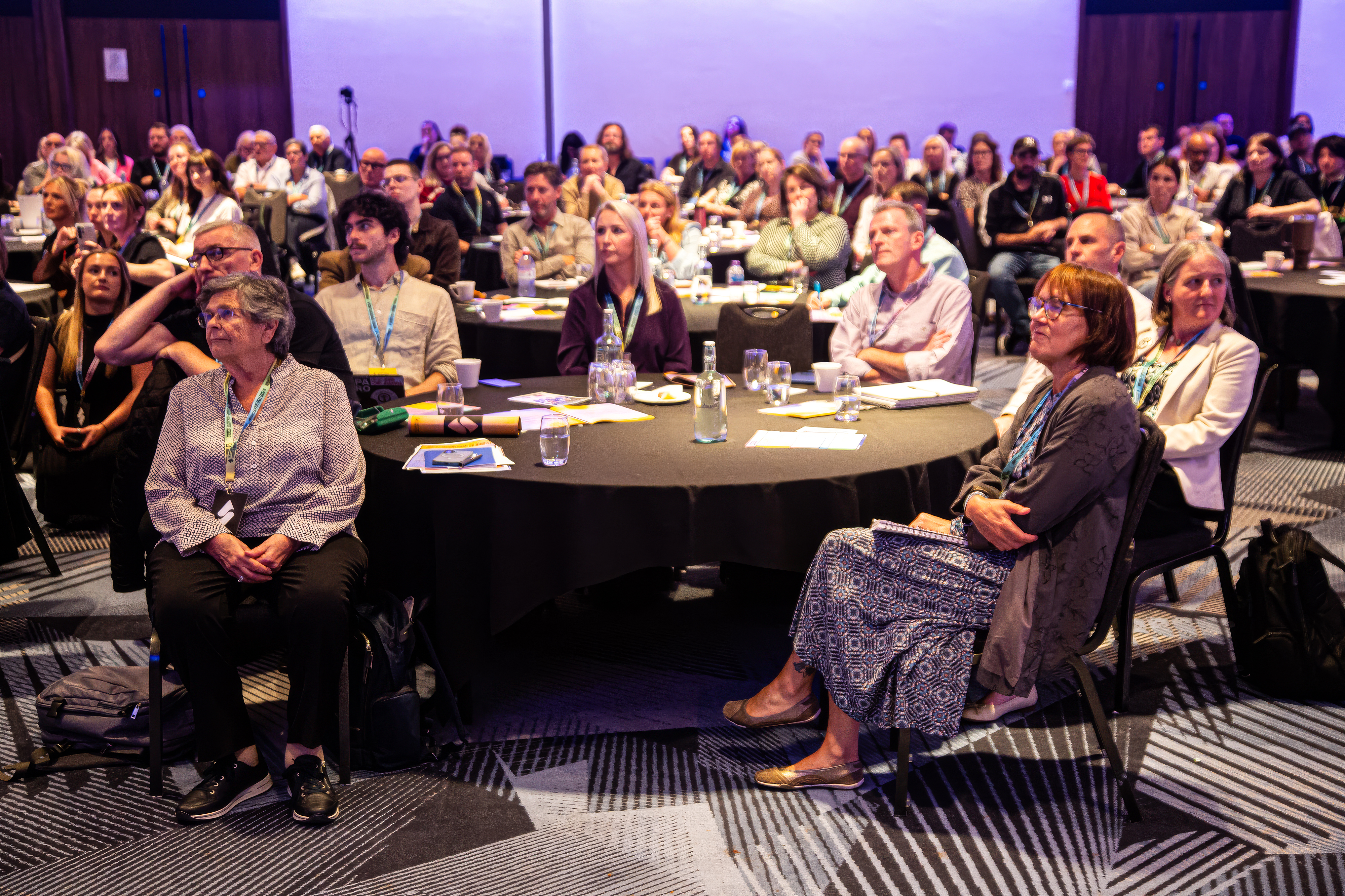 Dreifuss (left) at the SDF conference | Alamy
“What can you do as a society when the solutions you have are no longer working? In such a crisis, people are generally ready to do things that are not the tried answers. The proposals came from the bottom, from the professionals and medics, and we had a chance to do something pragmatic. The role of the political leaders was to support them and allow it to go through.
“This issue isn’t just about the health of the individual person who is consuming drugs, this is about protecting the whole society.”
While Dreifuss considers this a health issue, it is also highly political. The Scottish Greens support the decriminalisation and legal regulation of drugs and want to see Thistle-style clinics “wherever there is an issue with public drug use”. The Lib Dems also support the creation of similar centres, and the Scottish Labour manifesto committed to “reviewing the impact of The Thistle”. While Reform didn’t set out a drug policy in its manifesto, its deputy leader Thomas Kerr has repeatedly raised concerns about the facility.
“We had the same discussion in Switzerland in the 90s,” says Dreifuss, urging against an “ideological battle” about whether abstinence alone can cut it. “I know personal cases where people would go for abstinence” at dedicated centres “then go home and die in a few days by an overdose”, she says.
“I consider addiction a clinical disease which means that through institutional help and treatment people can go into remission and stop consuming for some time. Relapse is always a possibility for a clinical disease. We have to support quality services of this kind,” she says of The Thistle, where tight regulations extend legal protections only to the rooms of the building, not its surroundings, and come with several other caveats: users must be 18, the drugs must be for personal use and cannot be shared, no deals can be done inside and all must inject themselves.
Priyadarshi believes Scotland is “only just catching up” with Switzerland on the approach to problematic drug use. Dreifuss says her country’s shift has come “slowly, slowly”, and adaptations must now be made as heroin use has fallen and crack cocaine has become more prevalent.
Analysis of Switzerland’s waste water has found the country is running with the stuff and its inhalation is also allowed in regulated consumption rooms. Meanwhile, regulated cannabis market pilots are now running in several cities.
Thistle bosses would like to offer drug inhalation here too and have had a heavy-duty ventilation system craned into the site in the hopes that agreement can be made with the UK Government on allowing safer equipment for smoking. “It’s ridiculous,” says Councillor Casey. “That could be changed overnight.” The Scottish Government’s nine-year drug and alcohol strategy includes exploration of the matter, and the SDF would also support its introduction.
Dreifuss says change in her country was achieved through acceptance by the people – not necessarily that the new solutions would work, but that the “experiment” was worth trying.
Forty years on, it is clear that no end point has been reached, and Switzerland still has obvious problems with drug use. For Dreifuss, that does not mean harm reduction has failed. “We had to explain exactly what we were doing,” she says. “At the beginning it was radical – in the end, everything was accepted so we could rebuild the health that’s needed.
“New substances mean problems to solve,” she goes on. “Cannabis has become more harmful because of the black market. It is always necessary to adapt.”
Did she ever doubt the direction she was taking? “Of course,” she says. “You have always to ask yourself what you are doing. As a politician, I tried to stay aware that there is no solution that brings only benefits, and benefits for all. You have always to think about what a possibility is, to evaluate the consequences that will occur, may occur, from those steps you take. This is the reason why the contribution of science is so important. You have always to look at what you are doing and data in this sense is an absolutely indispensable tool for a politician.”
Holyrood Newsletters
Holyrood provides comprehensive coverage of Scottish politics, offering award-winning reporting and analysis: Subscribe