Can this Scottish Parliament work together for the good of the country?
John Swinney’s recent acceptance speech to parliament following his nomination as first minister was little different to the one he made two years ago. Then and now, he pledged to work collaboratively across parties to deliver for the people of Scotland.
Yet the tenor of session six of the Scottish Parliament changed very little after Swinney took the helm in May 2024. While his government did successfully manage to steer through two budgets and pass some legislation, other more contentious issues were kicked into the long grass or quietly dropped. Such matters as social care, a right to drug rehabilitation, prostitution, a recall process for MSPs, a ban on conversion therapy and much more were all considered too difficult to deal with at the time, especially against the backdrop of that febrile parliament.
But speaking in the chamber last week, the first minister insisted “tremendous progress” is possible, so long as parliamentarians “engage in constructive dialogue”. He would “offer to work across party lines” in a bid to “achieve a majority for every ambition that I have”.
“By electing a parliament of minorities, the people have given us a specific instruction to work together,” he continued. “Voters value co-operation among their politicians; they want to see more of it and, in this session of parliament, I will work to see more of it too.”
We will have absolutely nothing to do with Reform UK
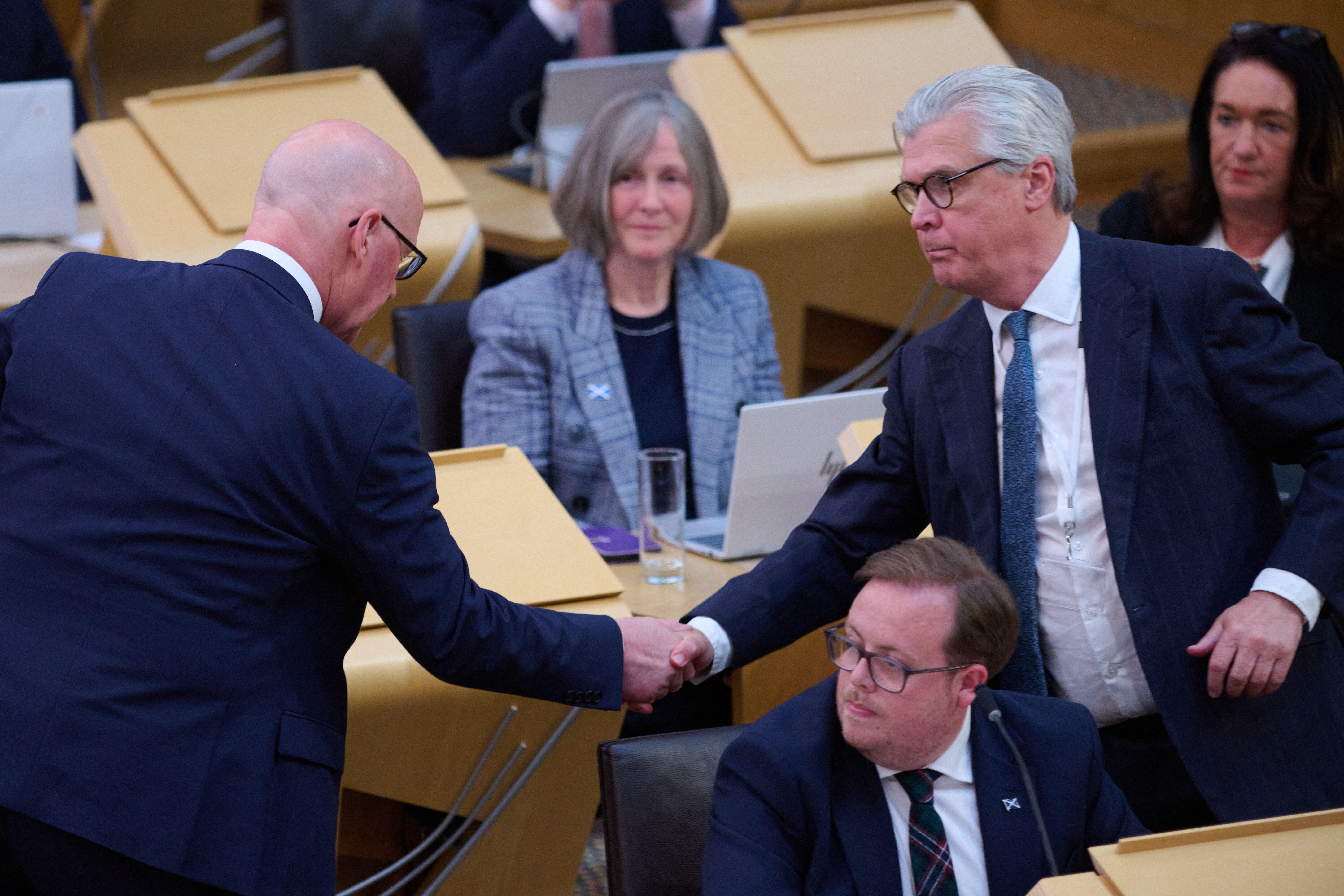
The commitment was a little difficult for the new group of Reform MSPs to swallow. Indeed, there was an awkward moment after Swinney’s speech where he went to shake the hands of all the party leaders and it was unclear whether Malcolm Offord would be included (he was). Only a week earlier, Swinney had ruled out engaging with Reform while offering to meet with all other parties.
“I give my assurance that my government will operate on a basis of cross-party cooperation. But I have been very clear – we will have absolutely nothing to do with Reform UK,” he had said. “They have nothing to offer the people of Scotland; I fundamentally disagree with their values and many of those who have been elected to represent them have expressed reprehensible views. I said during the election campaign that we would lock them out of influence in the Scottish Parliament, and that is exactly what I will do.”
In response, Offord accused the SNP of seeking to “silence” all those who had backed his insurgent party. “It is arrogant, petty and deeply undemocratic – [and] what’s more, exactly the kind of out-of-touch establishment politics people are sick of,” he said.
 Alamy
Alamy
Reform MSP Graham Simpson – the only one of the 17-strong group to have sat in Holyrood before – says he has already experienced some of this sidelining. He claims his member’s bill last session which sought to bring in a recall mechanism for MSPs fell because he defected to Reform mid-way through its passage.
He told a Holyrood webinar hosted just after the election: “It didn’t go through because, in my view, I was in Reform… It was disappointing, but I saw it coming. We need to, frankly, in this session be a bit more adult about things. If somebody comes up with a good idea – and I suggest that was a good idea – then work with it on that basis and not judge somebody just because they’re in a party you don’t particularly like.
“My concern is that this session of parliament could be more divisive than the last one, and the last one was pretty divisive. I don’t want to see that.”
He argued there is a need to develop “good relationships” with parliamentary colleagues of all colours and said he would “make a point” of doing so. “On that personal level, people need to get on. I would hate to think the parliament doesn’t work as it should work, as it was designed, because people are spitting the dummy out,” he said.
Happy to be the lone wolf over in the corner
But others in his party appear to be less concerned about creating those cross-party relationships. Deputy leader Thomas Kerr, speaking to Holyrood after the first minister’s election, says that while Reform would work with others “if we can find consensus on issues that really matter to us”, they are equally “happy to be the lone wolf over in the corner”.
That is perhaps because the party benefits from being viewed as outsiders. It maintains the impression that they are not part of the establishment at a time when politicians and politics is treated with a deep mistrust by voters. And with one eye on the race for Downing Street in two or three years’ time, how the party conducts itself both in Holyrood and Westminster will impact whether they will fight that general election with this anti-establishment image still intact.
Kerr does welcome the softening of the first minister’s rhetoric, though, suggesting Swinney appeared to be “a bit more receptive” to working with the group. “It’s a very different tone from him. But it doesn’t really change how we’re looking at this, because we’re looking at this and saying, we’re all brand new – bar Graham Simpson – and we’re in here to shake the place up. We’re not here to play the usual games with everybody else, where they all applaud and pretend that we’re opponents but we’re not really opponents. That’s not what we’re interested in.”
He thinks it unlikely his party will see eye to eye with the Greens or Labour, but interestingly he does believe some in the SNP may be sympathetic to his party’s views – particularly on oil and gas. He namechecks people like Stephen Flynn and Ivan McKee – who are now members of the Cabinet – as two individuals who do not necessarily seem at home with the some of the SNP’s current policies. McKee is widely seen to be on the right of the party, having backed the socially conservative former MSP Kate Forbes for leader back in 2023, while Flynn promised in his victory speech to be a “champion” for the North Sea.
The promise of the new session is that we should reach for that compromise
Where Kerr most sees opportunity for collaboration is with his former party, the Scottish Conservatives. “Some of the stuff they say is now along the lines of where we are,” he says, pointing to tax cuts and reinstating the local connection rule for homelessness applications in Glasgow as two examples.
Russell Findlay, now the leader of a much-diminished bloc, declined the invitation from Swinney to meet in the week after the election. Dubbing it a “PR stunt…made in bad faith”, Findlay wrote in reply: “There is no point discussing ‘shared priorities’ when it is clear that our positive vision for Scotland is fundamentally different to the path of mediocrity, division and decline favoured by the SNP.”
Yet he’s been equally scathing of Reform in recent weeks, accusing the party of not being wholly committed to the Union and splitting the vote, and suggesting Offord had “sneered at” voters while “bragging” about owning multiple properties and boats.
 Alamy
Alamy
But the idea that the Conservatives and Reform could form an alliance in parliament has not escaped the notice of other parties. This could make for some unlikely bedfellows in a bid to avoid this. Holyrood understands that the Greens have been contemplating ways the group could work with the Conservatives to avoid what they see as normalising Reform’s presence in parliament.
The much enlarged Green bloc is also considering how to continue what has been a relatively good relationship with the SNP. First on the party’s list has been bringing forward a debate on Scottish independence as soon as possible, while action on transport, climate change and childcare have also been highlighted as session seven priorities. However, the lack of clarity on the SNP’s position on oil and gas could yet prove a sticking point for wider collaboration.
It was during the Bute House Agreement between the two parties that former first minister Nicola Sturgeon announced her government supported a presumption against new oil and gas developments, as set out in the draft energy strategy. Publication of the final version of that strategy has been delayed, but it is expected to include a watering down of that pledge after Swinney and other ministers softened their language around the policy. Should the SNP ultimately decide to support continued drilling, not only does that prevent collaboration with the Greens in this area, but it may also be a red line forcing the smaller party to reduce the level of cross-party work overall.
The Liberal Democrats meanwhile went into the election expressing a willingness to work with others. While Alex Cole-Hamilton ruled out a deal with the Nationalists in an interview with Holyrood 18 months ago, circumstances have changed. Addressing parliament last week, he said that while he still believes that “the change that Scotland really needs is a change of government”, his party will “strive to get things done”. “The promise of the new session is that we should reach for that compromise where we can find it,” he added.
 Alamy
Alamy
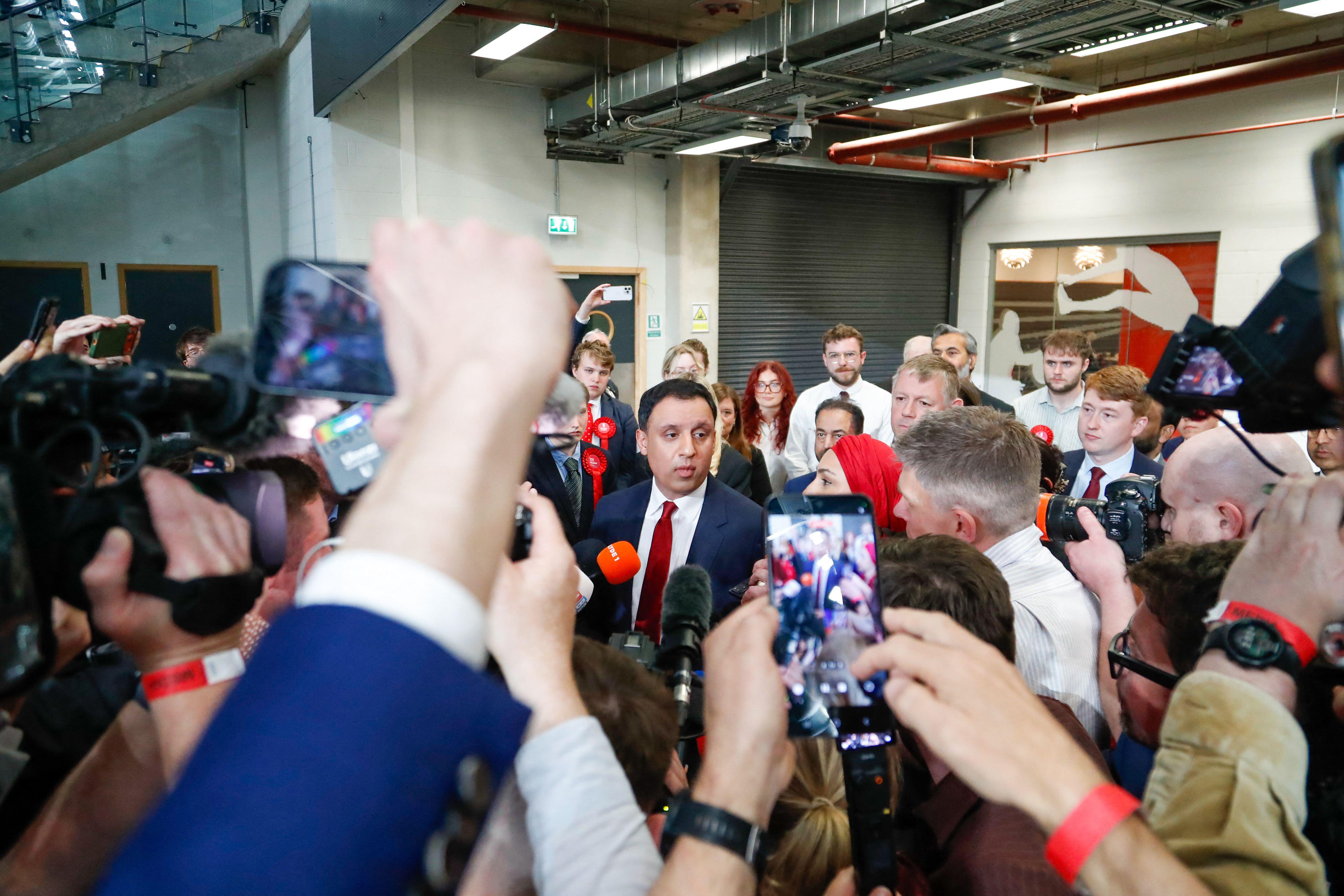
How Labour approaches this new session will likely have significant implications for the shape of the parliament too. Little thought seems to have been given as to how the party would operate in opposition, having been so focused on winning the election and forming the new government.
Having fallen short of that aim, Anas Sarwar did meet with Swinney two weeks ago to discuss how the pair would work together going forward. He offered to collaborate where possible but also told the first minister he would not shy away from criticism when required. But Sarwar’s own future remains unclear. While he has so far intimated he will stay on as leader, and there is no clamour internally to see him replaced, few expect him to remain for the whole term. Deputy Jackie Baillie is also understood to be seriously considering her position.
Playing into all this will be the party’s travails at Westminster. The Makerfield by-election – dubbed by some as King Makerfield – will have significant implications for the direction of the party as a whole. This will no doubt frame the thinking of Scottish Labour, and any potential leadership contenders if and when Sarwar does decide to go.
As a minority government, the SNP must forge relationships across the chamber to get anything done. The party is confident of being able to do just that, with staff having gone through its manifesto and those of the others to find willing partners for all its proposals.
But it is far from certain that any of this will make the Scottish Parliament a less divisive place this session than the last. This was evident when one now former MSP admitted to Holyrood they are delighted to no longer be there – because this has all the makings of a parliament unable to do the job it was elected to do.
Holyrood Newsletters
Holyrood provides comprehensive coverage of Scottish politics, offering award-winning reporting and analysis: Subscribe