Political capital: The Scottish budget has sparked debate on the economy
Rising in the Scottish Parliament, Shona Robison gave her thanks to Michael Marra.
Labour’s finance spokesperson had just given his party’s response to the Scottish Government’s budget, and Robison was ready to hit back.
“Why on earth would a 19th John Swinney budget change Scotland’s direction?” Marra had asked, accusing the SNP administration of having “decimated Scotland’s finances and brought our services to their knees”.
“I thank Michael Marra for Labour’s decision to abstain on the budget without costing us a single penny, for the second year in a row. It is most helpful,” she said.
In a minority parliament, the budget is supposed to be something all parties can have a hand in, with opposition leveraging their votes to talk the government into making concessions that serve their political aims. But even before Robison got to her feet and ahead of parliamentary debates on the matter, Labour indicated it would abstain on the vote and simply let it pass.
A Lib Dem MSP told Holyrood the news had “changed the game” and cost the party some of its negotiating power; a Labour backbencher called it all “a damp squib”. “It used to be an event,” one SNP MSP said of budget day. “Not any more.”
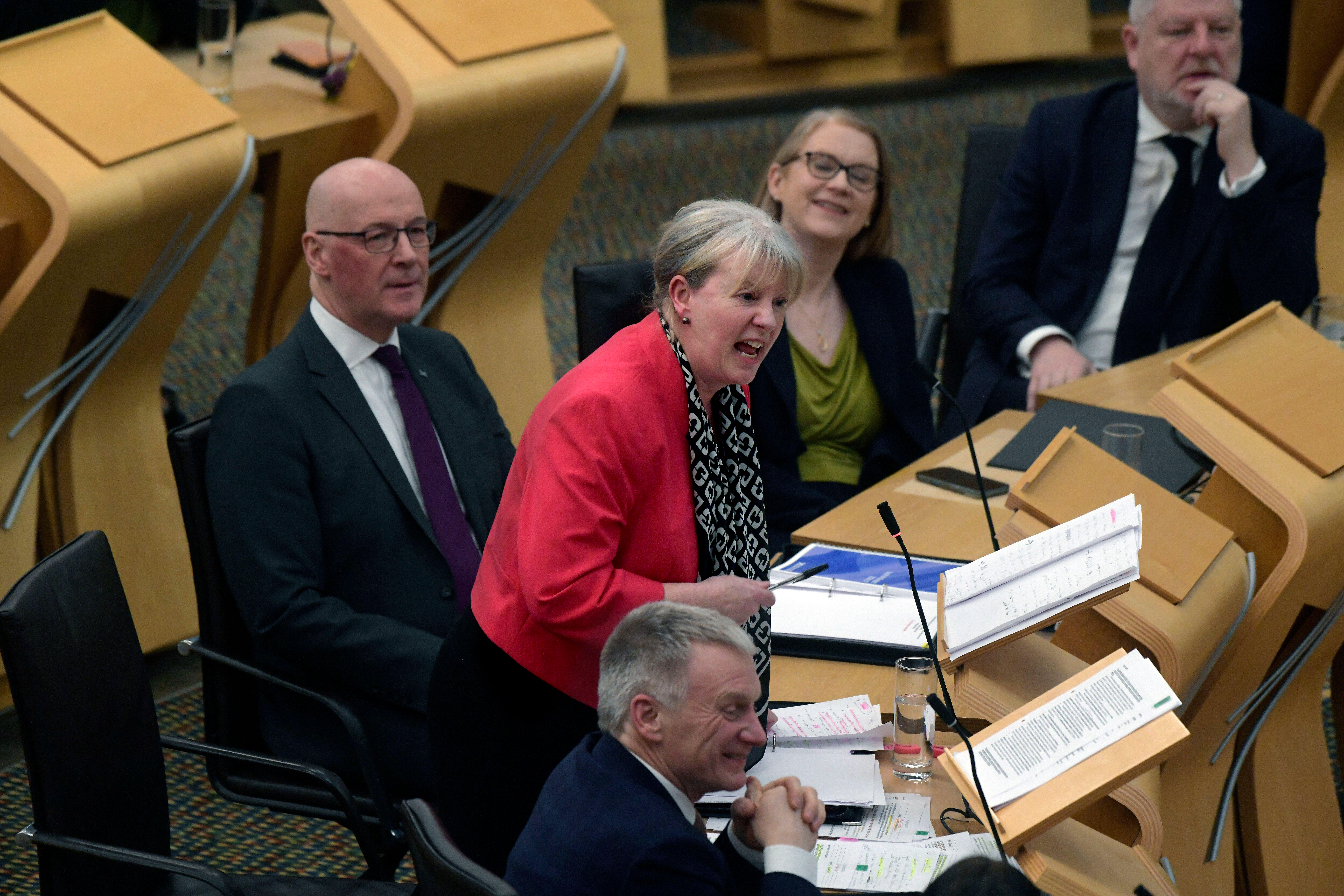
Still, Robison’s latest tax and spend plan is an election budget delivered by a party seeking to enter its second decade in government. But the period has seen sluggish growth and a raft of economic challenges that have left most Scots feeling the pinch, and businesses frustrated.
That’s a problem also faced by the UK as a whole – one so thorny that it pushed the chancellor’s autumn statement back to the latest point in the year since 1996, when Kenneth Clarke held the red box for a long-running Conservative government that was about to lose power.
Brexit’s fiscal drag isn’t to blame for all of it, but it hasn’t helped. Recent research by the National Bureau of Economic Research, which includes senior Bank of England economist Philip Bunn, found EU exit has caused nearly double the damage to the UK economy as official forecasts estimated, costing up to eight per cent of GDP per person over the last 10 years. The hit, the research said, is in the region of £180-240bn.
Anyone looking for a chink of light at the start of the new year could take heart from the latest figures from the Office for National Statistics. It put UK growth at 0.3 per cent in November – a level higher than expected thanks in no small part to the resumption of production at Jaguar Land Rover, which suffered a cyber attack earlier in the year, and to increased activity in the services sector.
But separate work by the Royal Bank of Scotland found firms north of the border suffered a drop in output and new orders at the end of 2025, with inflation continuing to affect trade. “Scottish businesses rounded out the final month of 2025 against a challenging economic backdrop with growth being hard to come by,” said the bank’s Seb Burnside.
And then there’s the public sector, which continues to face increased demand while higher operating costs and wage bills squeeze services. Local authorities, which will set their own budgets in the coming weeks, have much to say about their straitened financial circumstances.
There is, said Scottish Fiscal Commission chair Professor Graeme Roy, “ongoing volatility and ongoing uncertainty and issues of tariffs and global instability” underlying it all.
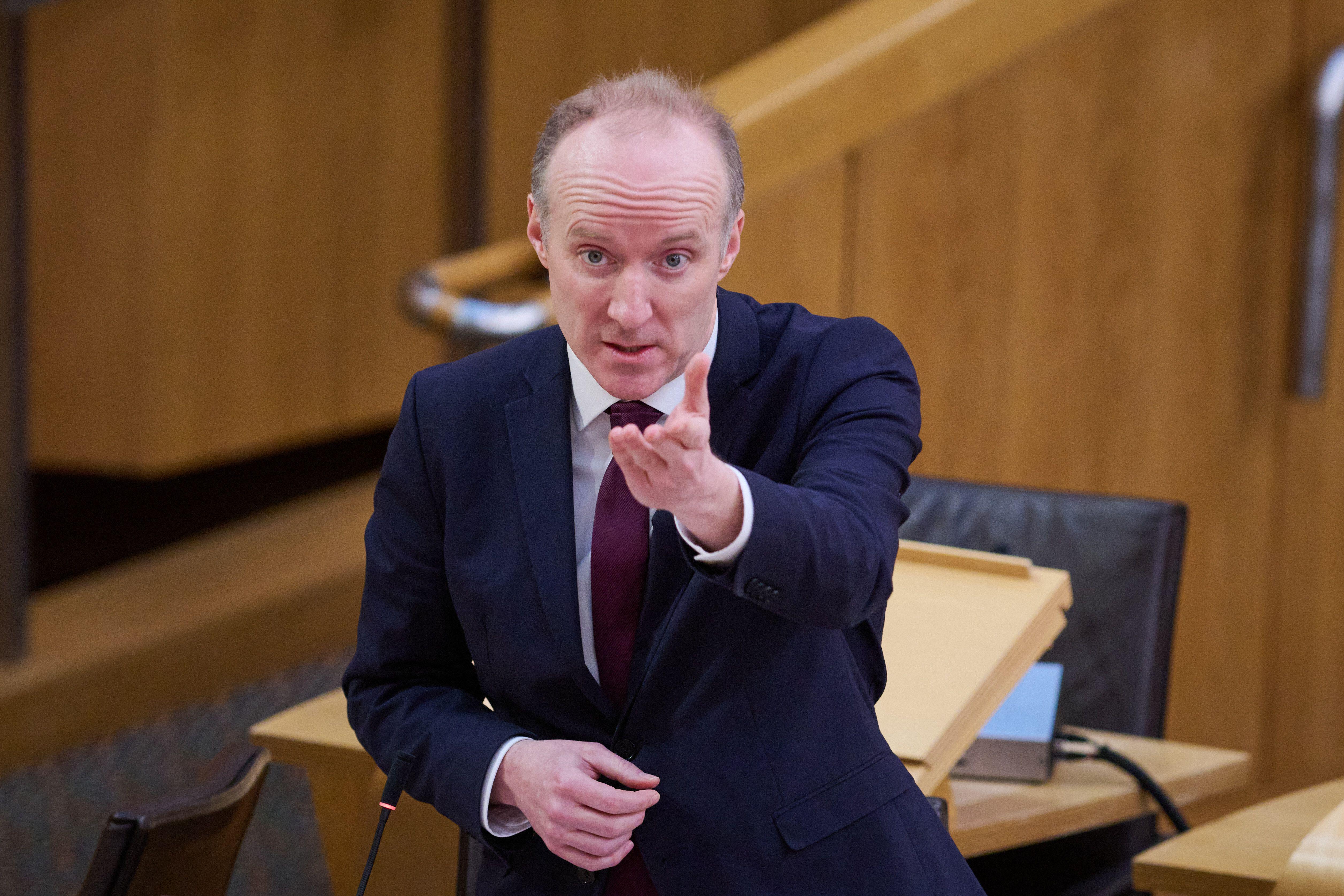
Michael Marra MSP | Alamy
But regardless of international headwinds, it’s up to ministers to make things work for Scotland.
Published in June, the Scottish Government’s Medium-Term Financial Strategy highlighted a growing gulf between spending and funding, projecting a £4.7bn black hole by 2029-30 due in part to a spiralling social security bill and rising workforce costs. But decisions by the UK Government, including a U-turn on proposed welfare curbs and an end to the two-child cap, have meant more money for Robison to play with. It’s not enough to cover all of Robison’s plans, though, with ministers dipping further into ScotWind proceeds and making cuts to public services, including the workforce.
It’s not rocket science: that lack of sizeable growth means tougher political choices, such as a proposed 9.4 per cent cash terms funding cut for justice and home affairs between 2026-27 and 2028-29, and a 7.2 per cent cut for the deputy first minister, economy and Gaelic portfolio.
The Scottish Productivity Index 2025, drawn up by Fraser of Allander Institute experts for CBI Scotland and legal firm Addleshaw Goddard, reveals both positive and negative signals. Business investment was found to have reached more than 10 per cent of GDP, even when the figure for the UK was falling, and the level of workplace qualifications remains the highest in the UK, while sickness absence levels have improved to near pre-pandemic norms. But long-term health-related economic activity was up to 34 per cent. For all UK nations, the level sits at around the same level, and it’s an area that presents a problem for policymakers.
The study highlighted other signs of strain: a sharp drop in exports which increased the gap between Scotland and the UK average, and a continued lag in early-stage entrepreneurship. Michelle Ferguson, director of CBI Scotland, said investment in digital infrastructure and other areas is “not yet translating into the step change in productivity our economy needs”. “Too many businesses are still held back by weak export performance, falling levels of workforce training and the growing impact of long-term ill health on participation in the labour market,” she said.
“If we want higher growth, better wages and improved living standards, we need a plan of action which delivers. Scotland has all the ingredients for success; a highly educated workforce and strong business investment – the task now is to bring them together at pace and at scale.”
The economy isn’t the top issue for voters in May, but it is one of the biggest.
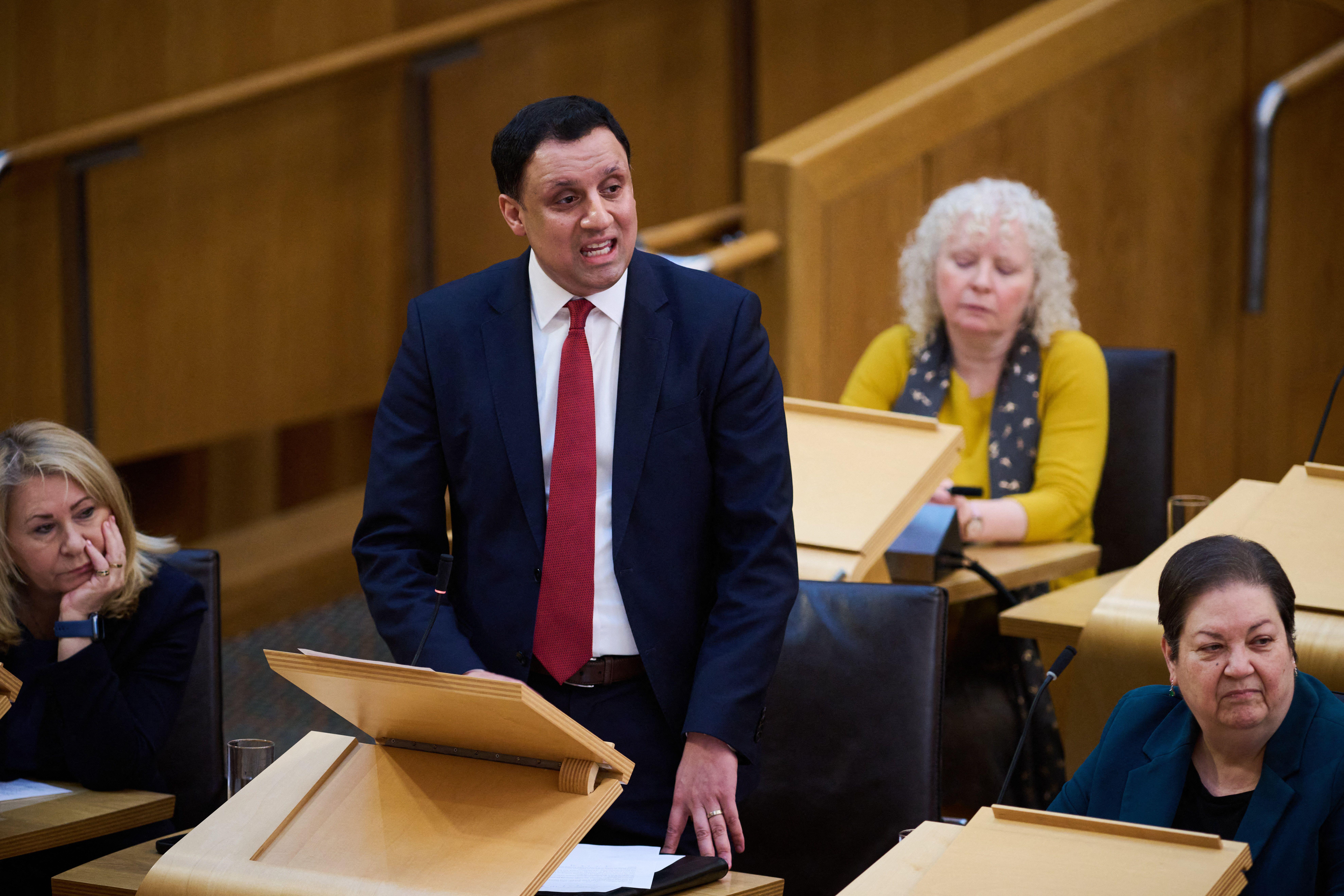
Scottish Labour leader Anas Sarwar MSP | Alamy
Polling from Ipsos Scotland at the turn of the year found healthcare and the NHS is the number one factor for 57 per cent of voters, followed by the cost of living at 41 per cent, immigration on 30 per cent and the economy on 25 per cent.
The same survey found the SNP is the party voters trust most to grow the economy and to tackle the cost of living. But that status is perhaps undermined by the fact that 25 per cent lack faith in any of the parties on that front.
Perhaps that’s unsurprising – trust is an increasingly rare commodity. Research by Carnegie UK found 34 per cent of Scots have “low trust” in their councils, for the Scottish Government the rate was 36 per cent and for the UK Government, 52 per cent.
The findings come from the charity’s Life in the UK 2025 study, published in November, which found “small improvements” in the number of people able to adequately heat their homes and with the funds to take a week’s holiday. But larger-scale change will take more radical economic improvement.
Prime Minister Keir Starmer has said 2026 will be the year that the UK will “turn a corner”. The public will be hoping that’s true, and so will Scottish Labour.
Anas Sarwar’s fortunes are closely tied to those of the UK Government as he tries to convince voters to return the first Labour Scottish Government since 2003. But his political capital is tied to that of the PM’s. And Starmer’s popularity leaves something to be desired. Responding to a Survation poll published earlier this month for lobbying firm True North, psephologist Sir John Curtice said that “voters’ evaluations of the UK Government hang like a cloud over Anas Sarwar’s hopes of winning the keys to Bute House”. 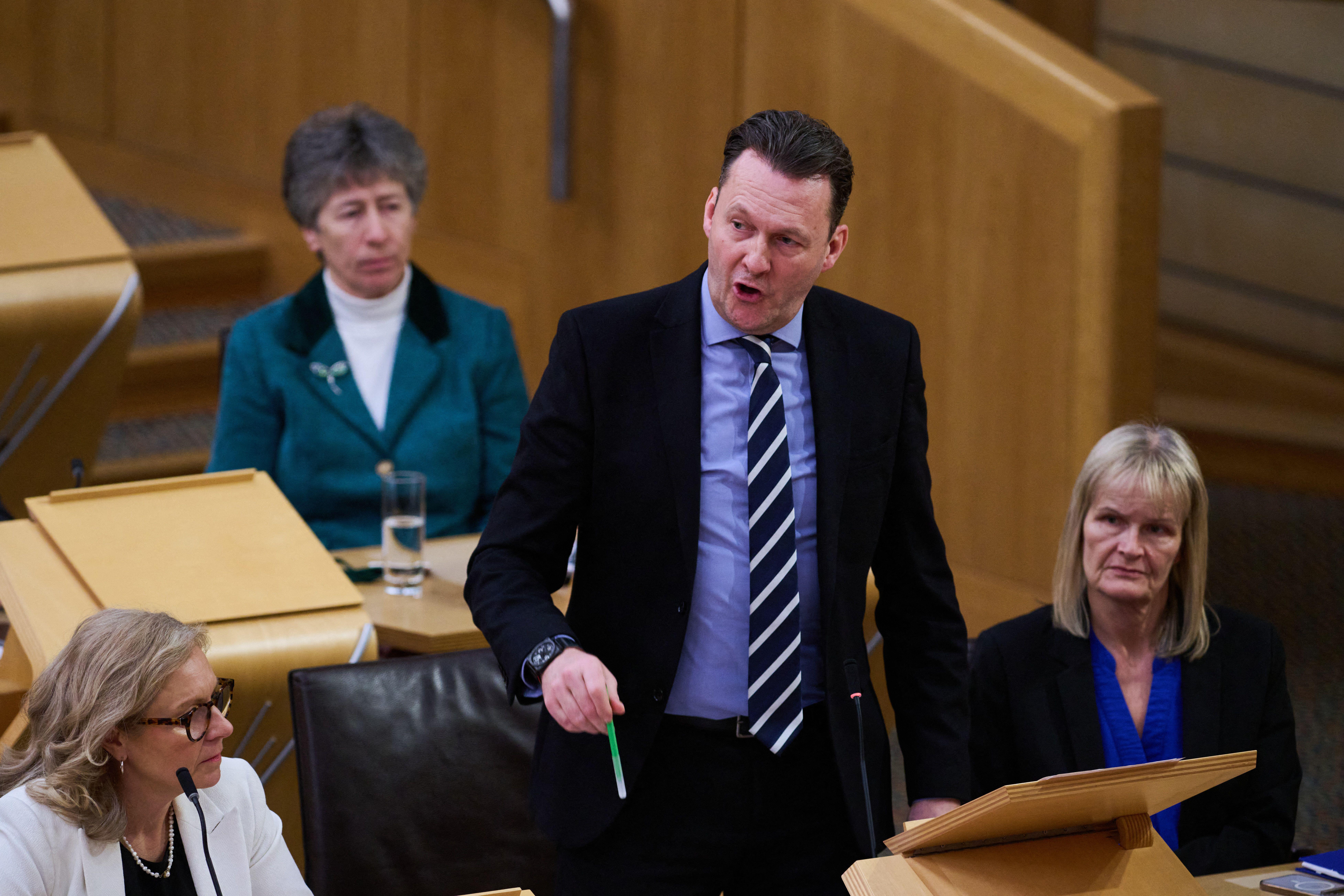
Scottish Conservatives leader Russell Findlay | Alamy
“Even among those who voted Labour in 2024, as many as 37 per cent say the record of Sir Keir Starmer’s government makes them less likely to vote Labour in May whereas only 29 per cent indicate that it makes then more likely to do so,” he commented. “Meanwhile, over half (52 per cent) of 2024 Labour voters now say they disapprove of the prime minister, up from 32 per cent a year ago.”
It is perhaps little wonder that Sarwar has tried to put distance between himself and his boss.
“Even among those who voted Labour in 2024, as many as 37 per cent say the record of Sir Keir Starmer’s government makes them less likely to vote Labour in May whereas only 29 per cent indicate that it makes then more likely to do so,” he commented. “Meanwhile, over half (52 per cent) of 2024 Labour voters now say they disapprove of the prime minister, up from 32 per cent a year ago.”
It is perhaps little wonder that Sarwar has tried to put distance between himself and his boss.
When asked, during a speech in Edinburgh, if he wanted the PM to campaign in Scotland, the answer was a clear ‘no’. “I would say the best thing that Keir Starmer and the UK Labour government can do is be behind their doors and in their departments getting things right and changing our outcomes,” he said.
Still, Starmer did travel north in the middle of the month, and it was Scotland’s finances he wanted people to think about. The UK Government awarded a “record amount of money” to Holyrood at its last budget, the prime minister said in Perth, but questioned how it has been used. “I think across Scotland people are entitled to ask, ‘where has the money gone, John?” Starmer said.
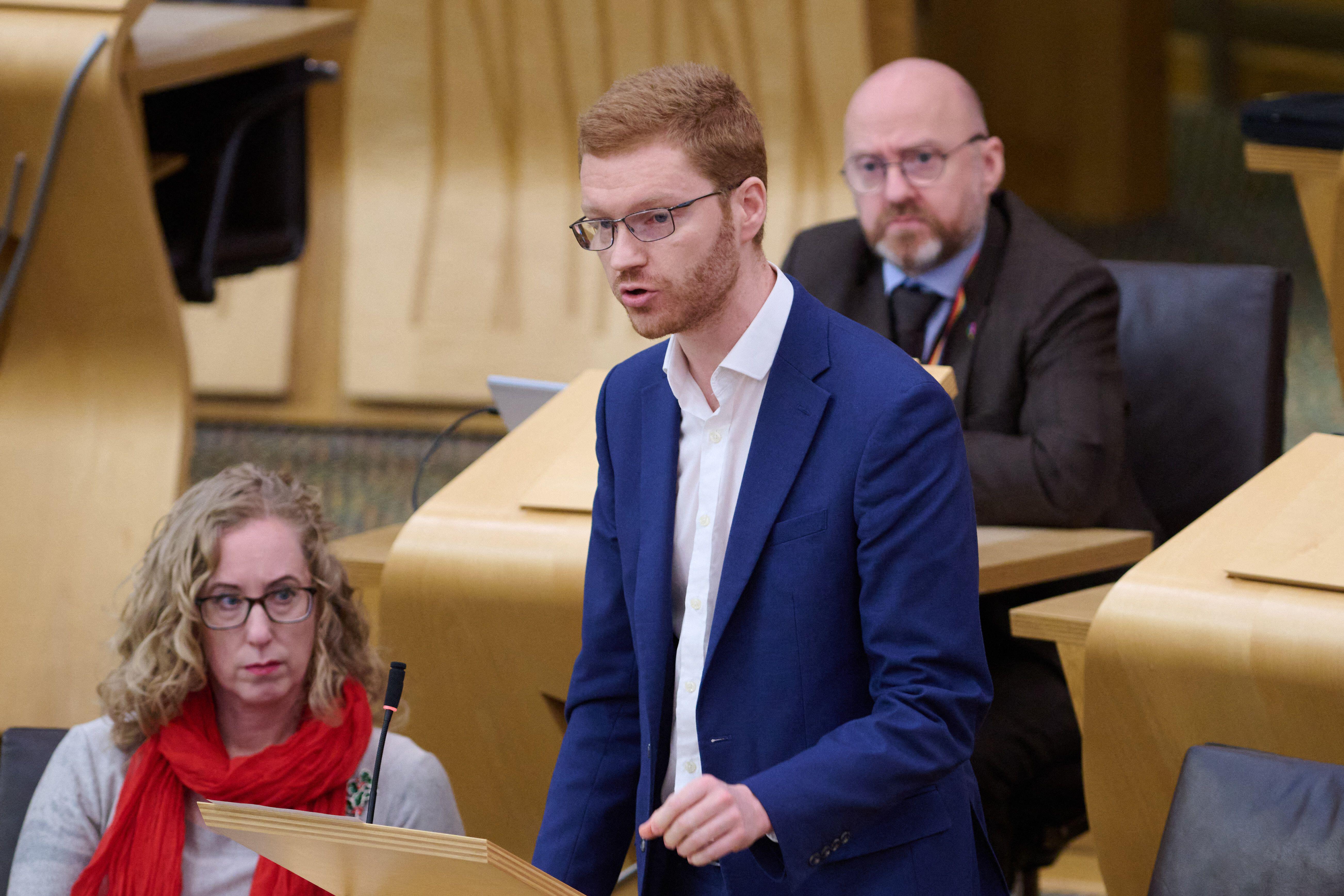
Scottish Greens co-leader Ross Greer | Alamy
A good chunk of the cash is going towards easing the strain caused by inflation. The headline policy, the uplift of the Scottish Child Payment to £40 for families with a child under the age of one, comes after ministers reallocated funding that had been earmarked for the mitigation of the two-child cap.
The rate for older children will rise with inflation in a move Save the Children Scotland described as “a moment of hope”. But Chris Birt of the Joseph Rowntree Foundation said poverty-related funding currently fails to “meet the scale of action required”, given that “over a third of babies in Scotland currently live in a household in poverty”.
That scale, plus wider poverty indicators, are proof for organisations like Wellbeing Alliance Scotland that the current economic strategy isn’t working.
Successive Scottish Governments have made social justice a major focus, and in 2017 MSPs agreed legally-binding targets to reduce the number of children in relative poverty to less than 10 per cent by 2030. But interim targets have been missed and though the government has said the target can be met with the right actions, charities and think tanks have expressed doubt about that.
And while work is often cited as a route out of poverty, it’s a well-worn fact that most children in poverty are in working households. The government instigated the No One Left Behind employability scheme to help jobless parents into employment, but a report published in June found just 26 per cent of parents supported through the scheme had entered work, and indeed only 57 per cent of entrants had achieved any sort of “positive destination”, including entering education or training, gaining a qualification, undertaking work experience or volunteering.
For Glasgow University professor Gerry McCartney, a member of Wellbeing Alliance Scotland, a more radical reshaping of the economy is needed to unlock potential and ease inequality. “The current economic strategy is too similar to what we have seen for many years, and there are too many contradictions between the ongoing pursuit of economic growth and a wellbeing economy,” he said.
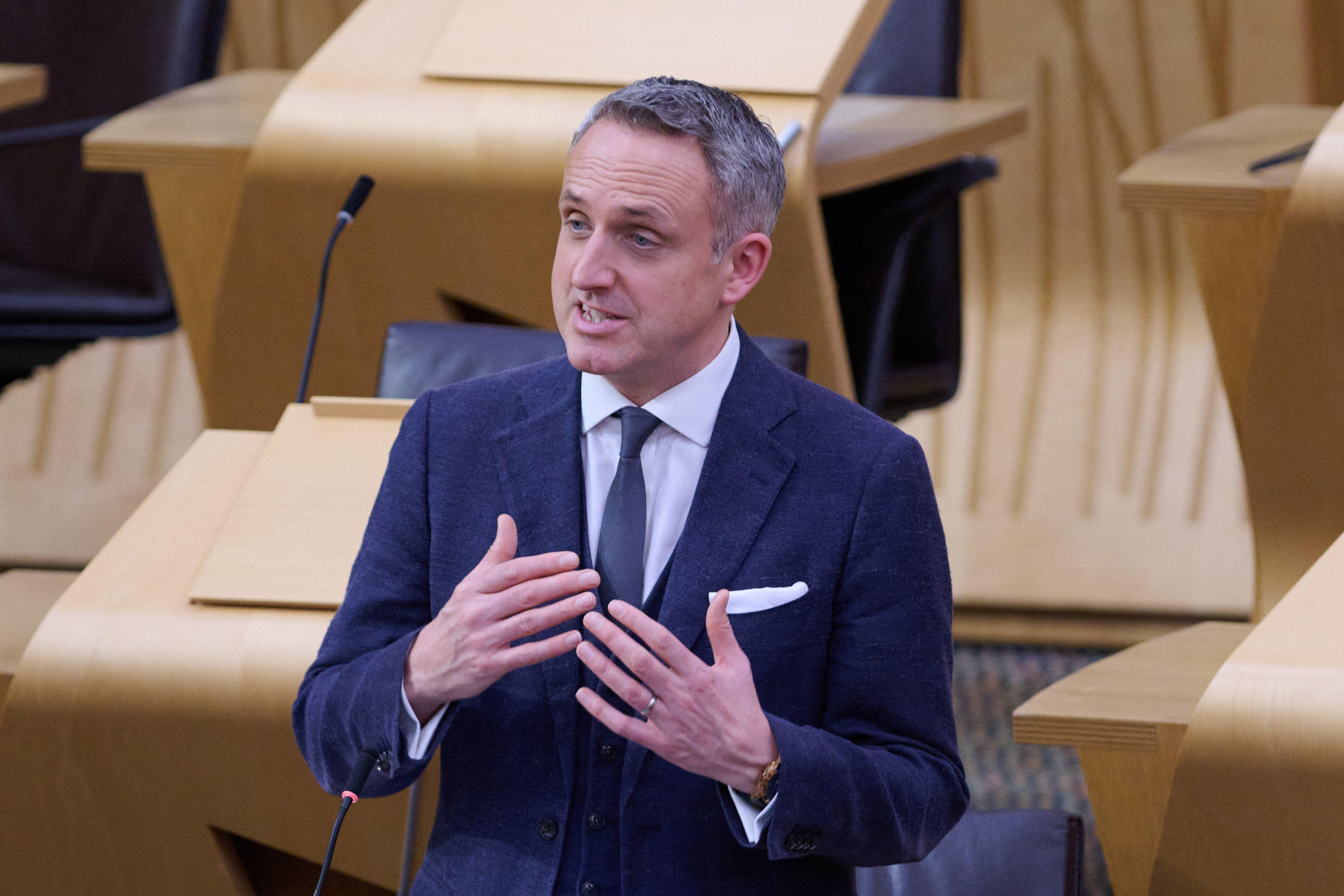
Scottish Lib Dems leader Alex Cole-Hamilton | Alamy
“We need a step-change to protect against climate change, to reduce poverty, and to create a flourishing society. The high inequalities and poverty in Scotland are generating unsustainable demands on our public services.”
Delivering her budget, Robison said: “Our ambition is for a society that is strong and an economy that is flourishing.”
It includes rates relief for hospitality, retail and tourism firms, as well as separate action for island companies, and targeted investment in the Grangemouth industrial cluster. Parliamentary debates are expected next month.
The Scottish Greens have praised commitments for a jet tax and new council tax bands for homes worth more than £1m but are pushing the government to “go further” and cut transport and childcare costs to “save families money”. The Lib Dems said measures including £36m business rates relief, £2.5m backing for young entrepreneurs and £651m college funding are down to them but warned they would squeeze ministers “for every penny”.
But the Tories have accused the government of treating economic growth like “an afterthought” and “stifling Scotland’s economic performance by making it harder and harder for businesses to recruit and retain skilled individuals” through a tax system that diverges from that of the rest of the UK.
It’s in the interests of the whole country that, between them, they get this right.
Holyrood Newsletters
Holyrood provides comprehensive coverage of Scottish politics, offering award-winning reporting and analysis: Subscribe