Keir Starmer's days might be numbered but don't expect the PM to go quietly
Situated in England’s north west between Manchester and Liverpool, the constituency of Makerfield has not previously been known for political high drama. Since its formation in 1983 it has been solidly Labour, as safe a seat as you’re likely to find anywhere in the country. But times are changing. When Tony Blair was swept to power in 1997, local MP Ian McCartney, a Scot born to a Labour politician father and trade unionist mother, held the seat with a majority of more than 26,000. By the time Josh Simons entered the Commons in 2024, one of 412 Labour MPs returned in Keir Starmer’s “loveless landslide”, that majority had fallen to just over 5,000.
Now Makerfield is set to host one of the most consequential by-elections in living memory, a vote not only on the performance of Starmer’s government and its ability to see off an insurgent threat from Nigel Farage’s Reform UK, but a referendum of sorts on the man who seeks to replace the PM, Manchester mayor Andy Burnham.
Blocked from putting his name forward in the recent Gorton and Denton by-election where Labour came third behind the Greens and Reform, Burnham has been cleared to stand in Makerfield after Simons made way by standing down to stop his party “imploding”.
That’s because, less than two years on from its general election victory, Labour is now facing an existential crisis. Returned on a promise of ‘change’ after 14 years of Tory rule, the party has so far failed to deliver, obscuring its limited successes with high-profile missteps and belated U-turns. While there have been grumbles of unrest among Labour MPs about Starmer’s leadership almost from day one of his premiership, they became noisier amid the scandal over Peter Mandelson’s appointment as US ambassador and reached fever pitch following a dire set of election results earlier this month in England, Scotland and Wales. For many in the party, now is the time to act if they are to prevent Farage entering 10 Downing Street at the next election.
It was Wes Streeting who blinked first, resigning as health secretary the day after a 17-minute meeting with Starmer that came just hours before the King’s Speech set out the government’s upcoming legislative agenda. Referring to the success of the SNP at Holyrood and Plaid Cymru in the Senedd, Streeting warned of the threat to the “future integrity” of the UK and the rise of “dangerous English nationalism” under Farage.
“Where we need vision, we have a vacuum,” he said in his resignation letter to the PM. “Where we need direction, we have drift… It is now clear that you will not lead the Labour Party into the next general election and that Labour MPs and Labour unions want the debate about what comes next to be a battle of ideas, not of personalities or petty factionalism. It needs to be broad, and it needs the best possible field of candidates. I support that approach and I hope that you will facilitate this.”
It was clear what Streeting meant by that broad field of candidates – one which includes Burnham but also former deputy prime minister Angela Rayner, whose recent tax issue has now been resolved. It was later the same day that Simons announced his decision to stand down, presenting the first of those two candidates with a possible route back to Westminster.
A former health secretary under Gordon Brown, Burnham stood for the Labour leadership twice before, coming fourth out of five candidates in 2010 and then a distant second to Jeremy Corbyn in 2015. But he’s impressed during almost a decade as Manchester mayor and is the most popular Labour politician among both the party’s voters and the public at large. A recent poll by YouGov gave him a net approval rating of +4 compared with -46 for Starmer, -32 for Ed Miliband, -33 for Rayner and -28 for Streeting. According to pollster More In Common, Burnham has a 14-point lead over Farage when it comes to who the public want as the next PM. Starmer’s lead over the Reform leader is a more modest three points.
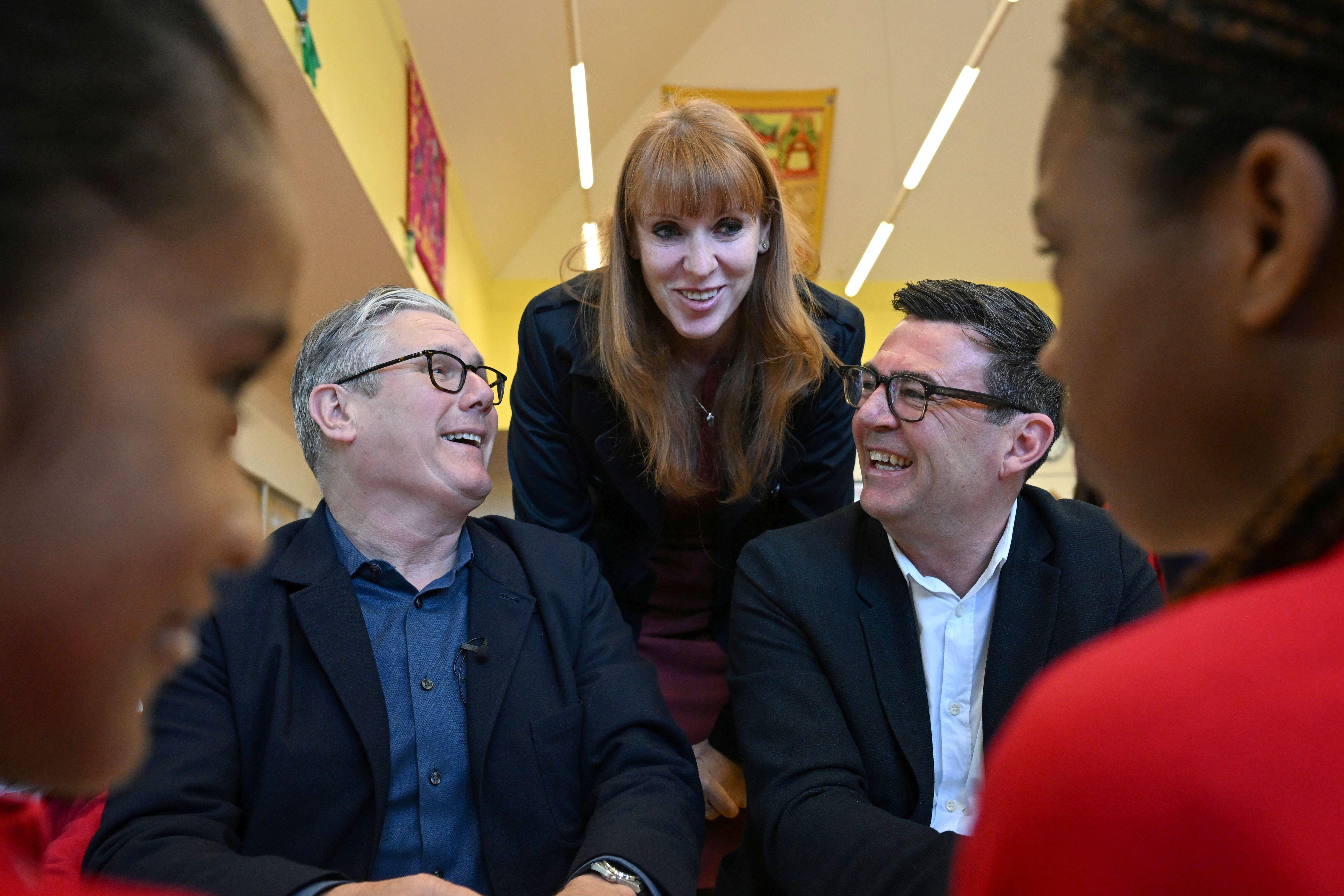 Starmer faces a potential leadership challenge from Angela Rayner and Andy Burnham | Alamy
A believer in proportional representation and responsible for the introduction of a £2 bus fare cap in Greater Manchester (an idea later adopted by the SNP), Burnham made headlines in January when he said the UK was “in hock to the bond markets”, leading to him being depicted as a dangerous leftist by the more hysterical sections of the London-based media. Even still, the value of the pound dropped by more than two per cent against the dollar during the week Burnham announced his decision to stand in the by-election. He later sought to reassure the markets that he would not scrap the government’s fiscal rules should he become Labour leader.
“Britain has been on the wrong path, 40 years on the wrong path, a path that has damaged communities across the north,” Burnham said in a speech at the Great North Investment Summit in Leeds last week. He said deindustrialisation in the 1980s had been “compounded by deregulation, privatisation in the 90s and austerity in the 2010s”.
“It all adds up to 40 years of neoliberalism that have not been kind to the north of England – 40 years of trickle-down economics that did not, in the end, trickle down very much at all…”
If that’s the sort of language we’ve come not to expect from Labour’s current risk-averse leadership, but those likely to challenge Starmer believe they need to become more radical to take on the incipient threat of Reform. Perhaps unhelpfully for Burnham, who’s standing in a seat where roughly two-thirds of people voted for Brexit, Labour leadership rival Streeting has done that by talking up the benefits of Britain rejoining the EU, calling for a new “special relationship” with Europe.
All of which gives at least a little insight into what Starmer’s being dealing with these past 22 months as he attempts to hold his fractious party together. And while the overall assessment of Starmerism is downbeat, there are undoubted successes, namely the decision to keep Britain out of the disastrous US-Israel conflict with Iran and the long overdue removal of the two-child benefit cap which is credited with lifting more than 400,000 children out of poverty. There have been other achievements too – the UK is currently the fastest growing economy in the G7 and the International Monetary Fund (IMF) last week revised a gloomy assessment of Britain’s fiscal outlook, upgrading its growth forecast, albeit from 0.8 per cent to one per cent.
And yet for most voters, things don’t feel any better than when Labour came to power in July 2024. The cost of living continues to bite, and the Iran war has pushed up inflation and the cost of borrowing. Starmer has made it clear that he will fight on and will attempt to see off any leadership challenge; the PM has been put in the awkward position of supporting his party’s candidate in Makerfield knowing that Burnham is coming for his job. Over 100 Labour MPs signed a letter of support for the prime minister earlier this month and his defenestration is not yet a fait accompli. But the current occupant of Number 10 has lost the backing of an increasingly fickle public who were promised change and have grown impatient waiting to see some.
It was partly that lack of progress that so hurt Scottish Labour leader Anas Sarwar at this month’s Holyrood election. Despite exercising the nuclear option, calling for Starmer to go in a hastily organised speech back in February, the Scottish party nevertheless struggled to dispel the taint of ineptitude that has marked Labour in power. Arriving at the Glasgow count with just a handful of seats declared across the country, Sarwar conceded defeat, telling journalists his party was “hurting”.
But while it surely would have been better for Labour had the Holyrood election come before the general election – after all, Sarwar’s party had been leading in the polls until that point – there are also questions for the leadership in Scotland about the campaign it ran and whether the duo of Sarwar and deputy Jackie Baillie are the best people to take it forward. Along with Scottish Conservative leader Russell Findlay, whose party went from the second biggest at Holyrood to fourth behind the Greens, Sarwar has decided to continue in post for now as Scottish Labour attempts to take stock. Coordinated by Scottish Secretary Douglas Alexander, the party’s election campaign focussed exclusively on the constituency vote, ignoring the peach ballot and the regional list targeted so effectively by others. The limitations of that strategy were evident in Sarwar’s own target constituency where he was easily beaten into second place by the SNP’s Zen Ghani, Labour’s vote share falling by four per cent in the process.
For the SNP, which went into 7 May promising that a vote for it would help remove Starmer from Downing Street, the election has helped maintain its near 20-year grip on power. John Swinney has much to be pleased about, although he fell short of the majority he said would give him a mandate for a second vote on independence and currently has no mechanism for securing a referendum. The first minister has sought to address the cost of living with a price cap on essential food items and says his party will bring forward a bill within the first 100 days of this parliament. After initially dismissing the plan as “undeliverable”, the UK Government is now reported to be considering something similar.
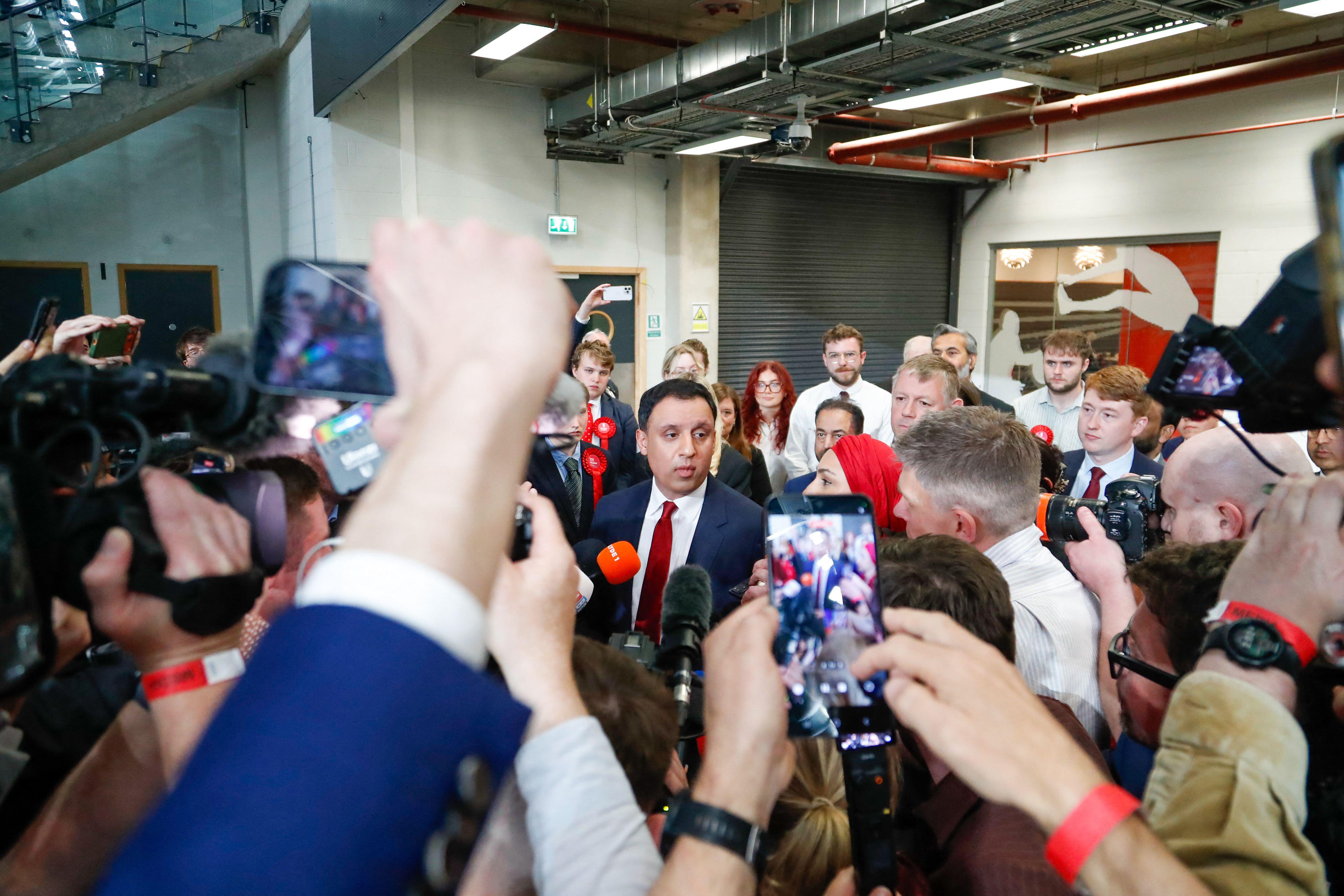 Anas Sarwar effectively conceded defeat on arriving at the Glasgow count | Alamy
Swinney, who had only previously led his party into election defeats both at Holyrood and Westminster, will be forgiven for wanting time to bask in the glow of victory. However, it remains to be seen whether he will serve a full term, especially with ambitious MSPs such as Mairi McAllan and Stephen Flynn waiting in the wings. And he’ll need all his political nous to build consensus across the chamber as his minority administration seeks to move ahead with its legislative agenda.
After a decade of tumult in British politics, Labour’s pitch was one of stability, of grown-up government after the freewheeling of Boris Johnson and the nosediving of Liz Truss. As we approach the halfway point of this parliament, there are signs not only of the fracturing of Westminster’s two-party system but growing unhappiness in the devolved nations at the UK status quo. Amid populist challenges on both the left and right of British politics, the Labour Party now finds itself in a diverting leadership struggle. Whoever emerges victorious has their work cut out.
Holyrood Newsletters
Holyrood provides comprehensive coverage of Scottish politics, offering award-winning reporting and analysis: Subscribe