Is Labour's Energy Independence Bill the beginning of the end for North Sea oil and gas?
Just under a mile in length, Aberdeen’s Union Street cuts through the heart of the city centre on its way eastwards to the harbour and the vessels which support the oil and gas industry. Like other once busy retail thoroughfares, namely Glasgow’s Sauchiehall Street, its fortunes have faded in recent years, with roughly a quarter of its shop units currently empty, the opening of a £275m mall just a few streets away in 2009 helping to hasten the decline. But Union Street has also become emblematic of something bigger – the slowing of fossil fuel extraction in the North Sea and the as-yet unfulfilled promise of the renewables sector to replace the skilled jobs being lost.
Before Aberdeen was “the oil capital of Europe”, it was simply the Granite City, its monochrome architecture built from the stone quarried at Rubislaw, near to where some of the north east’s most expensive homes now stand. When the oil began flowing in the mid-1970s, it transformed not only the local area which had hitherto been reliant on traditional industries such as agriculture, fishing and shipbuilding, but the entire UK economy, creating thousands of well-paid jobs and generating billions in tax receipts.
But production peaked at the start of this century and Britain became a net importer of oil products in 2013. It is estimated that 75,000 jobs were lost from the UK’s oil and gas workforce between 2016 and 2024. For those made redundant not just in the North Sea but at Grangemouth and at the Mossmorran chemical plant in Fife, the ‘just transition’ long promised by politicians both at Holyrood and Westminster has failed to materialise, chillingly reminiscent of the pit closures of the 1980s and 1990s which left a generation of workers on the scrap heap.
When the SNP held its party conference at the vast P&J Live arena in 2023, the boarded-up shops on Union Street came as a surprise to many of the delegates staying in hotels in the city centre, particularly those who had long seen Aberdeen as an outlier, a place which had been insulated from the impacts of deindustrialisation felt elsewhere in Scotland. Indeed, then first minister Humza Yousaf used his keynote speech to allocate £400,000 in support of a campaign to help rejuvenate the street and attract new businesses. That same year Yousaf accused Rishi Sunak of “climate denial” when the Conservative prime minister announced the decision to award 100 new North Sea oil and gas licences.
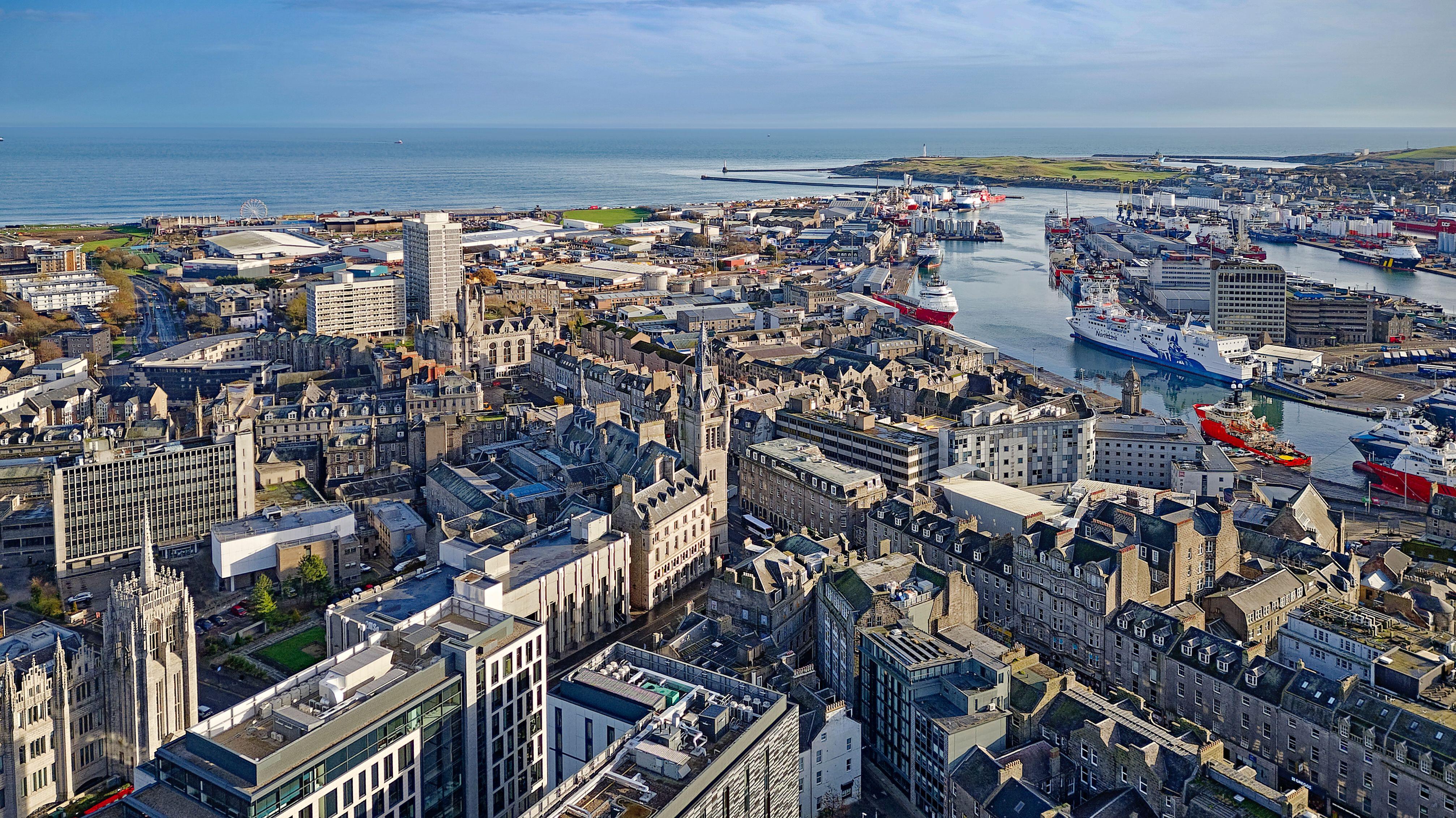 A view of Aberdeen city centre towards the harbour | John Bracegirdle
Under Yousaf’s successor, John Swinney, Scotland’s party of government for the past two decades is now slowly changing its tune. Nearly five years on from the Cop26 climate conference in Glasgow, the political consensus around net zero has all but broken down, the war in Ukraine and the conflict between the US and Iran creating a 1970s-style energy shock which saw the oil price hit $126 (£94) a barrel earlier this month and has already led some countries to ration supplies.
It was against this backdrop that the UK Government announced its intention to bring forward an energy independence bill in the King’s Speech, an attempt to “take back control” of Britain’s energy security, promoting renewables and new nuclear while bringing in measures that would effectively end new oil and gas licensing in the North Sea.
Fighting for his political future, Prime Minister Keir Starmer appeared to have ignored the advice coming from Washington where President Donald Trump told him to “open up the oil” in the North Sea. “I’ve told him from day one, you’re getting killed on energy,” Trump said. “You’re getting windmilled to death.”
After predicating its economic case for independence on North Sea oil in the run-up to the 2014 referendum, the SNP did a volte-face, adopting a presumption against any new drilling under the leadership of Nicola Sturgeon. But Swinney, whose new minority government will need to build cross-party consensus to pass bills, has taken a less ideological approach, giving cautious support to new drilling if it can be shown to be “climate compatible”. The SNP also sought to put the issue at the centre of its recent election campaign, contrasting the “squandering” of UK tax receipts with the creation of Norway’s $2.2tn sovereign wealth fund and repurposing its old battle cry from “It’s Scotland’s oil” to “It’s Scotland’s energy” as it pledged to lower bills with Scottish independence. The party’s former Westminster leader, Stephen Flynn, who was elected as an Aberdeen MSP on 7 May in an SNP clean sweep in the city, has been an outspoken critic of the UK Government’s Energy Profits Levy (EPL) and lobbied Scottish ministers in 2024 on behalf of an energy firm which donated £30,000 to his local party branch. He promised to be a “champion” of North Sea oil in the speech made straight after his election.
Just as the issue of immigration has become a dividing line in Scottish politics despite being reserved to Westminster, the question of oil and gas licensing and of energy more broadly looks set to become one of the major talking points of this Holyrood parliament. During an episode of the BBC’s Question Time filmed in Aberdeen ahead of the vote, the SNP’s Mairi McAllan told a sceptical-sounding studio audience her party supported “evidence-led” drilling in the North Sea. “If it can be demonstrated that it’s both climate compatible and required for energy security, then yes it should,” she answered when asked if new exploration should take place.
While a U-turn on the SNP’s previous position, it nevertheless remains more nuanced than Reform which not only wants to ramp up production in the North Sea but to scrap Scotland’s emissions targets, reintroduce open-cast coal mining and lift the UK-wide moratorium on fracking. At the other end of the political spectrum, the Scottish Greens want an immediate end to new oil and gas extraction, with priority given to renewables.
The ongoing United States-Israel war with Iran, which has effectively closed the Strait of Hormuz, has already led countries such as The Philippines and Pakistan to introduce emergency energy-saving measures. In the UK, concerns over supplies of jet fuel caused the government to introduce new contingency measures for airlines and controversially loosen sanctions on Russian oil. The war has further focused minds on Britain’s energy security, already in the spotlight following the invasion of Ukraine more than four years ago.
John Underhill, a professor of geoscience and energy transition at the University of Aberdeen, says the conflicts in Ukraine and in the Middle East are two “black swan events” which have helped re-shape the conversation about North Sea oil and gas.
“In the UK, we have taken energy largely for granted,” he says. “What’s happened with these events is that people are becoming more and more aware of the price of these commodities and where we get them from…”
Both Reform and the Conservatives have called for more drilling in the North Sea as a way of reducing energy bills at home. But while opening up new fields to exploration would have little impact on the price of what is an internationally traded commodity, Underhill says increased tax revenue coming to the Treasury as a result of ramped up production in the North Sea could be used to offset reductions in fuel duty or invested in the broader energy transition.
“If we are to import the same [amount of] oil and gas that we need, we would have no tax-raising powers, no revenue, so no opportunity to reduce bills,” Underhill says. “So you can make an argument that domestic supplies do have a potential to reduce bills.”
The current frontline between environmentalists and those in favour of more drilling lies 80 miles off the coast of Shetland. The Rosebank oil field is thought to contain between 300 and 500 million barrels of oil, enough for roughly 25 years of production. The PetroJarl Rosebank, a 95,000-tonne floating production vessel, is already in the North Sea after undergoing a recent refit in Dubai, and the first oil had been expected to flow by the end of the year. Final approval has been held up, however, by a Court of Session ruling which determined consent for both Rosebank and the Jackdaw gas field, 150 miles east of Aberdeen, had been granted unlawfully. In his written judgment published in early 2025, Lord Ericht said a more detailed assessment of the fields’ environmental impact was required.
Since then, campaign group Uplift has obtained legal advice warning the UK Government risks breaching the Geneva Conventions by giving the go-ahead for Rosebank due to links with the Israeli oil and gas firm Delek, the majority shareholder in Ithaca Energy, which owns 20 per cent of the oil field. The UN Human Rights Commissioner lists Delek on a database of businesses which have “supported the maintenance and existence” of illegal settlements in the West Bank.
Despite the legal challenges, there had appeared to be growing political consensus behind drilling at Rosebank, with the Greens unique among Scotland’s main parties in being explicitly opposed. But when the Tories forced a vote on both Rosebank and Jackdaw in the Commons last week, their motion was defeated by 323 votes to 108, leading shadow energy secretary Clare Coutinho to decry “the single greatest act of industrial self-harm we have seen in a generation”.
“When other parties claim that exploration in Rosebank will lower bills, they are actively misleading people, and they know it,” says the party’s co-leader Gillian Mackay.
That’s a view shared by Fatih Birol, executive director of the International Energy Agency (IEA), who recently told The Guardian the UK should forego remaining reserves in the North Sea and look to a future less reliant on fossil fuels, arguing the Iran conflict would re-shape forever the way countries regard energy security. “The vase is broken, the damage is done,” he said. “It will be very difficult to put the pieces back together.”
“The Climate Change Committee factors in that we will still need oil and gas in this country to 2050 and beyond,” says Underhill. “If we force the demand down, domestic supplies could make up more of the gap that we fill [currently] with imports.”
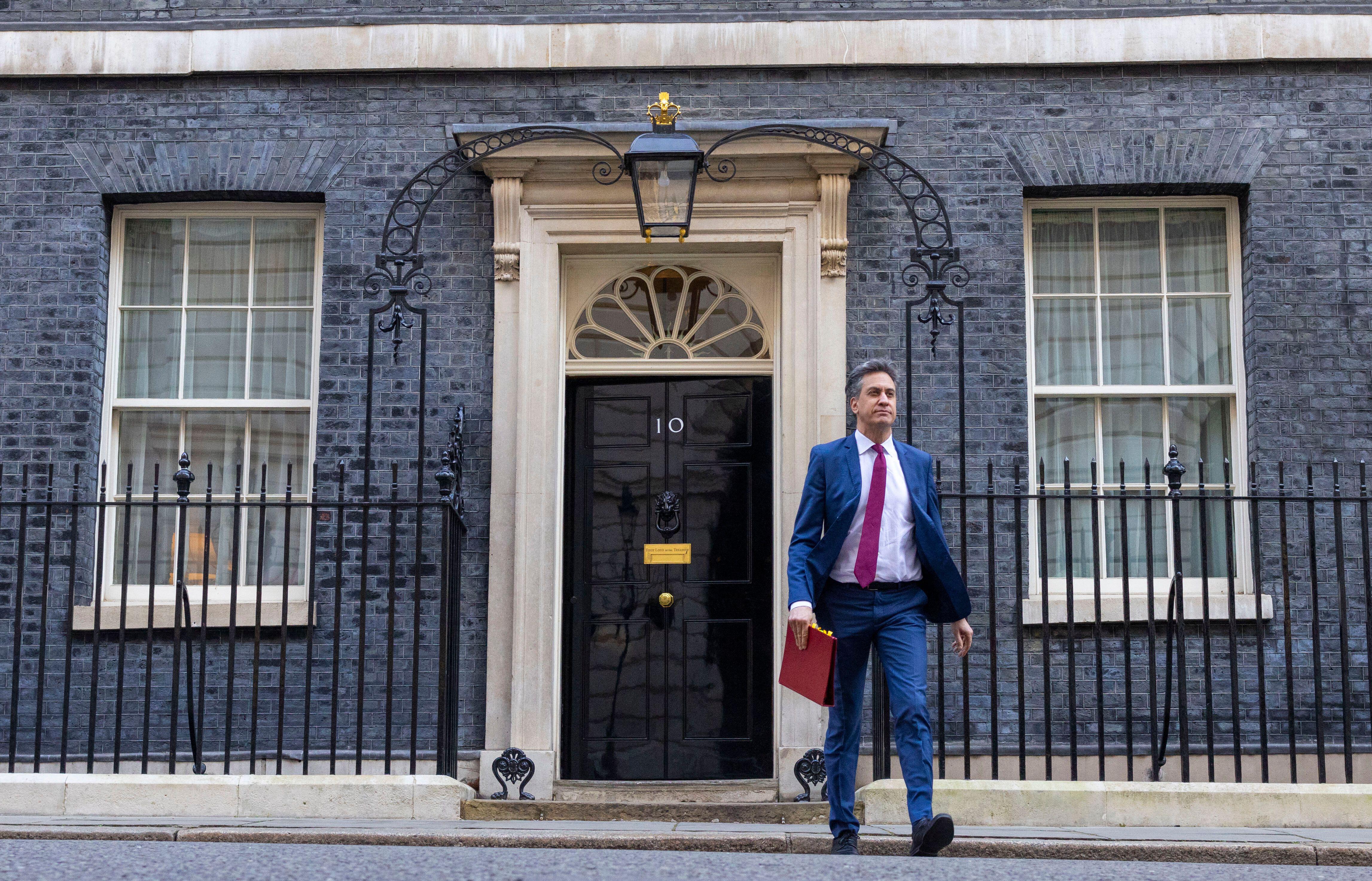 Energy secretary Ed Miliband has stuck firm to the position that there will be no new oil licences | Alamy
While the debate rages on, the impact of a declining basin and the decisions taken by multinational energy companies are being felt by workers in the here and now. In a report published last year, Westminster’s Scottish Affairs Committee called on the government to “avoid accelerating the decline” of production in the North Sea until the number of clean energy jobs being created matched those being lost in oil and gas. The report called on ministers to take a “pragmatic” approach to new licensing and consider reform of the EPL windfall tax.
“A just transition isn’t being delivered,” says Ewan Gibbs, a lecturer in economic and social history at the University of Glasgow. “We’ve seen that at Grangemouth, at Mossmorran, and offshore. The reality has been significant insecurity for energy workers. The big hope for the just transition was that opportunities were going to be created in onshore and offshore wind, which simply hasn’t been realised.”
Gibbs says there are “strong similarities” with the rapid deindustrialisation which took place during Margaret Thatcher’s premiership in the 1980s, particularly the sense that major decisions are being made outside of Scotland.
“I’m a historian of deindustrialisation; I’ve written about coal mine and factory closures and other major job losses in the 1980s which are still well remembered,” he says. “It does seem like we’re living through a frighteningly similar parallel…”
The irony is that all this is happening in a world where oil remains a much sought-after commodity, the price of a barrel of Brent crude nudging record highs amid the continued uncertainty in the Middle East. BP, which is reported to be mulling over a potential exit from the North Sea, a divestment which could be worth up to £2bn, last month reported a doubling of profits for the first three months of the year amid the conflict in Iran. Energy secretary Ed Miliband faced a backlash from the industry when he used that news to tweet in defence of the government’s windfall tax, saying it was “morally and economically wrong” to profit from the crisis. He later deleted the social media post. BP said its trading business – which is not subject to the profits levy – had done well but its upstream production, which includes oil and gas production, had been flat.
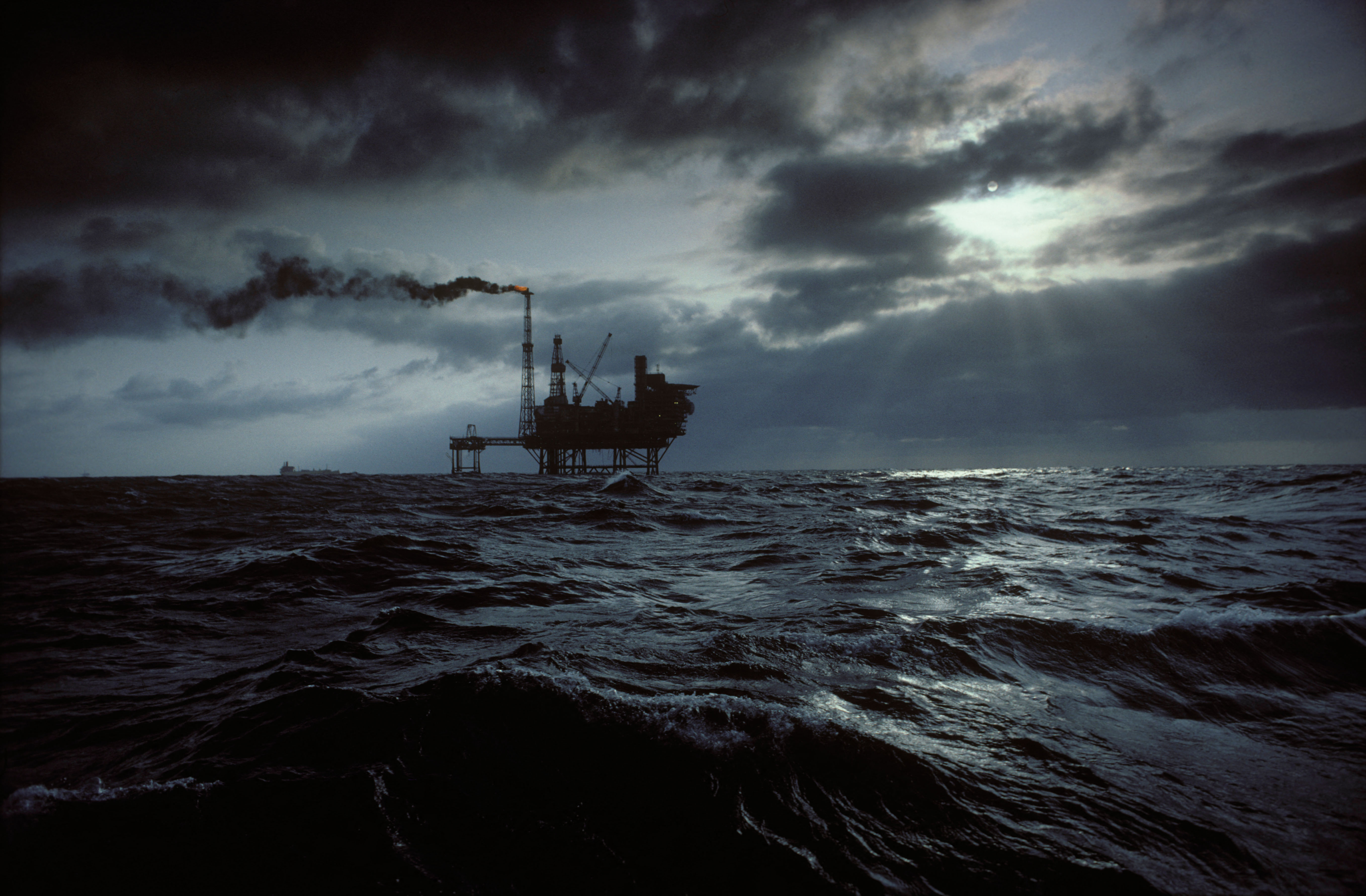
Labour has been accused of 'closing down' the North Sea in the King's Speech | Alamy
After a lacklustre election campaign which failed to fire the public imagination, John Swinney finds himself back in Bute House, his party down a handful of MSPs but still by far the largest at Holyrood. However, where once there was a consensus about net zero and reducing the reliance on fossil fuels, Scotland’s parliament now represents the full gamut of opinion on the future of oil and gas. The pledge to reduce emissions by 75 per cent by 2030 – considered unachievable by the independent Climate Change Committee – has been scrapped, replaced by a series of five-year carbon budgets leading up to the goal of net zero by 2045. But with his minority administration now forced to work with other parties across the chamber, Swinney could find agreement hard to come by for the kind of energy transition his party wants to see.
That transition includes the establishment of a ScotWind wealth fund nearly 20 years on from former first minister Alex Salmond’s promise to turn Scotland into the “Saudi Arabia of renewables”. Under the plan, revenues from successive leasing rounds will be invested back into public services. There’s also a commitment from the SNP to deliver a £500m Just Transition Fund as well as help accelerate investment in offshore wind, solar, pumped storage and any other emerging technologies. The party will retain what Scottish Labour calls its “ideological block” to new nuclear power stations.
For its part, the UK Government set up GB Energy to invest in and develop renewables. Headquartered in Aberdeen, the publicly owned energy company – once an idea of the SNP – has got off to a slow start but now has 120 members of staff, up from just nine permanent posts and 15 jobs “on loan” in late 2025. The agency’s boss, Jurgen Maier, recently rejected suggestions that increased domestic production of oil and gas could reduce UK energy bills, but he backed “more North Sea oil production” because it slowed jobs losses, supported supply chains and brought in tax revenue.
There are concerns too among those working in Scotland’s renewables sector about some of the current challenges facing the industry. Last month, offshore wind company Ocean Winds warned the current system of transmission charges was “harming existing Scottish projects and actively undermining future investment” because it places an increased burden on projects located furthest from centres of electricity demand.
The uncertainties in global energy supply are already having an impact on the economy, with forecasts the UK could enter recession later this year if the conflict in Iran continues. Analysis by financial services firm EY suggests as a result of the conflict in the Middle East, UK growth will fall from 1.3 per cent to 0.8 per cent this year. If the Strait of Hormuz remains closed until the end of the year, that figure could fall even further – to 0.3 per cent.
Underhill says it’s time for a regulator across all the UK’s energy technologies which can take decisions independent of government, similar to the fiscal role played by the Bank of England.
“Energy is so important to Scotland and the UK,” he says. “Having these short-term political cycles and it becoming a bit of a political football is not actually in our long-term interests.”
Holyrood Newsletters
Holyrood provides comprehensive coverage of Scottish politics, offering award-winning reporting and analysis: Subscribe