'If we have more women and girls being active, every part of our society will improve'
I haven’t played netball in 20 years – not since taking part in PE at school was mandatory. Even though the sport was one of the few my school offered that I didn’t hate – my height meant I wasn’t totally awful in defence – I was very much looking forward to not having to participate anymore. PE was for a me a twice-weekly exercise in clumsy embarrassment.
Yet here I find myself at the Donald Dewar leisure centre in Glasgow at the start of July, willingly attending a RecNet (recreational netball) taster session. Admittedly, I’m here for the purposes of this feature rather than for the sport. But even so, teenage me would be amazed.
There’s 14 of us in total – different ages, different levels of fitness, different netball abilities. A couple of the people play regularly, but most of the folk haven’t played since school. We’re all here for a bit of fun, a bit of exercise, and the chance to meet new people. We start with an easy warm-up, followed by some drills, and then we separate into pinks versus blues for a match.
I’m on wing defence. I manage a few successful passes and interceptions, and I’m surprised to find I’m enjoying myself. Whenever either team scores, we all applaud. No one is keeping score and the coach, Hannah, is cheering us on.
Not many people come away without having a wee bit of a red face and a lot of fun and a lot of giggles
Netball is an unusual sport, in that it is one of few dominated by women and girls. Only one man has turned up to this RecNet sesion, despite it being advertised as open to all. That makes a difference to the atmosphere. It feels incredibly female-friendly in a way that few other sports, or even the gym, manage.
That reputation, according to Carol Harvey, the director of development at Netball Scotland, begins early. “Traditionally girls get to experience netball from primary school. That’s certainly when I started and where most women have started playing… There’s a great love of the sport and I think because it’s traditionally a female-led sport, that attracts women and women want to play in that environment.”
She says that while netball is a team sport, the environment at the grassroots level is not a competitive one, at least not in the same way you often see in sports dominated by men. Instead, the focus is on “women and girls lifting each other up”.
Harvey continues: “People don’t want to play to win, they don’t want to play in a league, they don’t want the stress of all of that, but because it’s a team sport, generally there is an element of you playing to score as many goals, so there’s an element of it but it’s done in a safe, welcoming and inclusive environment and therein lies the difference.
“It’s absolutely welcome for everybody to come back or start for the first time and it really is great fun… You’re moving, you’re active and it’s the social aspect of all of this, as well, because not many people come away without having a wee bit of a red face and a lot of fun and a lot of giggles, because there’s invariably something that happens that makes people laugh or bond and they meet new people and that’s a good thing.”
That’s not to say there isn’t a competitive scene. Netball is one of the sports at this year’s Commonwealth Games, with Team Scotland opening the competition with a match against New Zealand on Saturday 25 July at Glasgow’s Hydro. And that’s not all the Scottish Thistles – the name of the national team – have to focus on this year, with World Cup qualifying games taking place in the autumn.
Utopia is that we have everything happening everywhere all at once
But Netball Scotland hopes to be able to use the interest around these big-ticket events to encourage more women and girls to give the sport a try (or re-try). It is part of the Scottish Government’s broader Summer of Sport initiative. Harvey says: “We have got everything happening in and around Glasgow for the next six weeks and beyond. We’ve got walking netball sessions throughout the city. We’ve got cerebral palsy come-and-try sessions. We have RecNet. We’ve also got drop-ins for young people 11-16 or the Primary 4-7 age group.
“But we also work in all areas of Scotland. We have a development officer up in Shetland. We have links into all the local associations in all 32 local authority areas. We have relationships either directly with them or with clubs. Not all, but most of them will have some provision of netball. I’m not saying that there’s walking netball in every one of them, but there will be some form of netball provision. Utopia is that we have everything happening everywhere all at once.”
Sessions like this, and the reputation of being a women’s sport, is why Netball Scotland has enjoyed “huge success” in encouraging women and girls to be physically active, Harvey says.
But the gender gap in participation rates across all sports and physical activity has proven a difficult one to close. This is a problem that starts during the teenage years. According to the most recent Scottish Health Survey, the proportion of children meeting the level of physical activity recommended by the chief medical officer ranges between 67 and 83 per cent. But for girls aged 13-15, that drops to just 43 per cent.
The gap narrows as people get older, but males still generally report higher levels of activity than females. The health survey found that while two-thirds of men (66 per cent) get their recommended level of physical activity, only 58 per cent of women do.
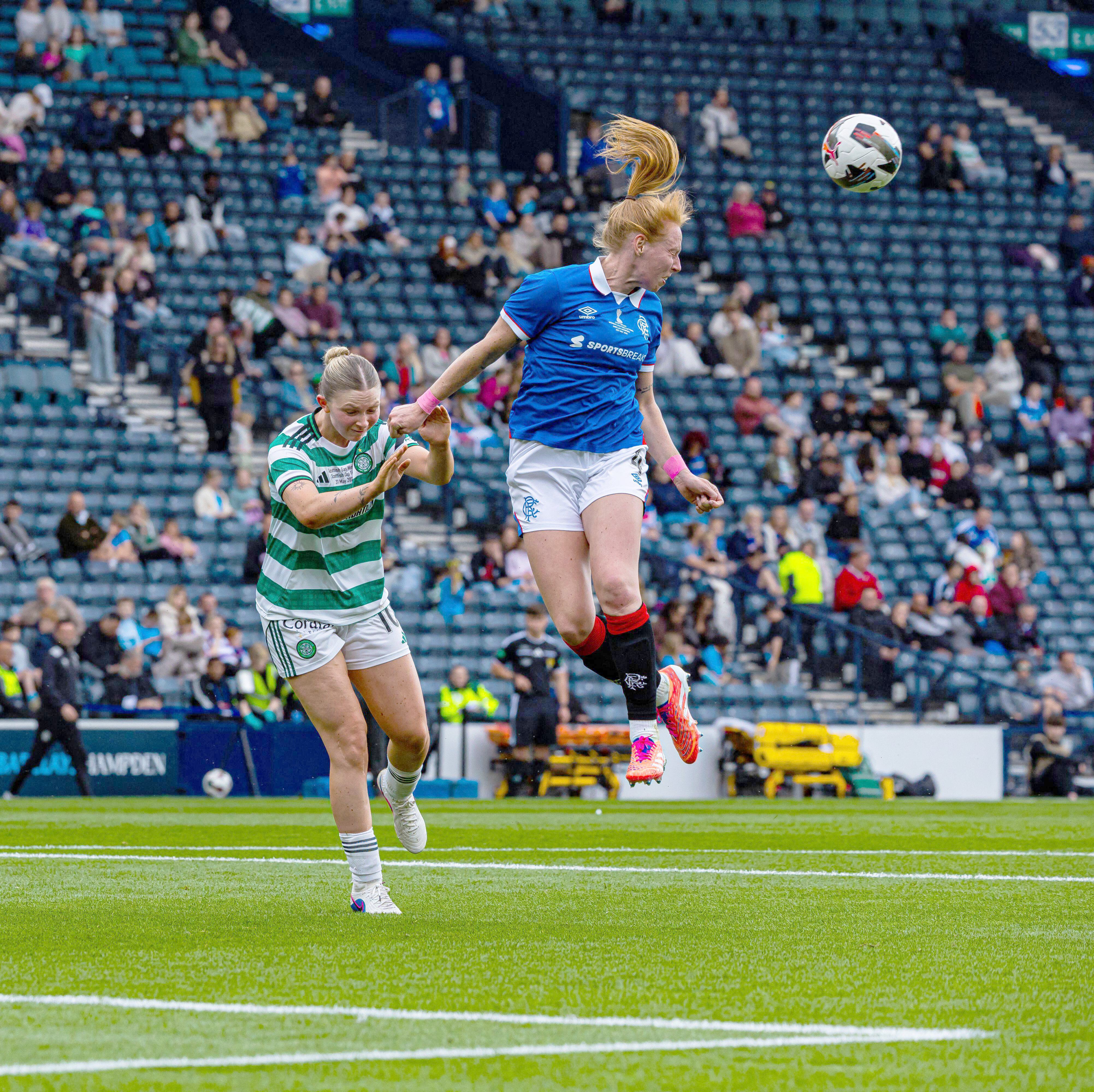 Football has becoming increasingly popular | Credit: Alamy
Asked what the barriers are to women and girls, Harvey says time, cost and visibility all play a part. Women are usually the primary caregivers, and keeping active “seems to go down the priority list”. Cost can both prevent some women from taking part, while at a club level indoor facilities are “eye-watering”. That limits how often and when sessions can take place, as well as club expansion. And on the visibility side of things, Harvey says netball has a “vibrant community” but not everyone knows about it – and “you can’t be what you can’t see”.
Similar themes were picked up by the Scottish Government’s National Advisory Council on Women and Girls and the separate Women and Girls in Sport Advisory Board, both of which were set up during Nicola Sturgeon’s time in government. In addition, a briefing by the former concluded that “experiences of physical education, lack of self-esteem and body confidence, poor changing facilities and influence of family and peers have all been found to be barriers”.
And in a 2019 report titled Levelling the Playing Field, the sports advisory board made three recommendations on improving leadership, implementing policy and service delivery changes, and establishing a Scottish Sport Media Summit to “discuss, review and challenge” media coverage of women’s sport.
That summit has not yet surfaced, a point picked up by the parliament’s health committee’s inquiry in the last session. Sports minister Maree Todd told the committee in December 2023 that she would keep MSPs updated on progress, but two and half years on, no summit has been held.
Heather Dewar, an award-winning sports journalist, says media coverage of women’s sport has markedly improved across her decades-long career. A major turning point, she says, was in 2019 when the BBC created a dedicated strand to a women’s summer of sport.
Dewar herself filled one of the jobs created as part of this. It meant there was a “really dedicated and really focused” effort to highlight a multitude of sporting events, including the Fifa World Cup, golf’s Solheim Cup hosted at Gleneagles, the Cycling Tour of Britain and the Netball World Cup. Unfortunately, Dewar’s role was “kiboshed” in 2020 when Covid hit, but she says broadcasters generally – and the BBC in particular – have continued to showcase women’s professional sport.
Sport in a way is becoming much more middle class than it has been before
There is, however, still a gap in newspaper coverage, Dewar says, and particularly around “what happens in between those big showpiece events”. This is due to the click-driven nature of print journalism, with many stories about women’s sports garnering less interest among readers. “The question has to be, is that right? And ultimately, how does that help grow interest in women’s sport if you can’t see it?”
The responsibility for pushing more sports stories which feature women forward partly falls to the governing bodies, she says, who need to work with journalists on how to promote sports with “personality-led” stories.
This matters because it shows women and girls that sport and physical activity is for them. She praises a lot of the good work being done on social media and YouTube channels which target younger generations. But Dewar also says there is then an issue with how that interest “translates into the real world”.
As Harvey said, access and affordability are increasingly the biggest barriers. Dewar says: “People are wanting to take part in sport and for their kids to do sport, but simply are not able to afford £90 to £150 a term, £250 a year, whatever it might be. Boys football is exactly the same. Sport in a way is becoming much more middle class than it has been before, because it’s becoming something that more and more people who are on lower earnings simply can’t afford to do.”
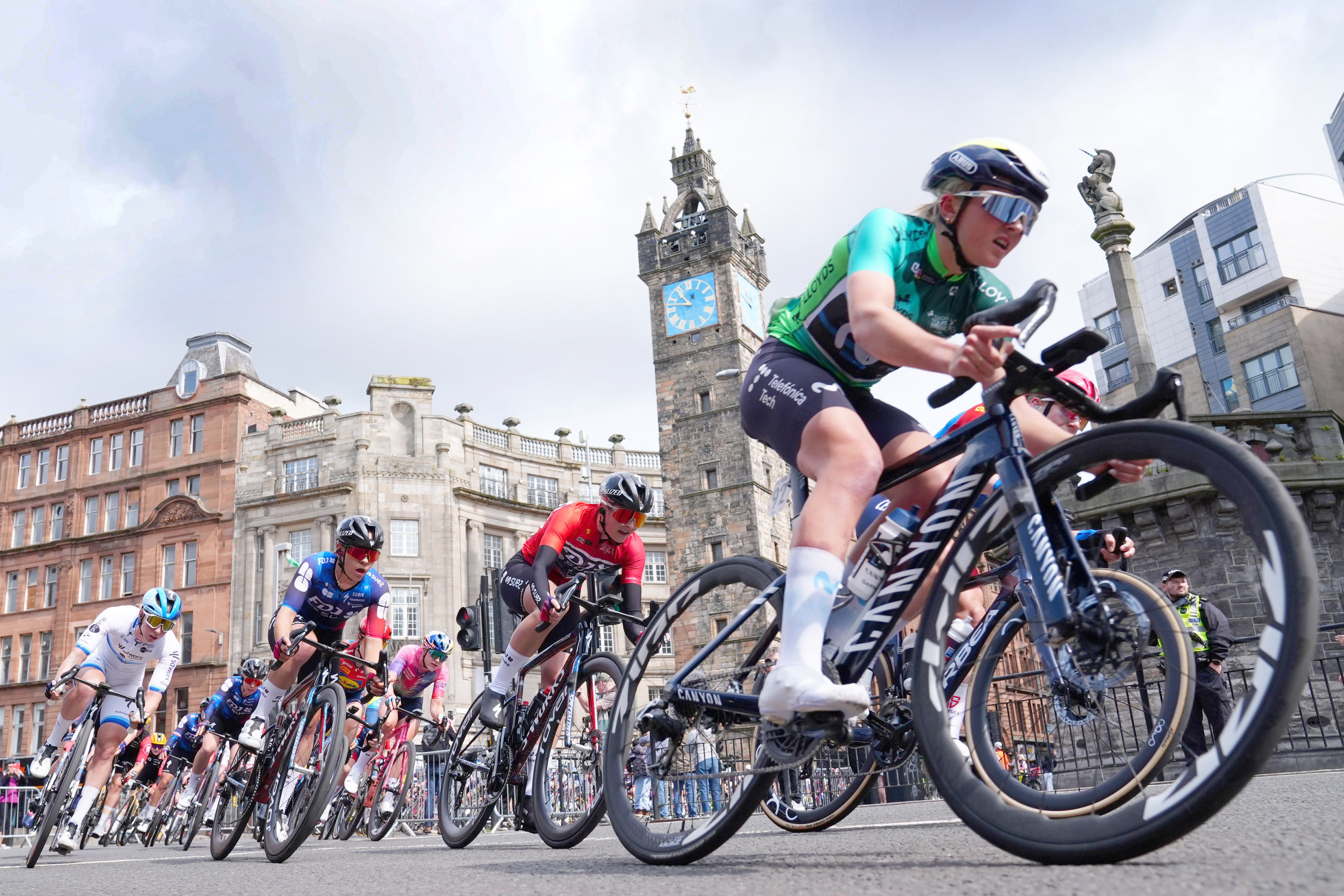 Stage four of the 2025 Lloyds Tour of Britain Women in Glasgow, 2025 | Alamy
One driver of these increasing costs is the static budgets for sports from the government over several years. A number of governing bodies banded together to launch the Running on Empty campaign last year, urging Scottish ministers to increase the budget. A survey of 30 sports organisations found 88 per cent of them were concerned about their future without more cash – and a quarter of them were specifically worried about the impact this would have on the inclusion of women and girls.
The Scottish Government did respond to these calls for 2025-26. Then finance secretary Shona Robison increased core funding by £20m, while a further £20m was set aside for one-off Summer of Sport activity.
Kim Atkinson, the outgoing chief of the Scottish Sports Association (SSA), welcomed this. “The new investment in sport presents an opportunity. And let’s be clear, the investment is enormously welcome. A number of us, the SSA included, along with a number of other partners, were campaigning for a very long time for the government to deliver on a commitment [to prioritise sport].
“But at the end of the day, yes, it’s a £20m sustained increase in sport, but the £40m pot isn’t all sustained. £20m of that is one-off investment. I think that presents a huge number of opportunities, but I think we also need to be clear that if we’re taking women and girls in sport as seriously as we would all like to – and I genuinely think that is a cross-portfolio, cross-sector, cross-partner, cross-agency priority – we need to recognise that there’s additional costs in making that happen because women and girls face two different kinds of barriers from a sport and physical activity point of view. Some of those are specific to women and girls, and some of those are barriers that everybody else faces too but they’re exacerbated for women and girls.”
I most fundamentally believe this is everyone’s responsibility
She points to facilities as a good example of these double barriers. Plenty of them are “not up to scratch” and need investment, which impacts everyone, but in addition to that some facilities don’t have women’s changing rooms. There is also a separate issue around the cost-of-living crisis making people more time poor; again, an issue for everyone but also one that hits women harder due to other competing pressures on their time.
Atkinson does point to a number of positive improvements, however, namely that getting women and girls involved in sports has become a priority for many governing bodies, and “they’re seeing new opportunities to do things differently and how things connect differently”. This is helped by the fact there are more women on boards and in other decision-making positions. The SSA has been running its On Board for Sport programme for many years to tackle this specific issue.
Despite the improvements, there is still some way to go on leadership. Maureen McGonigle, chief executive of Scottish Women in Sport, says there is a “much bigger job to do” to ensure the sector is “diverse and inclusive”.
“It’s important that people who deliver sport for women and girls understand the issues they go through, [and] that they adapt,” McGonigle explains. “Whilst it looks good that a lot of governing bodies now have women on boards, it’s not balanced, it’s not equality. The issue that comes from that is a woman that goes into that environment on her own against twelve men, she’s fighting a big battle.”
And this isn’t just about investment in sport. Atkinson, who in August will start her new role as chief of Girlguiding Scotland, explains: “I most fundamentally believe this is everyone’s responsibility. If we have more women and girls being active, then every part of our society will improve… But in order to do that, a lot of the systematic barriers [that need to be addressed] aren’t within sport. They can be in transport, they can be in planning, they can be any number of other things. That would be one of my overriding messages: that it is everyone’s responsibility.
“We collectively need to see investment in sport, and investment in women and girls’ sport, as an investment and not as a cost line that keeps being moved or cut or juggled. If we culturally, as a society, take the investment in sport and take our prioritisation of sport and take our narrative in sport very differently, then I think we’re in a very different place.”
She continues: “My argument would be the beneficiary of investing in sport isn’t actually the sporting sector. It’s physical health, it’s mental health, it’s the economy, it’s justice, it’s education. They all reap the many benefits of people being active, yet we invest with a small pot here.
“We need to think about the role of sport and physical activity in prevention and again, that starts to become everybody’s responsibility, everybody starts to benefit, but also hopefully we just have a happier nation. Wouldn’t that be a nice thought?”
Holyrood Newsletters
Holyrood provides comprehensive coverage of Scottish politics, offering award-winning reporting and analysis: Subscribe