Standards Issue: Angela Constance and an unedifying saga
Justice secretary Angela Constance has 21 previous parliamentary roles. If rivals had their way, her current post would have been added to that list.
The circumstances are by now well-rehearsed: a citation in the chamber triggering weeks of political pressure and taking up precious parliamentary bandwidth; a cabinet secretary found to have breached the ministerial code, but only inadvertently; an apology that finally provided clarification, but failed to satisfy critics.
And all the while frustration building on both sides, with each convinced the other was missing the point – for Constance and the government, an opposition obsessed with point-scoring, and for that opposition, an administration that considers itself above the rules.
“When it comes to regrets, I certainly have a few,” Constance said, apologising with a ministerial statement. “This may be of little interest or consolation to members of the opposition,” she went on, “but, at the end of the day, the biggest critic of me is me.”
“It’s not been pleasant for her,” a friend told Holyrood, “but that’s the way they want to play it.”
It was on 16 September that Constance made her first misstep, quoting child sexual abuse expert Professor Alexis Jay in a parliamentary debate. North East Scotland MSP Liam Kerr was trying to amend the Victims, Witnesses, and Justice Reform (Scotland) Bill to include a requirement for a victims commissioner to conduct an investigation into “group-based child sexual exploitation”.
She said it, she didn’t want to admit it, we need to move on
Such work had been carried out by Edinburgh-born Jay in England in light of cover-ups by authorities there. And when further such work was called for down south, Jay said she would not support this, given the wealth of existing evidence, and that, on substantive action to tackle the problem, “people should just get on with it”.
It’s these words that got Constance into trouble. Opposing the call for a Scotland-wide inquiry, the justice secretary told the chamber that Jay “shares my view”, adding: “I contend that that is what the Scottish Government is doing right here, right now – we are getting on with the work that we need to do to protect children.”
It would take Freedom of Information releases for messages from Jay to be revealed, showing how she took issue with that characterisation. “You correctly quoted me,” Jay told Constance, but said that those words “had nothing to do with Mr Kerr’s amendment, or the position in Scotland, as could be interpreted from your statement”.
That was problem one. And when Constance and Jay were called to give evidence to the Education, Children and Young People Committee, it emerged the cabinet secretary had phoned Jay to apologise but had done so without a government official present in what would be ruled a second breach of the code.
When asked by committee convener Douglas Ross if the solo call was worthy of investigation, Constance said she didn’t think so. “I am not aware of ministers being prohibited from making personal calls,” she told the panel. “It will, as ever, be for others to make any judgement about my actions, behaviour or comments.”
And as the clamour for investigation continued, the Scottish Government’s Independent Advisers on the Ministerial Code finally stepped in just days before Christmas, saying an investigation would be carried out.
By then, the justice secretary had faced a vote of no confidence which was brought by the Conservatives amidst claims that victims of child sexual exploitation and their families had lost confidence in her. Thanks to SNP and Green votes, she survived.
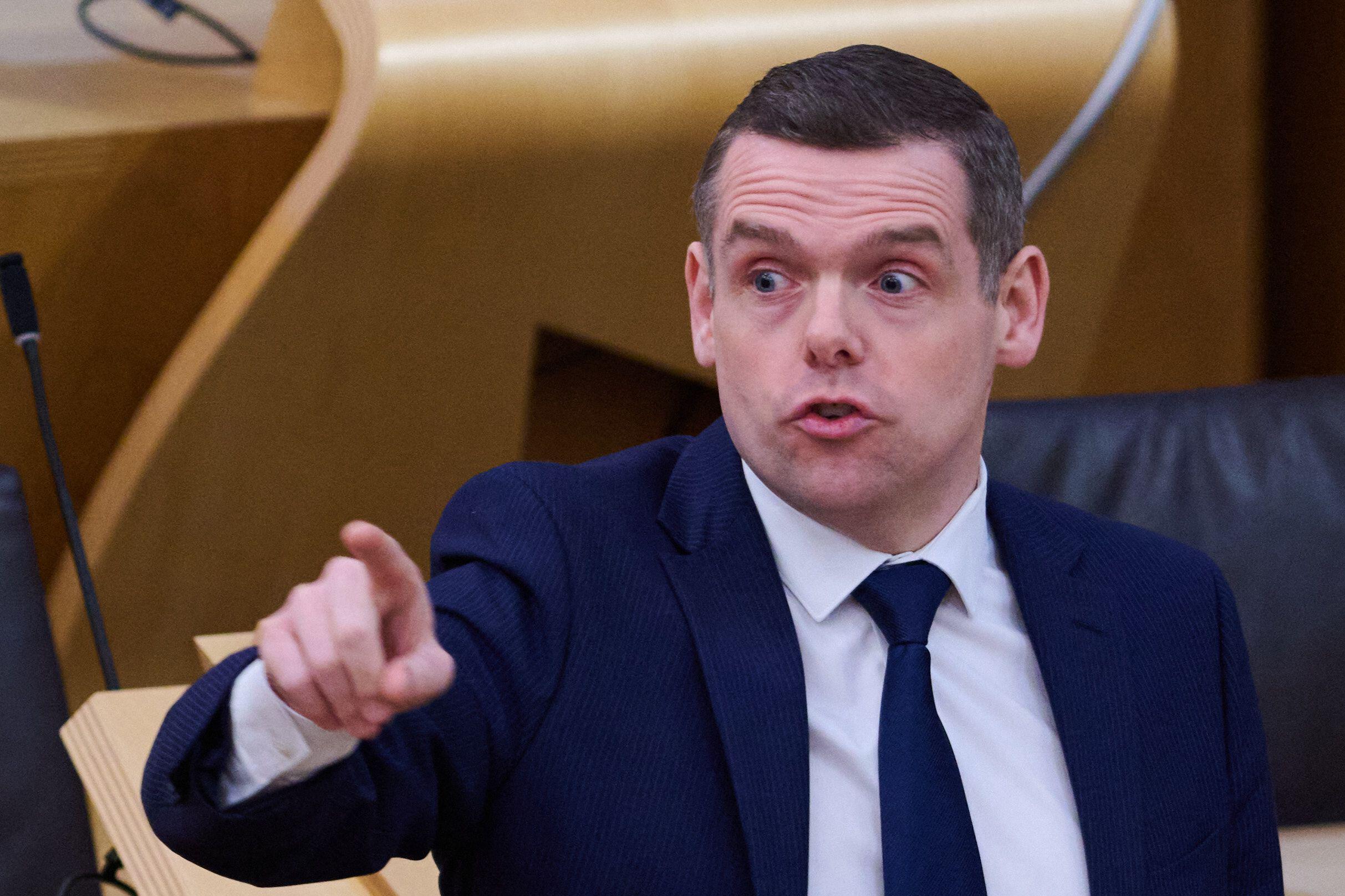
Douglas Ross MSP | Alamy
The advisers’ results were published as business resumed, and it was concluded that while Constance had committed two breaches of the ministerial code, these were at the “lower end of the spectrum” and had been made through “inadvertence”.
Apologising to parliament, Constance said she fully accepted the findings and should have corrected the official parliamentary record when Jay’s concerns emerged. “I have always stated that I did not intend to mislead parliament in any way,” Constance said, telling the chamber: “I hope that that addresses the matter in full and that we are all able to focus on how to effectively address and prevent the horrific and insidious criminality that is involved in the exploitation of children, and support victims.”
Throughout the affair it had been speculated that this would be the end of a varied government career, and a pre-election headache for Swinney. An MSP since 2007, the former social worker was a West Lothian Council member before entering Holyrood and has been given a portfolio by every SNP first minister.
Under Alex Salmond she became cabinet secretary for training, youth and women’s employment. She rose to become education and lifelong learning secretary under Nicola Sturgeon before taking on the communities, social security and equalities brief, then moving to drugs policy. Justice and home affairs followed after Humza Yousaf became FM, with John Swinney re-appointing her in May 2024.
The probe into her conduct was the first of its kind, having been instigated not through a referral from the first minister but by independent advisers themselves. That follows a 2024 rule change initiated by Swinney in a move which was welcomed by anti-corruption campaign Transparency International, which sought further reforms.
Still, the government has been accused of lacking transparency. “The saga has all the hallmarks of John Swinney’s government: cover-up over candour and self-preservation over integrity,” said Scottish Conservative leader Russell Findlay. If Swinney “will not do the right thing and sack her”, he asked after her apology to MSPs, “why will she not do the right thing and quit?”
such issues... do damage by distracting from the core agenda of the SNP government, especially now we are in an election year
For Scottish Labour leader Anas Sarwar, the Constance probe “should have been triggered by John Swinney”, not ethics watchdogs, “but instead he followed the culture that he has created from the top – one of secrecy and cover-up and putting his party before country every single time”. “This is the man who tried to withhold evidence from the Salmond inquiry,” Sarwar said, turning to previous Scottish Government dramas. “He defended Michael Matheson over the matter of the iPad bill, and he did the same now with Angela Constance.”
Sarwar said his party would “keep [its] options open” over a motion of no confidence on Constance. But any such motion would likely fall, thanks to the Scottish Greens. And, privately, Labour insiders concede the advisers’ findings mean the end of a challenge. “She said it, she didn’t want to admit it, we need to move on,” one told Holyrood.
And, on suggestions that the matter is a distraction from other business – not least the matter of tackling child sexual exploitation – the MSP suggested the government itself is to blame. “They’ve dragged it out. When they do that, you have to wonder what they want to distract you away from.”
Had Swinney been forced to replace Constance, it would have taken place just months before the Holyrood election – precious little time for a successor to get to grips with a portfolio that carries no small challenge, with prisons overflowing.
Even without this, there’s been speculation about how it all appears to the public. Do voters view the breaches as daft, forgivable errors or evidence of bigger, more sinister problems? Or does this all look like politicians talking about themselves? For Professor Jennifer Lees-Marshment, who teaches political marketing and management at the University of Dundee, that depends. “Voters are unlikely to be interested in the detail of such issues, but they do damage by distracting from the core agenda of the SNP government, especially now we are in an election year,” she said.
“One incident won’t matter but if there are any more similar concerns with MSPs’ conduct it could damage the brand image of the party which opposition parties are likely to exploit.
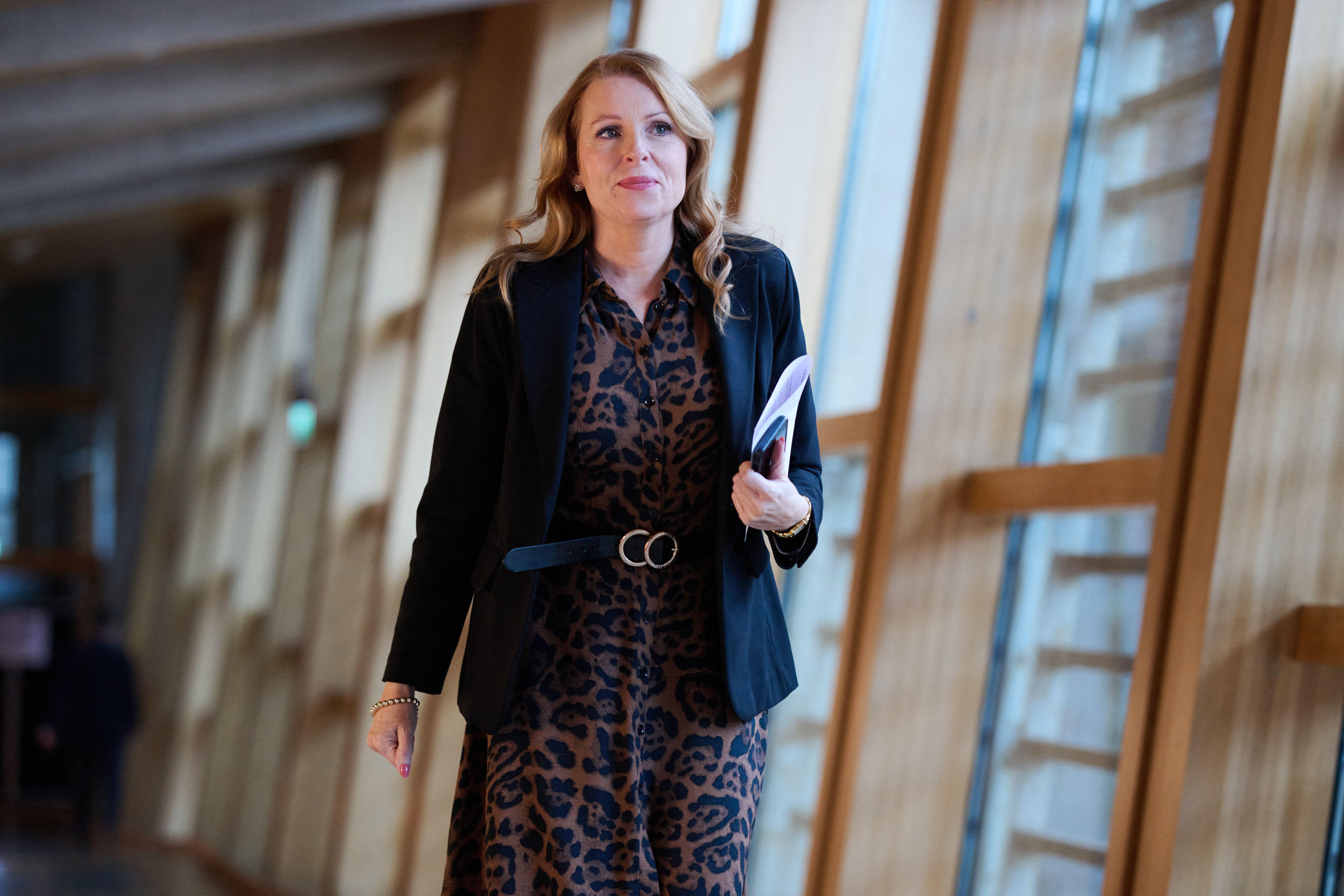
Ash Regan MSP | Alamy
“Voters could also link this incident to previous concerns under the Sturgeon leadership. The SNP has been in power for a long time now so has to go the extra mile to be seen as in touch, and not arrogant, if it is to secure a strong result in the 2026 election.
“But ultimately what really matters between now and May is whether Swinney can offer a refreshed set of policy proposals that address voters core concerns such as the cost of living and do so more effectively than the opposition parties.”
Constance’s troubles played out as a former colleague went through her own conduct battle. Independent MSP Ash Regan, once the SNP minister for community justice, was suspended from parliament for two days, not for comments made in the chamber or to a committee, but for a post on X.
In April, Regan told followers on the platform that she had “formally” reported Maggie Chapman of the Greens to the presiding officer and standards committee, after Chapman spoke out against the Supreme Court’s ruling in the For Women Scotland versus Scottish Ministers case relating to single-sex spaces and services. Ironically, this ended with censure for Regan herself.
She didn’t go through with the complaint, but the sheer mention of her intention was enough to mark a rule-breach, according to the unanimous opinion of the Standards, Procedures and Public Appointments Committee.
That verdict followed a report by the Commissioner for Ethical Standards in Public Life in Scotland, which was sparked by a complaint from a member of the public.
This has been the most febrile, disappointing parliament I’ve taken part in
The MSP code states that members must not “disclose, communicate or discuss any complaint or intention to make a complaint to or with members of the press or other media prior to the lodging of the complaint”.
The matter, according to a source close to Regan, is “absurd”. But when the issue went to MSPs for a vote, they backed her suspension by 84 votes to 18, with six abstentions.
The two cases are unconnected and were not assessed by the same panels. But the difference in outcomes between them is striking and has led to claims of double-standards. That MSPs voted on Regan’s fate on the same afternoon that Constance offered her apology has not helped. “People who are watching these proceedings will see a sanction being applied for a breach of the rules, which is to be a two-day suspension,” said Liam Kerr in parliament. “People will have been watching the parliament earlier on and will have seen that a cabinet secretary has been found, on two counts, to be in breach of the ministerial code, and has come before the parliament to give a statement and carry out the remedy that was advised in that case.
“I worry that people will be looking at these proceedings and asking whether the sanction that has been handed out by the committee is proportionate.”
Independent John Mason said Regan’s had been “a minor breach” and ex-Tory Jeremy Balfour called the sanction “totally disproportionate”. Chapman “brought the judiciary into disrepute and gets no punishment”, he said, adding that his Scottish Parliament colleagues had “got it wrong”.
Still others believe they see evidence that the parliamentary rulebook is being weaponised to score political points. “This has been the most febrile, disappointing parliament I’ve taken part in,” one veteran MSP told Holyrood with a shake of the head.
Holyrood Newsletters
Holyrood provides comprehensive coverage of Scottish politics, offering award-winning reporting and analysis: Subscribe