Renfrewshire North and Cardonald: The new constituency where voters are struggling to pick a side
The graffiti under the railway bridge reads: “You are Now Entering Free Cardonald.”
If the Glasgow district is serious about its independence, someone had better tell the Scottish Parliament. As far as it’s concerned, this place is about to elect a brand spanking new MSP, alongside the rest of Scotland.
Still, the self-appointed authorities of ‘Free Cardonald’ have been working on their signage. “Cross this line and you love the Pope,” declares a message written at the only exit away from the platform. A clutch of pedestrians trudges up the concrete steps as traffic crawls along the adjacent M8 motorway.
This is a community on the edge of Scotland’s biggest city, and if it’s in the grip of an identity crisis, who can blame it? After all, it’s just been shoehorned into a new Scottish Parliament constituency, Renfrewshire North and Cardonald, which means it’s part of the same 10-mile long seat as the tiny hillside village of Langbank.
“Langbank, where’s that?” a woman asks. She’s on her way to the supermarket and has been applying for a new house. “I need a move but there’s nothing,” she says. “I’m even looking outside of Glasgow.”
In a way, so is this district and its neighbours Mosspark, Corkerhill and Hillington. All part of the Glasgow City Council area, they’ve been rebadged at Holyrood level, bundled up with Renfrew, Erskine, Inchinnan, Bishopton and toaty wee Langbank, a place so small it doesn’t even have a shop.
But then, much of the country has gone through the same ahead of this election as boundaries have shifted to reflect changing populations.
As many as 42 of Scotland’s seats have seen their borders change thanks to a review by the electoral authorities. Some places have seen bigger adjustments than others, and here in the G52 postcode, where a mural of the Still Game cast looks down onto the main thoroughfare, the Glasgow Pollok seat to which it so recently belonged has now been wiped off the electoral map, its constituent parts divided across four successor seats.
In many cases, gentle alterations will have done little to change the profile of the local electorate. In others, a redrawn line could have major ramifications, such as in Edinburgh Central, where the incorporation of a chunk of what was Labour-held Edinburgh Southern may make it harder for the SNP’s Angus Robertson to hold on.
It’s the second time boundaries have been checked and changed in the history of the devolved parliament and means every seat will have roughly 60,000 voters – a measure aimed at preserving democracy.
But in a contest in which the public is – to quote former rivals Anas Sarwar and Douglas Ross – “scunnered”, the detail may be missed by many.
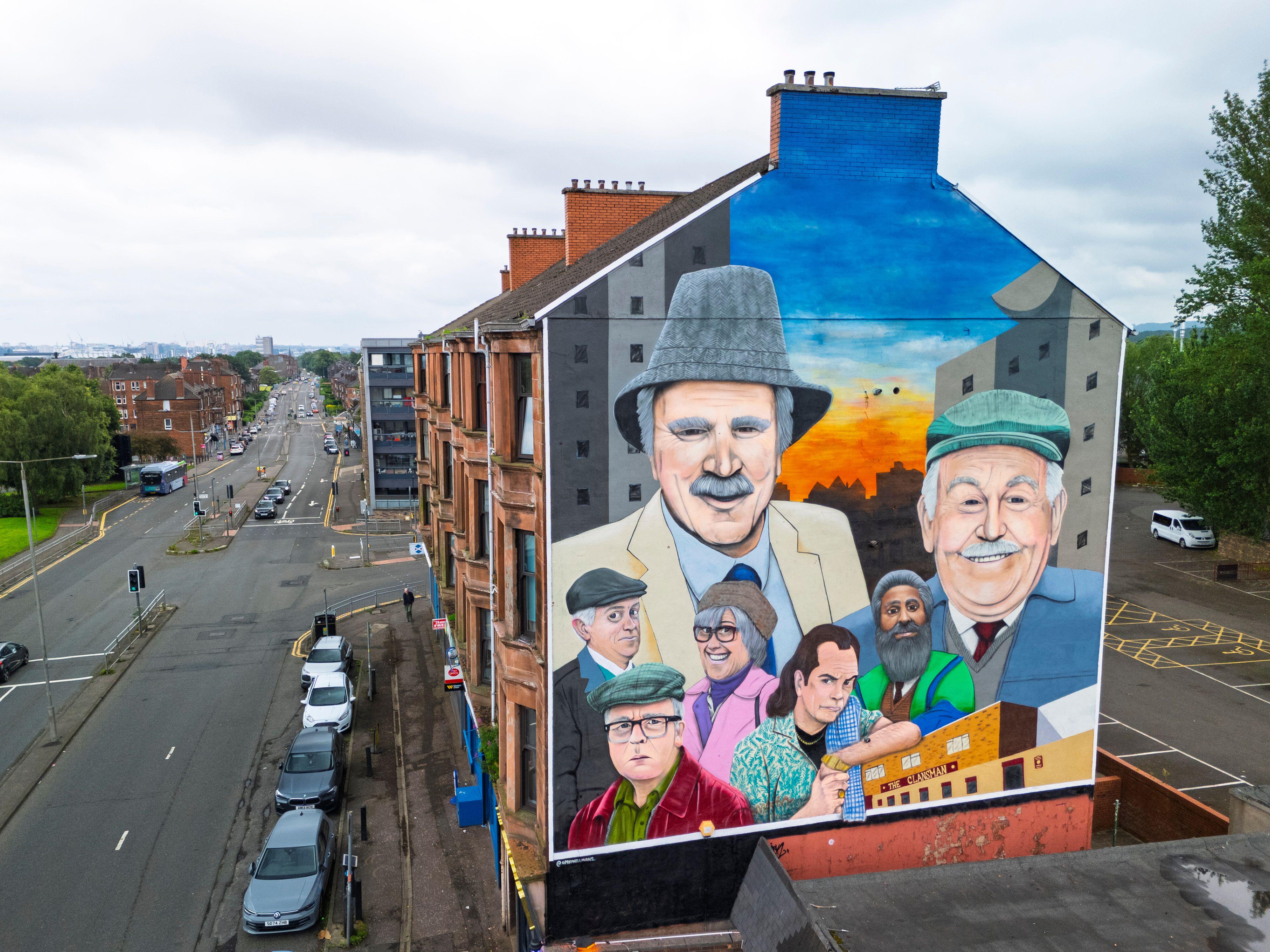 Still Game mural by graffiti artist Ejek | Alamy
After all, there are bigger things to think about. Council tax has gone up by as much as 10 per cent in some areas, with fuel bills set to rise as food prices do too. Scotland remains in the grip of a housing emergency, while the pressures on the NHS are so well-worn they no longer bear repeating. It follows, then, that the economy and health are the top two concerns for the electorate.
As if to illustrate the point, outside Hillington Parish Church, which neighbours a branch of Morrisons supermarket, a knot of people stands waiting for the services of Glasgow South West Foodbank.
Along the street, one man – an out-of-work spray painter nearing retirement age – tells Holyrood that people here have too little. He thinks he knows who is to blame. “Everybody’s talking about immigration stuff, let’s be honest, and I’m one of them,” he says. “All these people are coming in and getting everything for nothing. I’m fed-up with it all.”
As he talks, black, white and Asian teenagers play football on the roadside pitches of Lourdes Secondary. At a nearby bus stop, a warehouse worker looks sceptical when asked whether he will vote. It turns out he’s a refugee from Chad. “Can I vote here?” he asks. “Will it be Labour and SNP? How do I do it?” He’s got legal status, is looking for a job in the security sector, and remembers getting a letter from the council. That, he thinks, might be his cue to register. “I’ll do it,” he decides.
Moving pieces
Immigration is the third highest priority for voters, polls have found. Reform UK, which largely owns this political ground, chose this seat to launch its election campaign, kicking it off down the River Clyde at Bishopton.
Nigel Farage and his Scottish leader Malcolm Offord unveiled a slate of hopefuls there in what is the party’s first major Holyrood push. In the days since then, not only has Offord apologised for an offensive joke told after the death of George Michael, but Reform has lost five of its candidates, including one who branded former first minister Humza Yousaf an “Islamist”.
Another, Senga Beresford, has held onto her Galloway and West Dumfries candidacy despite having liked social media posts calling for the mass deportation of British Muslims. They are, Offord says, “real people with real opinions”, and critics should be less hung-up about their “fruity” language.
On the day of the Reform launch, a local SNP activist says that day’s canvassing session has turned up one Farage supporter. But that’s not to say they’re not there, and the SNP’s own projections put the seat as an SNP/Reform marginal. Meanwhile, a Labour source reveals a doorstep conversation with a man who complains of African health workers ruining the NHS, and another with a Polish voter convinced that Sarwar will prioritise jobs for Pakistanis if he becomes first minister. Both said they would vote Reform.
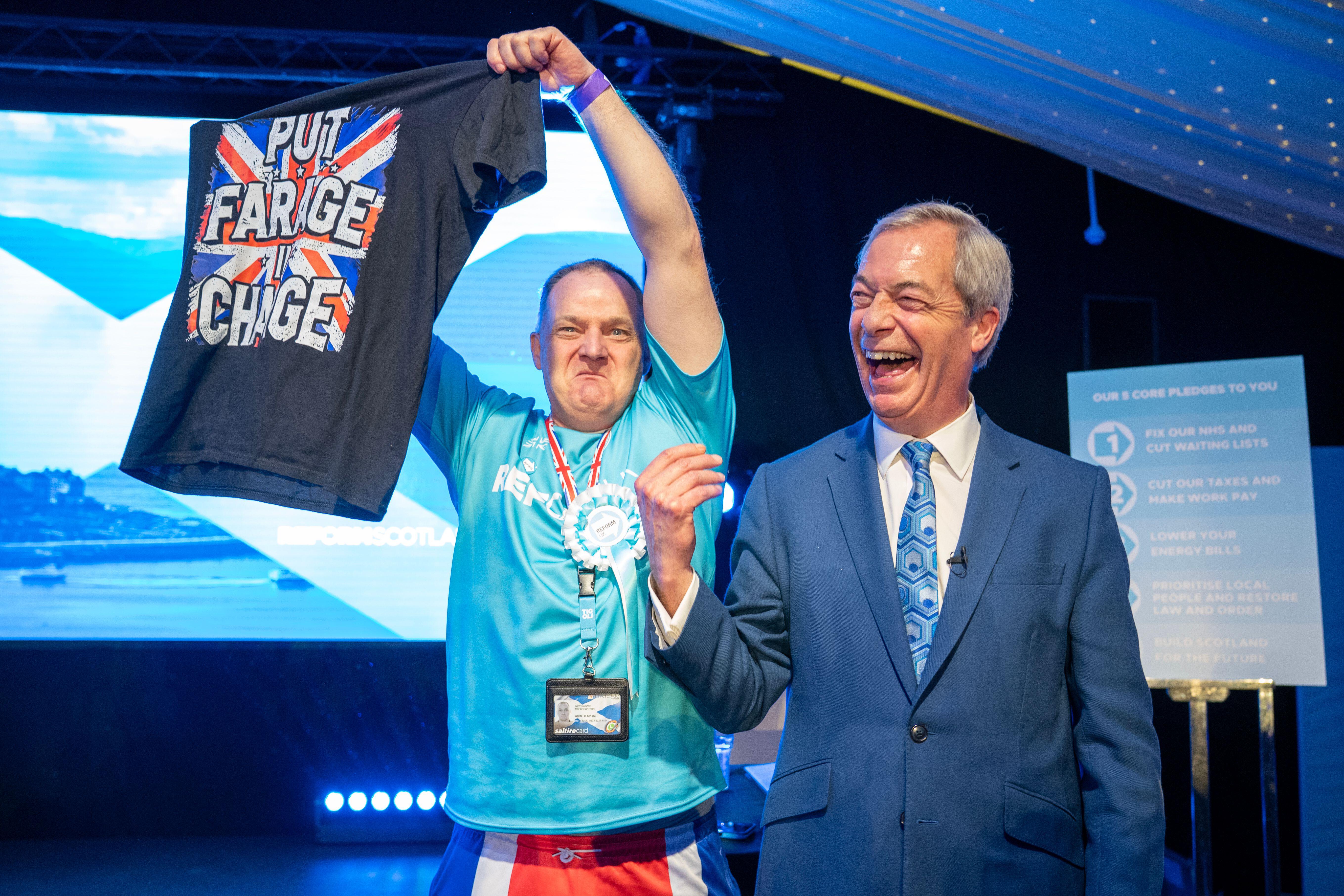 Nigel Farage and supporter Gary Taggart at the Reform UK event in Bishopton | Alamy
That party’s candidate is Moira Ramage, one of just five prospective politicians standing here. The lawyer spent more than 20 years as a procurator fiscal and, like many Reform UK members, has been on something of a political journey, having stood for George Galloway’s All4Unity at the last Scottish Parliament election, when she hoped to win in the Highlands and Islands and stood on a ticket pledging to “rid Scotland of nationalism”, and appealing to those “tired of sleaze, scandal and corruption”. Two years prior to that, she came second for Labour in 2019’s snap general election, losing out in Paisley to Mhairi Black. “We are the only party that truly cares about jobs, equality and justice for the millions of people who today feel helpless and powerless,” she said at the time.
Ramage faces competition from Grant Toghill of the Lib Dems, a scout leader and software engineer for JP Morgan & Chase, and Michelle Campbell, a local SNP councillor and mental health nurse. There’s also Labour candidate Mike McKirdy, a former consultant surgeon and Scottish Government adviser, as well as Conservative hopeful Jack Hall, who recently appeared on GB News programme Free Speech Nation to ask, “why are old people such extremists?”
“When did raising concerns about immigration become enough to get you labelled an extremist? I went on Free Speech Nation to call this out,” he explained afterwards, “because too many people, including older generations, are being dismissed, smeared, or shut down simply for saying what they think. That’s not just wrong, it’s dangerous.
“In a free country, people must be able to express their views without fear, challenge government decisions, and hold power to account – especially on issues like immigration. You don’t protect democracy by narrowing what people are allowed to say.”
The undecideds
The only major party missing from the mix here is the Greens. Along the road in the historic royal burgh of Renfrew, an airport worker has mixed feelings about that. Glasgow Airport, which lies just outwith the seat, is a major source of employment here, whatever your political allegiance.
Ferry Village, a waterfront residential development, stretches along former brownfield land towards Braehead shopping centre, and nearby a new bridge connects Renfrew with Yoker. The old passenger ferry that used to do the job is long gone, but the bridge swings open to allow boats to go by, including the famous Waverley paddle steamer. Out on the street, the airport worker is considering his options.
“I want to vote Green, but I feel like the last administration was pretty disastrous,” he says, referring to the Bute House Agreement that took two Green ministers into government with the SNP. “I wanted to vote Green for all the right reasons: renewables, the climate emergency, the Paris Agreement. I wanted to see that plan achieved.” Under Patrick Harvie, he says, the party was just “too zealous” and now his vote is up for grabs. “I’ve not made my mind up yet,” he says.
He’s far from the only one. Across the country, local party teams report finding a significant proportion of undecided voters on the doorstep. There’s acknowledgement that some may be cagey, unwilling to disclose a true preference. But activists say many appear to be truly at a loss, with canvassing sessions turning up around one third such responses in many cases.
“They’re all as bad as each other,” says one disillusioned voter in Mosspark. She says that’s nothing new – she never knows who she’ll vote for until she gets to the polling booth. But she is exactly the kind of voter that parties are now seeking to woo – someone who will actually turn out on the day. After all, participation levels hit a record low at the last general election, and Holyrood contests tend to have worse turnouts still.
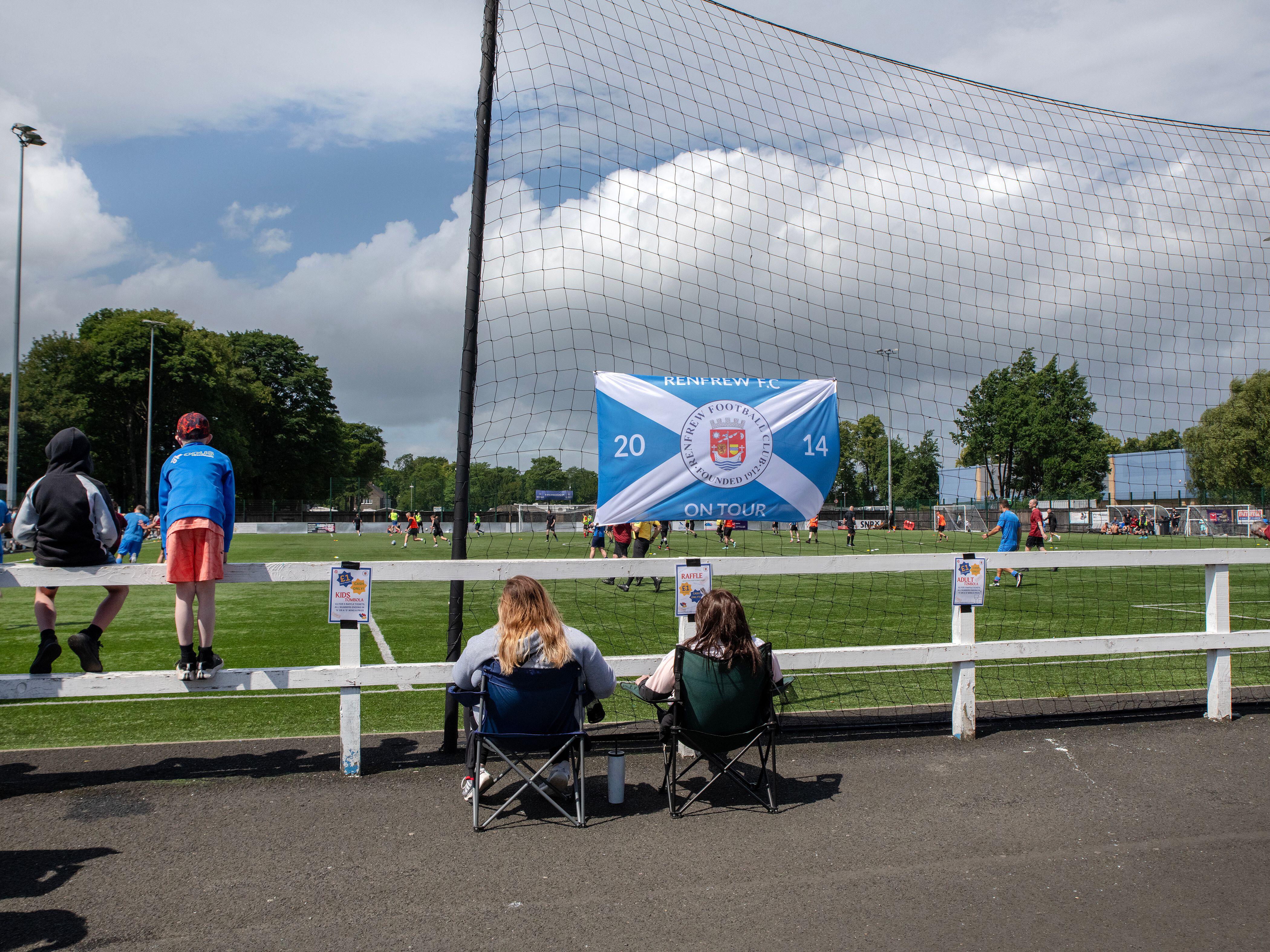 Football at New Western Park in Renfrew | Alamy
The Scottish Election Study has said that’s likely to be a factor this time. And so, while success in an election always rests on who can motivate their base, it could prove even trickier for parties to get their vote out this time.
Former social worker Joan wants to take part, but she’s “struggling to find someone” to believe in. “I’ve been voting Labour all my life,” she says, “but with the political climate, I think right up until the day I’ll still be deciding. I listen to the news – promises are easy but delivery is hard.
“I was in the trade union movement all my life, and you knew Labour had your back. Young people now don’t know good trade unions. If Labour had done a slightly better job [at Westminster] it would be easier. It’s like the winter fuel allowance,” she goes on, citing the post-election row that forced the government into a U-turn on the older-age benefit. “Anyone with a bit of common sense says, ‘hang on a minute, this is going to go down like a lead balloon’.”
Her friend Arv, another long-time Labour voter, is swithering towards the Lib Dems. “It’s tricky,” he says.
Bob, who made his career in the NHS, is also looking to settle on a candidate. He’s concerned about law and order and health and sees the “gender debate” – that long-running equalities saga over self-identification and single-sex services – as an issue that is “affecting the SNP”. Still, he says he’s open-minded. “I tend to vote for the person’s CV – I’ll read all the bumph that comes through the door,” he says. He’s going out for lunch today and says he would be “worried if there was a lot of Reform [MSPs] coming through”. They don’t have the interests of working people at heart,” he says, “they’re just scapegoating. It’s typical, it’s the creation of division just to divert attention away from where it needs to be. They’ll generate headlines but there’s fundamentally no substance. And the less said about Malcolm Offord’s comments, the better.”
Seizing the narrative
All parties, all candidates, know what they do and don’t want to talk about in this election. For some, that means dodging difficult conversations about negative press, of which there has been plenty in this contest so far: for the SNP, the conviction of North Lanarkshire Council leader Jordan Linden, ferry woes and poor housebuilding results; for Labour, allegations surrounding Joani Reid MP and the Mandelson revelations; for Reform UK, accounts of unsavoury comments by MSP prospects. It’s not only Reform which has had eleventh-hour candidate problems – allegations and investigations mean Labour and the SNP have also seen people dropping out or being dropped.
None of these personnel changes have affected the runners in this constituency so far, however. And, across the country, there is an effort to take control of the narrative. John Swinney wants to talk about independence and support for families. Anas Sarwar wants to talk about health and the economy. Malcolm Offord wants to talk about immigration and public spending.
And then there are the local issues – schools, roads and services affecting individual communities.
“A lot of people are generally fed up,” says Labour’s Mike McKirdy, who Holyrood finds door knocking in Bishopton with one activist between rain showers. “This is the SNP’s mess and I’m not finding many people who are willing to defend that,” he goes on. “I wouldn’t like to be on the doorstep having to defend it.”
McKirdy is a former consultant breast surgeon who practised at the local Royal Alexandra Hospital and who has met ex-patients and their relatives on his rounds. He voted Yes in 2014 out of “hope”, he says, and he doesn’t have “any disagreement with the concept that Scotland could be a viable independent country”. But it has to be shown that “we can do our work well in public services, on budget”, he says.
 Ferry Village, Renfrew | Alamy
Last year McKirdy authored an NHS review for Scottish Labour and is still struck that ministers “didn’t even comment on it”. “There was nothing to disagree with,” he says of the paper, which warned that the founding principles of the NHS “are becoming strained and frayed” in Scotland and that current practice risks “entrenching a two-tier system where access depends increasingly on ability to pay rather than clinical need”.
“I’ve worked with all the SNP cabinet secretaries back to Nicola [Sturgeon] and they’re all nice people,” McKirdy says, “but they don’t have a grip on delivery. I would like to be in parliament, if Labour were forming a government, to actually be responsible for what’s happening, and if that [government] wasn’t to happen, to hold to account those who are responsible for it.”
Along the main road in Renfrew, where the town motto is ‘Deus gubernat navem’ (God steers the ship), service sector worker David says he has yet to meet McKirdy or indeed any of the other candidates. He says he’s an avid watcher of the news and would like to have a chat with them.
As long as David has lived here, he says, he has always had an SNP MSP. He doesn’t expect that to change and likes John Swinney, who he says has “steadied the ship”. He feels sorry, he says, for Sarwar because “no matter how hard he tries, he’ll not be able to create distance” for himself and Scottish Labour from Keir Starmer and the UK Government. He scoffs when asked about the Liberal Democrats and shakes his head when the Conservatives are mentioned. What about the prospect of a Reform victory? After all, three members of Renfrewshire Council have defected to Farage’s party. “It feels like a smash and grab,” he says. “All of a sudden they’re here and we’re faced with the prospect of an extreme party gaining a foothold in Scotland.”
Holyrood Newsletters
Holyrood provides comprehensive coverage of Scottish politics, offering award-winning reporting and analysis: Subscribe