The loveless election: Why a win for the SNP is not a vote of confidence in the status quo
It was a televised debate that produced one of the standout moments of this Holyrood election campaign. Under attack from Anas Sarwar, Reform’s Malcolm Offord claimed the Scottish Labour leader had previously suggested the two men “work together to remove the SNP”. Standing between them was John Swinney, whose head flipped back and forth like a spectator at Centre Court, his exclamation “Oh! Oh!” already on its way to becoming a social media meme.
It didn’t matter that Sarwar denied the conversation had ever taken place, going as far as calling Offord a liar for suggesting it had. Nor did it appear to matter to Swinney that he was trusting the word of someone he’d previously described as being unfit to become an MSP after details emerged of a crude ‘joke’ Reform’s leader in Scotland had made about George Michael. None of that mattered either to the users of X – still Scottish politics’ platform of choice – who clipped the exchange and shared it widely in the hours that followed. That’s because during an election which has felt like a foregone conclusion from the start, and at times appeared insignificant against the backdrop of events being played out elsewhere, Scottish politics remains fixated on plots, intrigue, and often little else.
With just under two weeks until the vote, all the polls suggest the SNP is on course for its fifth straight term in office, albeit on a reduced share of the vote. While Scottish Labour remains confident it can upset the odds and still somehow find a path to victory amid the marginal constituencies of the central belt, the party has fought an insipid campaign, promising ‘change’ but failing to set out what it might look like other than having a new occupant of Bute House.
In a remark he must now surely regret, Sarwar told voters to “hold your nose” and back his party during his address to Scottish Labour’s conference in Paisley earlier this year. Devoid of hope, low on ambition, it was a fitting cri de coeur for an election the pollsters have described as “loveless” and where everyone seems to know who they don’t want to win.
Launching his party’s manifesto in Glasgow on 16 April, a confident Swinney was keen to talk about the SNP’s record – some would say a bold choice. “When I took office, I promised I would deliver for Scotland,” he said. “Friends, I keep my promises. That is my record. It’s a record I am proud to take to the people of Scotland.” The first minister pointed to NHS waiting times, GP walk-in clinics, the abolition of peak rail fares, the reduction of child poverty. But for every debatable success entered in the ledger, there’s a failure – ferries, the situation in A&E, the inability to tackle the poverty-related educational attainment gap in schools, the early release of inmates to ease the pressure on Scotland’s prisons. The truth is, despite what the SNP leader might say, the past five years contain a litany of broken promises.
And now we come to scandal. Whether it’s Operation Branchform (the long-running police investigation into the party’s finances which culminated in former chief executive Peter Murrell being charged with embezzlement); the ongoing row over the handling of harassment complaints against the late Alex Salmond; the criticism of the way former council leader and now convicted sex offender Jordan Linden was allegedly protected by the party; or – most damning of all – the failures at the Queen Elizabeth University Hospital which saw children die in an unsafe facility which opened before it was ready, the SNP has not had it dramas to seek.
This is Sarwar’s pitch, that after two decades of incompetence, he can be a new broom: “Give me five years to fix the mess,” he said at his party’s manifesto launch. That there is a mess to clear up does not seem to be in dispute, but voters appear far from convinced that Scottish Labour is the party to do it.
Things had been looking up, with polling in early 2024 suggesting the party had overtaken the SNP for the first time in almost a decade. Then a cataclysm: Labour won a general election. Ever since the so-called “loveless landslide”, voters have looked on in disappointment or even outright horror at the premiership of Keir Starmer – the U-turns on the winter fuel allowance, on farmers’ inheritance tax, on digital ID; the unwitting invocation of Enoch Powell on the subject of immigration as he complained of an “island of strangers”. And that was before the scandal surrounding the appointment of Peter Mandelson as US ambassador.
As Sarwar finished addressing delegates at the STUC Congress in Dundee earlier this week, having set out his party’s plans for creating 9,000 new apprenticeships and building 125,000 new homes, Starmer was taking to his feet in the Commons, setting out his explanation for how Mandelson was given a key diplomatic post despite concerns being raised during security vetting. “I know many members across the House will find these facts to be incredible,” the prime minister said to laughs from the opposition benches. “To that I can only say, they are right.”
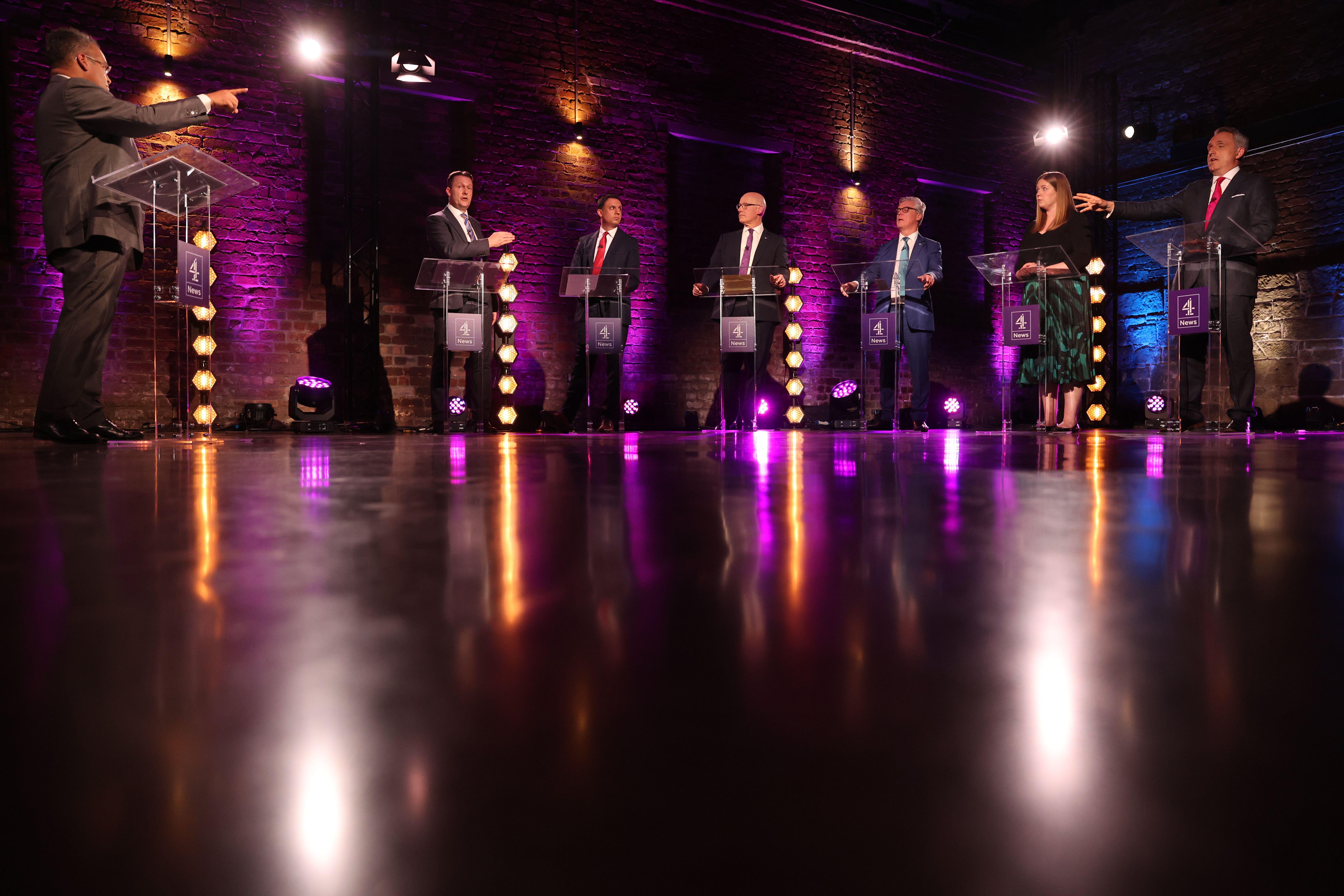 The leaders clash in the Channel 4 News debate | Alamy
But while Starmer’s edited version of events was no doubt true, it was his apparent credulity in Mandelson – someone he knew to have maintained a relationship with the power broker and paedophile Jeffrey Epstein – which was hard to believe. “The prime minister blames all of this on the judgement of others, but I’m interested in his judgement,” the SNP’s Stephen Flynn said. “Does he believe himself to be gullible, incompetent or both?”
The following day it was the turn of Olly Robbins, the senior Foreign Office official sacked by Starmer, to have his say. Appearing before a cross-party committee of MPs, he accused Downing Street of having a “dismissive” approach to Mandelson’s vetting and said “serious reputational risks” surrounding the appointment had not figured in the PM’s judgement. Robbins said the Foreign Office had been put under sustained pressure from Number 10 to ensure the peer was in post in time for Donald Trump re-entering the White House.
At best, it was all an unwelcome distraction for the Scottish Labour leader who managed to extricate himself from the Mandelson imbroglio – a scandal which would otherwise have followed him on the campaign trail – by calling for the prime minister’s resignation as far back as February. While Conservative leader Kemi Badenoch, the Lib Dems’ Ed Davey and even Reform’s Nigel Farage – a man once so unpopular in Scotland he had to be barricaded in an Edinburgh pub for his own safety – have all made visits north of the border ahead of 7 May, Starmer has, so far at least, been conspicuous by his absence on the campaign trail. In the hours after his statement in the Commons, and particularly after Robbins’ appearance the following day, the prospect of the prime minister clinging to power for the remainder of the year, never mind until the general election, grew increasingly remote, with Angela Rayner currently the favourite to replace him. It may yet be his party’s performance on 7 May, not only at Holyrood but also in the Welsh Senedd and in the English local elections, which draws a line under the Labour leader’s time in office.
But if this election has implications for individual political careers, the bigger story is likely to be one of growing disillusionment across the electorate, with a low turnout and falling support for Labour, the Tories and even the SNP. Reform UK is set to come from nowhere – the party currently has just one MSP – to become one of the largest parties in the Scottish Parliament, while at the opposite end of the political spectrum, the Scottish Greens could make considerable gains.
It is a story writ large across UK politics, the cratering in support for the established centrist parties as voters go in search of answers to entrenched problems such as the cost of living, deteriorating public services and the unaffordability of decent housing. It’s why Labour went from winning the constituency of Gorton and Denton with 50 per cent of the vote in 2024 to coming third behind the Greens and Reform in the recent by-election. It’s why Farage remains the bookies’ favourite to be prime minister after the next election and why Rupert Lowe’s Restore Britain – a party which proposes holding a referendum on the re-introduction of the death penalty – is currently polling at around four per cent.
The one thing that has so far helped protect the SNP from this rising tide of resentment and the coming populist wave is the question of Scotland’s constitutional future. It is the peculiarity at the heart of Scottish politics – an unpopular government that people continue to back. Indeed, the final Scottish Opinion Monitor (Scoop) poll before the election found just 23 per cent of respondents thought the party was doing a “good job” in office, compared with 40 per cent in December 2021.
But while the matter of a second referendum may have slipped down most voters’ immediate political priorities, around half of Scots still support leaving the UK, with only one of the main parties offering them a way out. For those who still believe in the Union, the choice is further diluted by the arrival of Reform.
Swinney has put independence at the front and centre of his campaign, arguing a Holyrood majority for the SNP would give it a mandate for a second referendum, just as it did for Salmond following his historic victory in 2011. The current SNP leader has confidently identified 2028 as the date when that referendum will take place, even though there’s no evidence of the UK Government shifting on its position that no such vote will be granted.
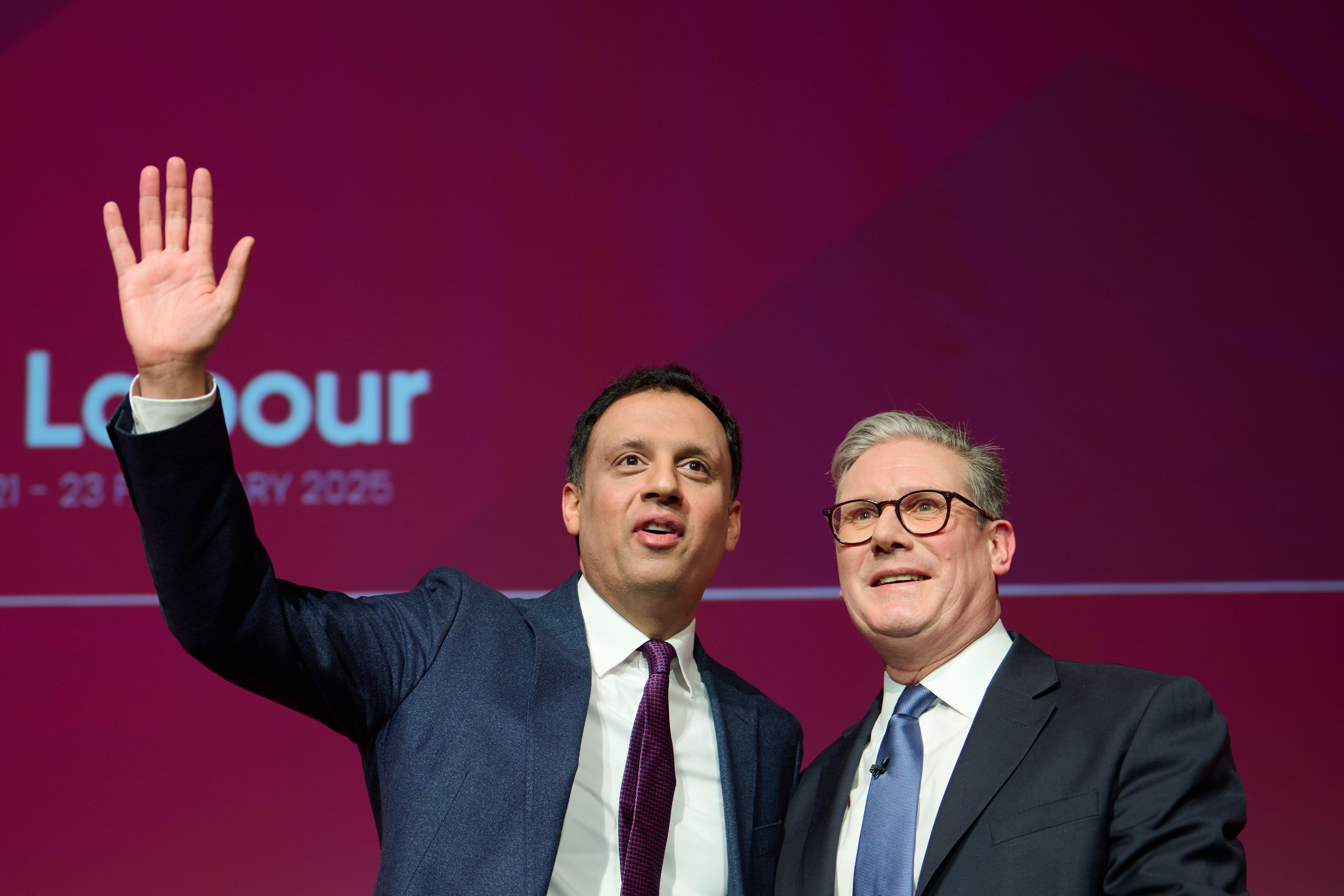 Sarwar and Starmer together at the Scottish Labour conference last year | Alamy
But there are other ambitious proposals in the SNP’s policy platform, including a promise to spend an extra £500m on extending childcare, a nationwide £2 cap on bus fares, support of up to £10,000 for first time buyers and the introduction of a price cap on basic food items. That last one, while recently tried in France, is likely to be blocked by the UK Government under the post-Brexit Internal Market Act, which it could be argued is its very purpose in any case. Analysing the SNP’s manifesto, the IFS think tank estimated the party’s pledges would cost the country an additional £1.4bn by 2031/32 and would need to be paid for by cuts to other services or by increasing taxes.
The SNP was in the doldrums after the general election, losing 38 MPs at Westminster as Labour was propelled to victory by the promise of change. Almost two years on, the tables have turned and it is now Swinney’s party which has the momentum. With under two weeks to go before polling day, there are still votes to be won and lost, but the SNP’s lead looks unassailable. A fifth term in office would be an incredible achievement for the party, but it would be simplistic to view it as an endorsement of the status quo.
Holyrood Newsletters
Holyrood provides comprehensive coverage of Scottish politics, offering award-winning reporting and analysis: Subscribe