Scottish Labour leadership: Can Marra or Fagan bring the party back from the edge?
“I’m sorry we haven’t been good enough,” said Anas Sarwar.
It was 2021 and the Glasgow MSP had just been elected Scottish Labour leader. “If we’re brutally honest,” he said in a victory speech promising things would only get better, “you haven’t had the Scottish Labour Party you deserve.”
Five years on, a diminished and dismayed Scottish Labour is electing his replacement. Members, now reduced to a rump of around 11,000, must choose between two men closely connected to Sarwar, both of whom deny being a “continuity candidate”.
Scottish Labour is the last branch of the party to change its leader since May, when it lost big in three elections. In Wales, it fell out of power for the first time in the history of devolution. In England, it lost control of almost 40 councils. And in Scotland, a campaign which promised to take the party back into administration after almost 20 years didn’t just fail to deliver that outcome but produced its worst-ever Holyrood result.
What separates Scottish Labour from the party’s UK or Welsh arms is that the handover of power is a contest, not a coronation. Andy Burnham’s move from Manchester to Downing Street was assured after an emphatic by-election win in a seat vacated by Labour colleague Josh Simons in order to get Starmer out, and a challenge from the likes of Wes Streeting did not emerge. In Wales, where Eluned Morgan had lost her Senedd seat, Ken Skates’ leadership was unanimously supported by his eight MS colleagues.
Far from holding the key to Bute House, whoever follows Sarwar will command a group of just 17 MSPs. They will include Monica Lennon, whose re-entry to Holyrood on the Glasgow list has been made possible by Sarwar’s exit for the Lords and Andy Burnham’s government, and whose own leadership campaign stopped short of the ballot.
Lennon – who had described the contest as reeking of “misogyny and male entitlement” – missed official candidacy by just one endorsement. Aggrieved, she accused her party of being “stuck in the past” and suggested it was “quite nasty”, “punching down on trans people and other minorities” after her rivals affirmed their opposition to gender recognition reforms.
Lennon’s reintegration with a group in which support for her campaign was quiet and late – she had just one backer in Katy Clark until Carol Mochan followed as the contest closed – and in which many share Michael Marra and Joe Fagan’s position may not be without challenges itself.
And the next major electoral challenge is less than one year away. Burnham has ruled out an early general election, but Scots will vote in council elections in May 2027. Labour is currently in minority administration on eight of those, including South Lanarkshire Council, which was so recently led by Fagan.
It is this experience that he says sets him apart. “I led a £1bn council and I know all about budget negotiations”, he said in an STV debate. “You were a successful leader of South Lanarkshire Council, but in May we lost every seat in that area,” Marra told him.
In the same debate, the North East MSP – Sarwar’s finance spokesman – said a leadership which was “too tight and too small” was a factor in the May election drubbing. Fagan, whose team includes Sarwar’s former chief of communications Oliver Milne and senior parliamentary assistant Fraser Jackson, hit back: “You were in Anas Sarwar’s shadow cabinet [and] you were one of the authors of the manifesto which led us to that defeat.”
Whatever barbs were uttered, the two found much to agree on. Standing side-by-side in dark suits, white shirts and red ties, both denied being the “continuity candidate” and neither landed a killer blow.
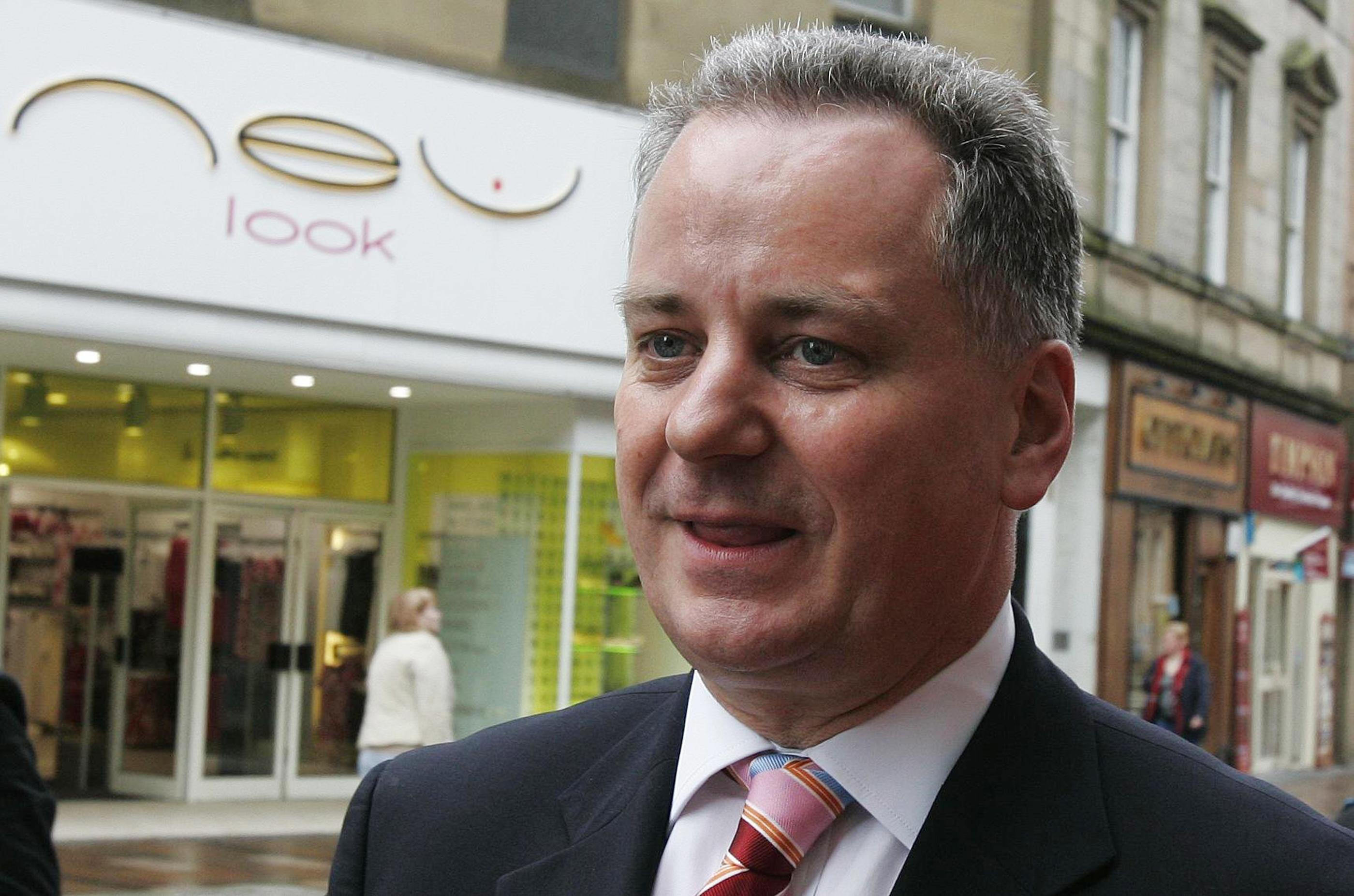 Jack McConnell campaigning in 2007 | Alamy
Once the biggest and most powerful party in Scotland, Labour has floundered from one leader to another since the resignation of Jack McConnell in 2007.
First there was Wendy Alexander, whose brother Douglas, now Scottish Secretary, ran the May election campaign with Jackie Baillie. Then came Iain Gray, who Marra worked for. Johann Lamont followed, as did Jim Murphy, Kezia Dugdale and Richard Leonard, who stood down after concerted briefing against him.
At more than five years, Sarwar outlasted all of them, staying in the top job for longer than Dugdale and Leonard put together.
Under his leadership the party rebalanced its relationship with business, greatly increasing donations. More than half a million pounds was received in the last quarter of 2025 alone and ahead of 7 May the party embarked on the best-funded election campaign it had ever run.
All that money resulted in an overall vote share of just 19 per cent for constituencies and 16 per cent on the regional list.
In contrast, those figures for the SNP, which returned 58 MSPs, were 38 per cent and 27 per cent.
When Keir Starmer was popular we won a landslide victory. When he was unpopular we had a landslide defeat
“My party is hurting,” said Sarwar as he arrived at his local count, defending a constituency-focused campaign in which he had implored wary voters to “hold your nose” and vote for Labour. He’d had the intention “to change the government here in Scotland”, he went on, concluding that this “is clearly an ambition we have not made”.
Still, Sarwar has helped to change the UK Government, his early declaration of no confidence in Starmer bolstering Burnham’s own leadership ambitions and leading him into the Lords, where he becomes one of a small contingent of Scottish politicians to have served in three houses of parliament.
He’s far from the only Scot to join Burnham’s team. A score were given ministerial positions, with eight others appointed as private parliamentary secretaries spanning everything from energy security to the foreign office.
Burnham has pledged to decentralise power in Scotland as part of his mission to “rewire” Britain. He’ll take “new opportunities to extend devolution in Scotland, Wales and Northern Ireland by taking power deeper down”, he said, but we’ve yet to see what that will mean in practice. His job will be made easier if he has a strong working relationship with his Scottish deputy. In that regard, it is perhaps unfortunate that Marra suggested Burnham “should shut up” amidst leadership speculation in September, calling talk of a challenge to Starmer “a distraction”.
He’s since praised Burham for “leading with hope”. But in his own leadership pitch, Marra has sought to create some distance from the UK hierarchy, warning against “betting everything on the popularity” of the leader in London. “When Keir Starmer was popular we won a landslide victory,” he said of the party in Scotland. “When he was unpopular we had a landslide defeat.”
For his part, Fagan has said Burnham’s Makerfield by-election win is evidence of how Labour can turn things around but has not sought to minimise the party’s problems. “Never before in recorded polling history has a new government seen its popularity collapse in such a short space of time,” he said of Starmer’s administration, “but that doesn’t get us off the hook in Scotland.”
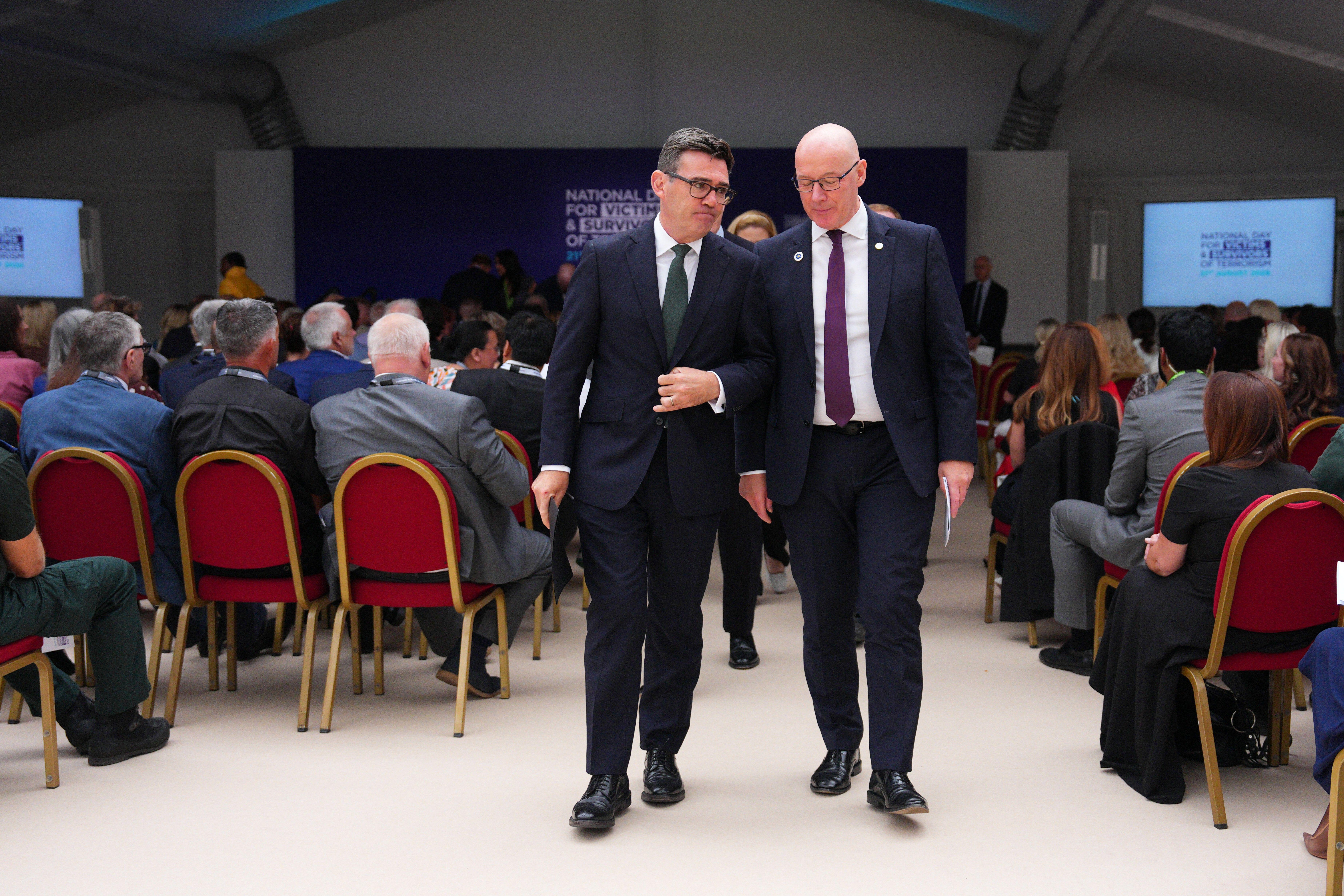 New PM Andy Burnham and First Minister John Swinney | Alamy
Getting into gear over summer recess, the race may have generated headlines in a quiet period, but it’s doubtful that it has captured the imagination in the way that Burnham’s takeover did. “It hasn’t been the talk of the chat,” remarked one Lib Dem MSP, referring to private messaging groups. “You could elect either of those people and it wouldn’t make a blind bit of difference,” commented an SNP MSP. Both said Lennon would have been their pick for the job.
Politicians can be expected to talk down developments in other parties. But Glasgow University historian Dr Ewan Gibbs, who specialises in labour and policymaking, suspects the sentiment is justified. “I wonder to what extent Scottish Labour is actually on people’s radars,” he said.
“The party gets a lot of attention from pundits and journalists, but when it comes to the Scottish Parliament, Scottish Labour are pretty much on a par with the Greens and Reform and I don’t know that they receive any more attention in the minds of the average voter than those other parties.”
In his latest book, An Injury to All: The Unmaking of the British Working Class, Gibbs argues that the labour force has been increasingly marginalised in politics in the post-war period, and explores who now speaks for workers.
Class politics has “often been presented as old-fashioned”, he said, and even invoked in “racialised terms”.
Both Marra and Fagan have said their socialist credentials are a given and insisted theirs is the party of working people.
By 2015 working-class voters were more likely to vote SNP than the population as a whole
But while economic shifts have seen a reorganisation of the labour force away from the factory and into social care and hospitality, for example, Gibbs said data also shows significant shifts in who votes for Labour. “In Scotland, the Labour vote doesn’t look like the vote we might imagine,” he said, and is made up of “relatively high earners” and “a higher proportion of homeowners than the population as a whole”.
“We are looking at an affluent, disproportionately middle class vote for the Labour Party. That does seem to run in contradiction with who Labour claims to represent and who it historically represented.
“Labour was a choice for particularly industrial manual workers and their families. These patterns have clearly been discarded. By 2015 working-class voters were more likely to vote SNP than the population as a whole. These patterns have continued as Labour has become more marginalised.”
In Marra’s own words, Scottish Labour has “gone backwards six elections in a row”. Lennon warned it was heading for “oblivion”, while Daniel Johnson, who is backing Marra, said it faces “existential questions”.
Gibbs believes the party is at “real risk of just becoming a standing irrelevance”. “In the 19th and early 20th centuries Liberalism was the dominant political expression,” he said, and though the Lib Dems put on seats in the last election “it’s hard to think they really matter”. “Labour will perhaps go on existing,” he says of the ‘oblivion’ claims, “but there’s a big question over whether that really matters.”
If Gibbs is correct, then the party which ushered in the devolution era will lose its currency as a consequence of that major constitutional change.
Scottish Labour should not live in fear of another referendum
According to the academic, devolution “encouraged the birth of a much stronger professional political class” which changed the make-up of party apparatus and in turn had a major impact on policy. “There’s a broad pattern across politics but it’s particularly visible in Labour,” he said, and “there aren’t nearly as many people who come from trade union backgrounds” at senior levels. Without a wider base to draw on, the party has “become very dependent on that professional political apparatus”, Gibbs said, which is “quite a big issue when it comes to building that larger social coalition” of support for policies.
Supposed to empower more local decision making and settle arguments over a democratic deficit, devolution “has not in any way brought a long-term resolution to the question of the balance of political power in Britain or the role of Scottish nationhood in resolving questions of political power”.
“Not only do Labour have no policy answer, they have no ideological answer,” Gibbs said.
The academic was speaking to Holyrood before a speech by Marra last week which covered similar ground. Devolution has “created a new national political arena” in which Scotland changed but Labour didn’t, the MSP said, challenging his party to “move to where the country is now, not where it used to be”.
That did not include support for holding another indyref or even setting clear criteria for this – something Fagan also opposes and which, according to MP Brian Leishman, means writing off “a huge amount of Scots, including what was once a large chunk of core Labour voters”.
“Do we not see that we will be consigned to forever opposition with this inflexible strategy? Scottish Labour should not live in fear of another referendum”, Leishman said.
This internal election, however, is not about where the country is, but where those 11,000 Scottish Labour members are.
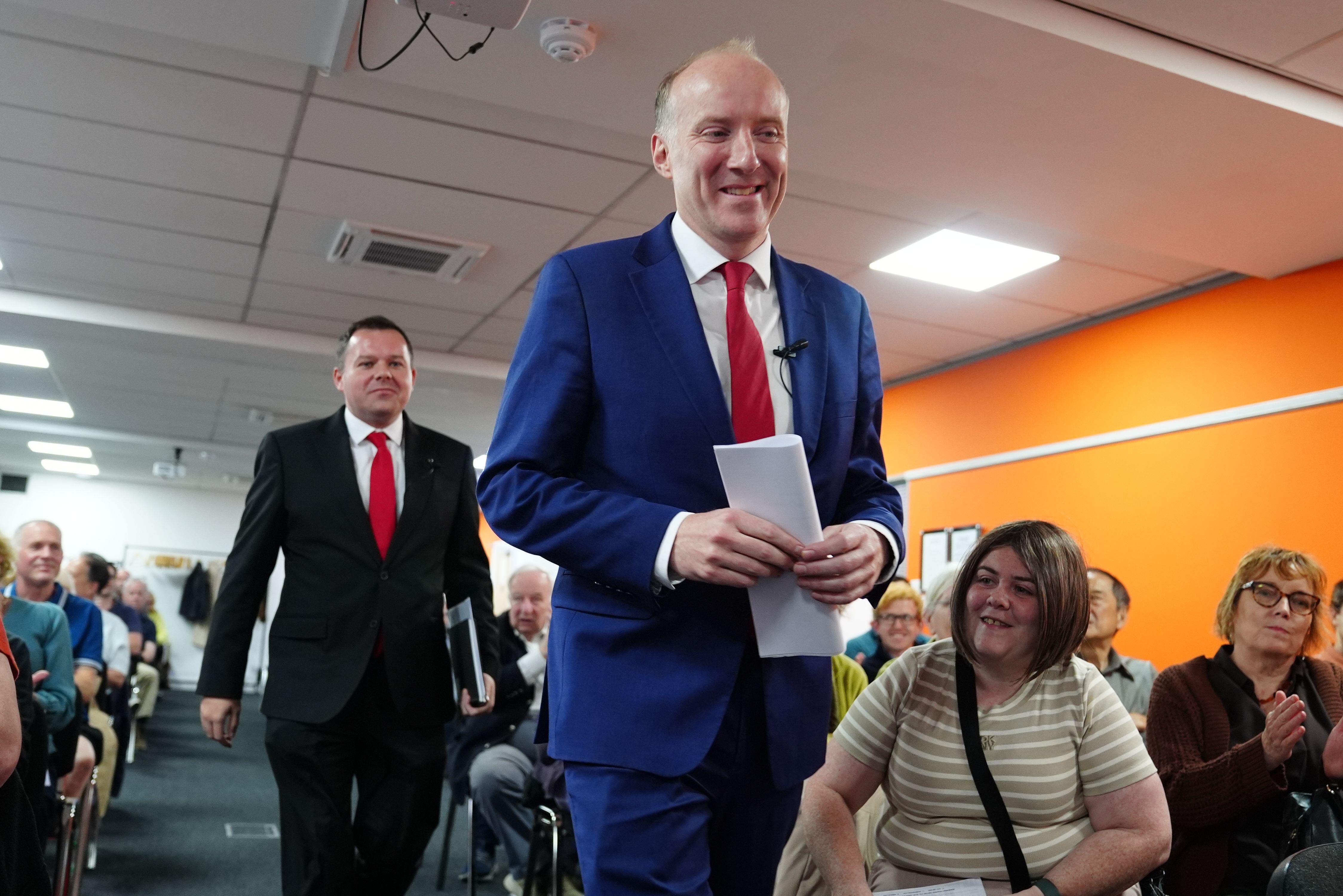 Fagan and Marra attend hustings | Alamy
Major unions GMB, Unison and Usdaw have backed Fagan, who also has the support of 14 Constituency Labour Parties (CLPs). Aslef, Community and NUM – smaller unions – have come out for Marra, but so have the Scottish Labour Students, Scottish Young Labour and Labour Movement for Europe affiliates and 23 CLPs.
There’s a clear weight of support for Marra amongst MPs, with more than three times as many MPs backing him than Fagan.
At Holyrood, though, the gap is smaller, with just two MSPs separating them.
There are three weeks to go until one or the other triumphs. Ballots have gone out to eligible members and affiliate supporters – none who signed up after 24 January can take part – and the voting window closes on 17 September, with the result to be announced two days later.
The party has so often promised ‘change’ to voters. Once again, it must decide how to change itself.
Holyrood Newsletters
Holyrood provides comprehensive coverage of Scottish politics, offering award-winning reporting and analysis: Subscribe