Jack McConnell: For the first time in a long time, I'm feeling hopeful
last interviewed Jack McConnell five years ago in November 2021, and at the time he was in a state of real despair about Scottish politics. During an emotional discussion, he broke down as he described a Scotland that had become a much worse place, had stagnated, and that he just felt “incredibly sad” about its future.
At the time, the SNP had been in power for 14 years and Nicola Sturgeon, first minister, for seven. His frustration and clear emotional upset were rooted in what he saw as the polarisation of debate since the referendum, the toxicity around the gender reforms and the inability of Sturgeon to engage with people she disagreed with. He talked about the failure of government to deal with rising drug deaths, falling educational standards, and big transport issues that were crippling communities. And he identified what he saw as a national malaise, an insularity, and a creeping mediocrity which he could see no way out of, and it clearly hurt.
Just over a year later, Sturgeon resigned as first minister, marking the beginning of a tumultuous period for both her personally and the SNP. It sparked a bitter leadership contest that ended with Humza Yousaf becoming a short-lived first minister and revealed a schism within a previously tight-knit party that exposed some serious fault lines which ultimately led to the end of Yousaf’s time as leader and the return of John Swinney to head up the party which he says he has managed to heal. Throughout it all, opinion polls largely maintained confidence in the SNP to win the coming election despite a lack of public confidence in their ability to deliver public services.
I’m fed up hearing the excuses that it’s always somebody else’s fault...
And meanwhile, Sturgeon faced the ignominy of being arrested and later released without charge as part of the police investigation into the SNP’s finances. She separated from her husband, the former chief executive of the SNP, who, just weeks after the May election, was convicted of embezzling more than £400,000 of SNP funds and is now serving a prison sentence. And with much of that serving as the backdrop to the election, the SNP still won – its fifth Scottish election in a row. And with Scottish Labour having been previously tipped to win that election, they returned just 17 seats to Holyrood, tying for second place with Reform UK. The blame for that result was squarely placed at Keir Starmer’s door, and despite Anas Sarwar making a call for him to quit ahead of the election, it wasn’t until the disaster of the local elections in England and the devolved elections in Scotland and Wales that others in the party joined him in that clamour for change and Starmer eventually made the decision to go.
And of course, the political merry-go-round doesn’t stop there. Having won the Makerfield by-election to become an MP, Andy Burnham is now the likely next occupier of No 10. On the face of it, there’s so much for McConnell to still be in despair about, but surprisingly I find him completely energised. He has recently been announced as the UK Government’s special envoy on soft power and major events, which brings together his appetite for international relations and for sport – he was one of the key architects in bringing the 2014 Commonwealth Games to Scotland – a topic to which we will return, but for now, I want to know where his optimism stems from.
“I am excited. For the first time in a long time, I am feeling hopeful,” he says. “I have quite surprised myself. It’s been nice because I was in real despair again after the Scottish election, not necessarily because of the result for Labour, but more because of the poor quality of debate during the campaign, the lack of a real programme for government that now exists in the Scottish Parliament and the Scottish Government. So I was pretty despondent but I think Andy has brought something back, and while nobody’s perfect, and this will be a rough and tumble ride at times, I think that it is possible that this Burnham government could be very different, not just in its shape and structure, but in its sense of purpose, values, and the way that it relates to people, and I think that’s very exciting.
“I hear people say Andy Burnham is not experienced. Well, one: he’s run the biggest non-legislative government body in the UK, outside of London, and he’s done it damn well. Secondly, he was an MP, a minister in a UK government, and by all accounts a very good health secretary. I’ve been speaking to health professionals who worked with him at the time, and they talked very highly of him, but even if he wasn’t a superstar at that point, he was learning all the time. He’s had 25 years of learning that he’s going to put into this job. But I think the thing that’s really changed him is seeing the government of the UK from a perspective outside of London, and I had the benefit of that, and I hope I’ve retained that in my contributions to the debate on the future of the UK over the last 20 years. But I think for Andy, it has fundamentally changed his outlook on UK politics, and his instinct is going to be informed by that experience in a way that is very, very difficult to have if you spend all your time in politics in London.
“I heard David Blunkett talking about this, like it was yesterday, where he said that his years as leader of Sheffield City Council made a big difference to him when he was a cabinet minister in the UK Government, and it was partly about that experience that helped him run his departments well, but it was also about not instinctively thinking from the centre, but at least in part, instinctively thinking from outside the centre.
“Andy has devolution baked into his thinking and approach, and I hope that he is a strong enough, confident enough, but open enough politician to lead engagement with the leaders of Scotland, Wales, and Northern Ireland, rather than just simply respond to their demands, be that negatively or positively. I think, for far too long, UK leadership in the context of the devolved nations has meant, either because of fear or of getting it wrong, has been distant and detached. I think we need the leadership in the UK to be confident enough to engage properly with the leadership of the three nations and I think Andy Burnham might be that guy but this should also be seen as an opportunity for all of the leaders, including John Swinney, to seize the opportunities that are there if we work together, to share ideas and expertise and not simply be at loggerheads. None of us – first ministers, elected mayors, prime ministers – have a monopoly on wisdom or ideas.”
On that, I wince slightly and say that it is inevitable that there will be those that pounce on him for even suggesting that being the first minister of Scotland is any way comparable to being an elected mayor. He responds with a level of irritation.
“I have lost interest in that kind of small-minded carping a long time ago. I think if we can’t learn from other national and sub-state leaders, and frankly, global leaders, in what we do, then Scotland is going to be poorer as a result. We need to be willing to engage, and I’m sure that what has happened in Manchester in the last 12 years has picked up some of the good things that we did in Scotland back in the day, but also we were learning from them too at that time, even before they had a mayor. You know, I went down to Manchester because Manchester had the best system for dealing with anti-social behaviour in the country at the time when I was first minister, and I spent two days there going right through the system and learning what they’ve done, so that we could learn from it in Scotland.
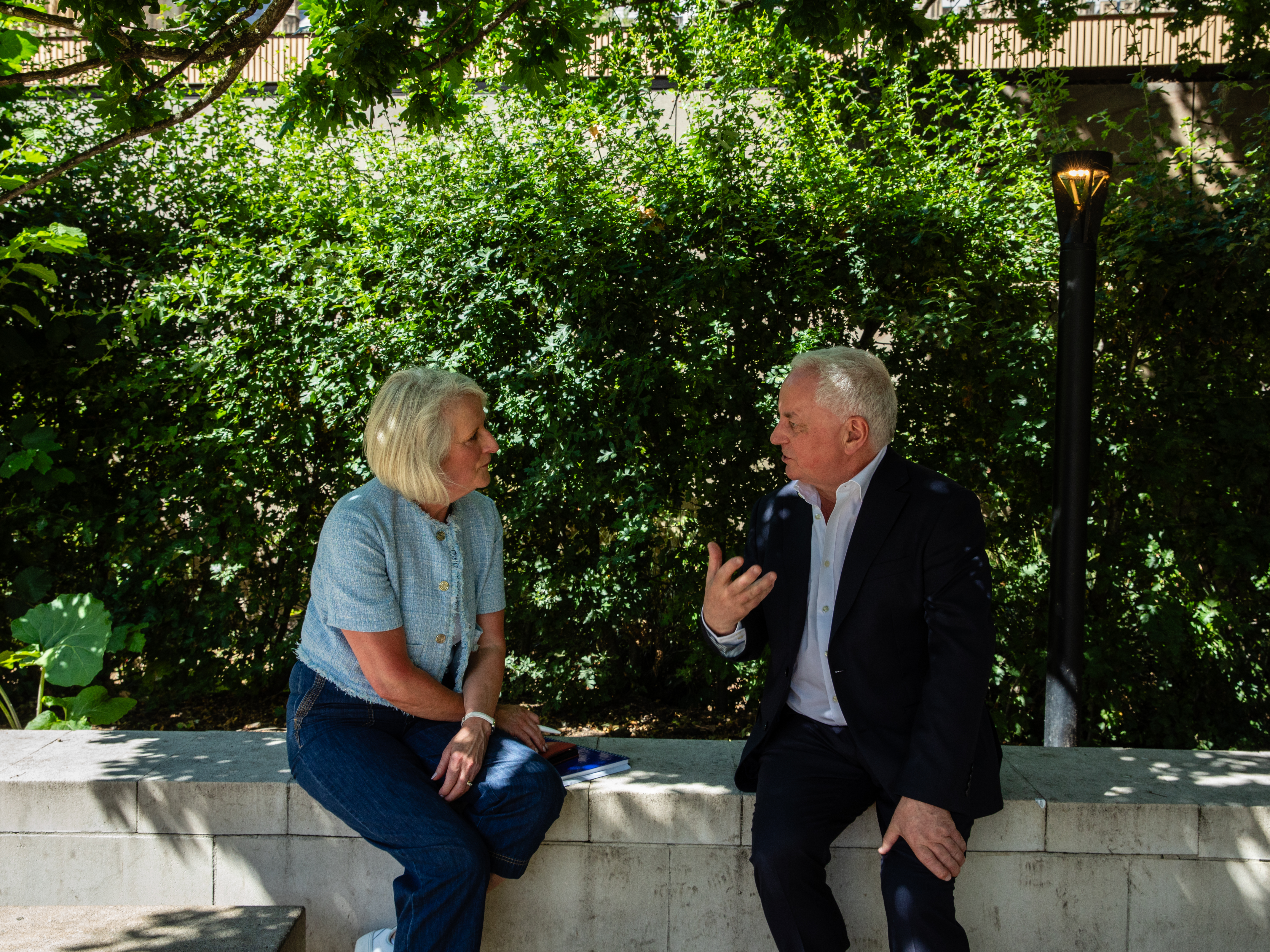 Jack McConnell photographed for Holyrood by Louise Haywood-Schiefer
“We should not be ashamed to learn from other people or to admire other people, and this kind of petty, pernickety attitude of just shutting people down when they’ve got other ideas, or it doesn’t exactly fit into somebody’s algorithm of how we should all be thinking, it’s just not good enough, and that’s why Scotland’s in the mess it’s in.
“Let’s take Manchester as an example. The Greater Manchester region has a population of about three million. It’s not a country, of course it’s not a country, and it’s not a nation. But Manchester is a hugely successful, economically and socially, a hugely successful region. And in Scotland, we should be looking to unite the central belt of Scotland to compete with Manchester, not griping about it not being a country. Scottish leadership is about making sure that we can compete, and I think we’ve lost the will and the creativity to compete with some of these big English regions, and frankly, with some strongly elected mayors around England, Scotland’s going to get left behind if we don’t get our act together.
“And if some people in Scotland find it unpalatable to be comparing Scotland with a large area of England like Manchester, then let’s take a country like Estonia. A much better example is Estonia, where a small country has managed to create something from nothing and become the global leader on the digitisation of public services and the economy. We are so far behind them that we should be absolutely ashamed. And what’s happening with them is that, for example, next door in Ukraine, people have picked up on the Estonian example; others in that region are doing the same thing now, and in the middle of a war, Ukraine has taken some of the best things about Estonia and put them in place to work for them. Ukraine has not said that Estonia is too wee a country or not important enough for a big country like Ukraine to look to for good ideas; they’ve said, what is the best example in the world for the digitisation of public services and it’s in Estonia so let’s pinch some of their ideas and build on their expertise. I remember I met the digital minister in Ukraine three years ago, in June 2023, so not that long into the war, and I remember her saying to me at that point that they were catching up on Estonia and they were going to get ahead of them – in the midst of a war. Scotland would do well to embrace that kind of spirit and enthusiasm for taking ideas from elsewhere and making them our own.
“This is all healthy, and I think there has to be, in the modern world, an openness to ideas that come from elsewhere, but also an openness to talk about your own ideas and share them, because ultimately we are all interdependent, but we’re also in a competitive environment among small countries, big regions, bigger countries, and everybody’s fighting for their share of global trade and global tourism and global talent, and you have to be engaged with that.
“I think if I was first minister at the moment I would be writing to the new prime minister, not seeking yet another constitutional argument, but presenting a number of areas where we could work together that would boost the Scottish economy, that would help deliver on some of the big challenges of our time that both, Scotland and England have got around things like, social care, for example. Why are we not working together to try and find the best solutions to that or on things like finding digital solutions? Instead of political leaders in Scotland rejecting a digital idea like the NHS App, for instance, because the idea came from London – ya-boo – they should be saying, actually let’s work on this together to make something even better by pooling resources and creating, for example, a health digital ID that allows you to transfer your records north and south of the border. It’s a ridiculous situation in this day and age when if somebody’s on holiday in London and has an accident or something, or an illness, and goes to a doctor in London, that doctor cannot share the records back with the patient’s GP back in Scotland, and vice versa. Utterly ridiculous, and this is the kind of stuff that at the start of a new Scottish administration, with the Scottish first minister with his own mandate, he could be writing creatively to the new prime minister saying here’s four or five areas where we could work together for the benefit of the whole country. That would be so much better than sticking your head in the sand or just doing the old ya-boo grievance and saying we don’t want to hear anything you have to say.
“They have a phrase in Malawi that I once heard – ‘It’s as good as it can be’. People shouldn’t accept that kind of shrug of the shoulder acceptance of mediocrity or worse, in rural Malawi, but they certainly shouldn’t accept it in Scotland, and I have a feeling that there is a degree of a kind of acceptance of the situation, that it’s fine, that it’s just the way it is. But it’s not fine, and I’m fed up hearing the excuses that it’s always somebody else’s fault anyway.
“You know, when we last did an interview like this, I was in despair, and that was largely around a lack of openness, transparency, and just this malaise like we were stuck in treacle with nothing getting done, that is still the same today, so something needs to change.
“I think a Burnham government is an opportunity for a reset across the whole UK, and I think it’s an opportunity for a reset between the devolved governments and Whitehall as well. I think this is an opportunity for a complete reset, because in Andy Burnham we will have a post ’99, post devolution prime minister, who doesn’t see everything through a metropolitan lens and in terms of devolution and Scotland, he absolutely gets it. I think government is going to look very different, not just in Number 10, but in other government departments as well. I think one of the urgent changes that needs to be made is to have people in the departments who have a proper understanding and an ability to engage with not just the devolved governments but with stakeholders in the devolved nations, and I think that has been missing for a while now.
“There needs to be some big picture stuff so for instance looking at proper urgent proposals to revise the House of Lords into a much more regions and nations second chamber, and I think we need to revise the government departments to create a powerful department of the nations and regions.
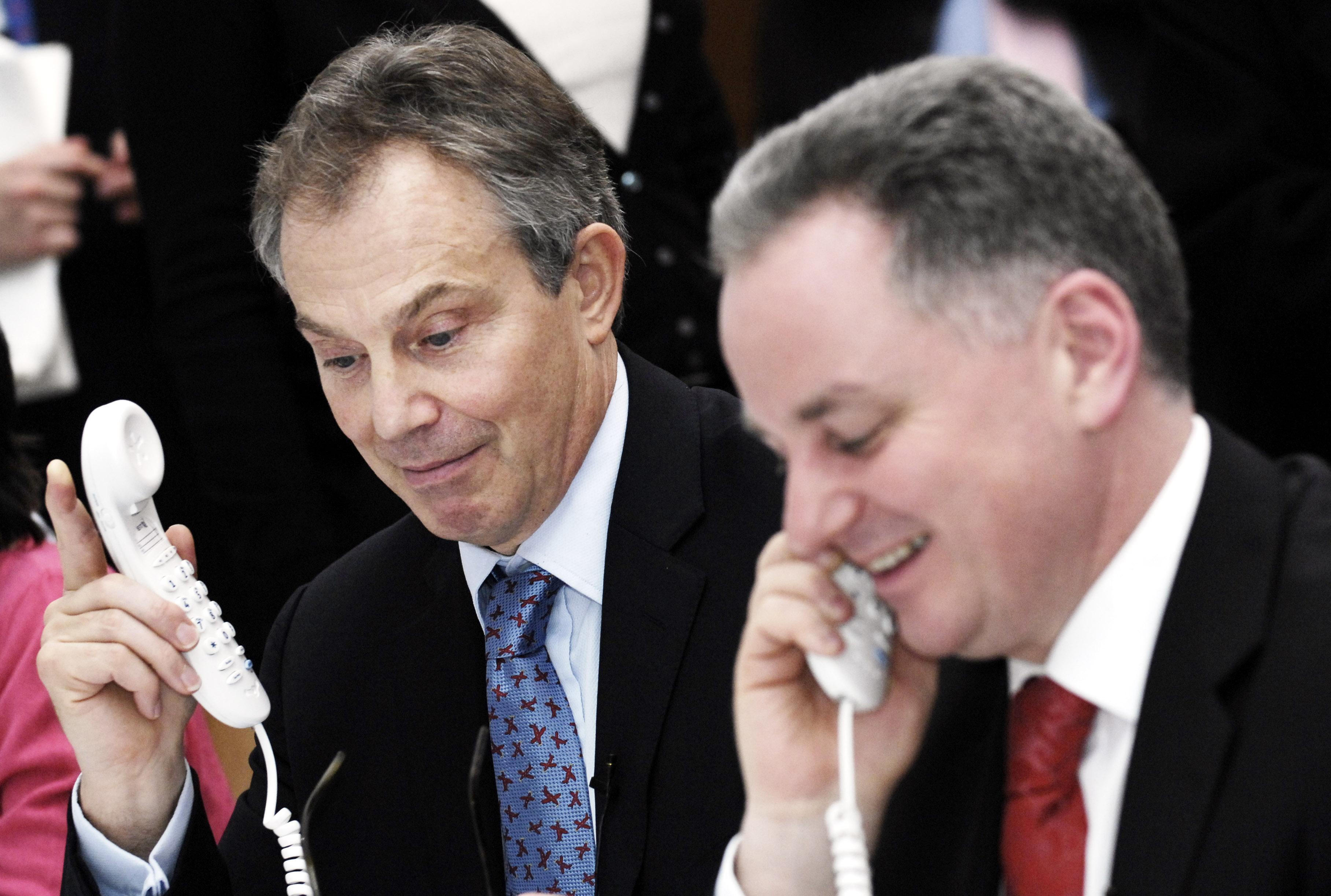 As first minister, McConnell answers phone calls from members of the public alongside Tony Blair in 2007 | Alamy / PA
“I think it’s ridiculous that we still have a Scotland Office and a Wales Office. I would scrap them and put the three territorial national offices inside a big department of the nations and regions with a powerful leader who has got the regular ear of the prime minister and is a leader within the Cabinet. I think these big structural changes need to be made, but I also think that in terms of the operation of government we need to refresh the understanding and intelligence around the devolved nations, and that’s partly about advisers who can make those links, but it’s also about civil servants. So, for example, I think regular exchanges of civil servants between Edinburgh, Cardiff, Belfast, and London would go some way to help, but I would insist on anybody who wants to be a senior civil servant having to spend some of their career on secondment in other areas of the country and that would be true in Edinburgh, as much as in London. So if anybody ever wants to be a director or higher in the Scottish Government, they should go and do a wee bit of seconded time in London, and the other way around as well. If anybody wants to be a perm secretary or a director or whatever in the UK Government, spend some time with one of the devolved governments and just get the whole system to knit together better and get to understand each other better.”
McConnell’s big ideas aren’t restricted to structural change for government departments; he believes his own party needs to have a detailed review about “what went wrong in the election campaign”. He says he can see no evidence of that currently going on and says that Andy Burnham should insist on it and look at the evidence within that review for himself. He says he welcomes what Burnham has said generally about the UK party “encouraging a bit of diversity of thought and of debate”.
This is a more energised former first minister than I have seen him in some time. He’s fizzing with ideas and energy to get things done. And it’s not just about the prospect of a new prime minister. Two months ago, McConnell was directly appointed by UK culture secretary Lisa Nandy, a firm ally of Burnham, to be a UK Government adviser on ‘soft power and major events’. I ask him if his new enthusiasm is about a return to government, to which he laughs and corrects me: “This is definitely not a return to government, but maybe a return to helping government.
“Look, I’ve been advising behind the scenes, mainly on ministers getting things done and running their departments and having the right kind of relationships with stakeholders and so on, but this whole issue of soft power partly through major events is just massive. The government has given a big commitment, which is controversial in some circles, to expanding Britain’s hard power, but one of the UK’s single biggest assets in the world is its soft power. Yes, we are an important part of Nato, and we have to be secure in our defences, but in terms of our impact on the world and also quality of life here in the UK, using our soft power well is absolutely critical, and that stretches across education and trade, conflict prevention, and diplomacy generally, but it also, at its core, what we do in sport and the arts, and both our contribution outwards and their contribution inwards. Being involved in that is exciting. Helping to build our place in the world is exciting.
“One of the things I am most proud of doing when I was first minister was to change the way that Scotland was portrayed around the world and change the way that Scotland engaged around the world, and we could do that within the devolution settlement by being creative and imaginative and assertive and putting the full political weight behind it. We did it partly to attract the best people to come to Scotland through the Fresh Talent Scheme and promoting that around the world. We did it partly through promoting Scottish tourism and Scottish hospitality and investment in Scotland, and we also did it partly to promote Scotland as an exporter, as an educator, and I think all of that contributed to portraying a modern Scotland and confronting the way that people viewed Scotland, which was very old-fashioned, ancient in many respects. I remember a focus group report that we got from a couple of focus groups we did in eastern Europe, where people were laughing in the group at the idea that Scotland had international airports, and in fact one person was very surprised to know that we had roads, because they’d been watching Braveheart.
I was in real despair again after the Scottish election, not necessarily because of the result for Labour, but more because of the poor quality of debate during the campaign.
“I think we confronted that head on with a very modern, assertive, open image of Scotland, which I think really worked. I think the problem in the UK now is that there’s been a lack of clarity about what we are. How do you portray the modern UK globally? And I think for a few years now that has been the case, that has been underplayed, and there’s much, much more that could be done. The UK is one of the most popular and attractive countries in the world, and every set of statistics you could possibly look at shows just how much amongst people, rather than necessarily commentators or politicians, the UK is trusted. It is attractive. It’s very popular as a destination for all sorts of things but I think we’ve lost our confidence to engage with that, to benefit from it, to use it both in ways to influence as well as to secure investment, and so I think the purpose of this role is to try and put some energy and some ideas into that and hopefully with a fresh sense of purpose.”
One of McConnell’s first public outings in his new role will be at the Commonwealth Games when they open in Glasgow this month. He was one of the key architects that helped bring the Games to Glasgow in 2014 and with a scaled-down version returning to the city, he says this is an opportunity to show how much Scotland punches above its weight in terms of international diplomacy.
“Shortly after the election, two years ago, the Foreign and Commonwealth Office under David Lammy and the DCMS under Lisa established a thing called the Soft Power Council, whose role, I suppose, was to expand the impact of the UK’s soft power assets, everything from our universities to our great cultural institutions and creators to our big sporting events, and so on, and so forth, and they had a very good theory of what could be achieved, but I think Lisa’s view is that it’s not achieved everything that should have by now, and she wants me to try and help ensure that she can achieve more through the Soft Power Council.
“We live in very divided times, so I think using UK soft power as a two-way thing and internally it’s about recognising the diversity of the four nations of the UK, which I think could be really impactful and could make a huge difference abroad. This country needs to be able to sell itself abroad for investment, for talent, for education, for trade, but also internally, as a country, we are, divided and a bit unhappy, and I think a more effective use of our cultural and soft power assets could actually make a big difference in terms of the country and help make the kind of post-devolution-four-nations-UK be a bit more comfortable with itself, and then collectively become a bit more ambitious.
“The Games itself is an opportunity, maybe smaller, and it’s going to look and feel different from 2014 because it is a rescue games, but it has the potential to allow countries that are not as wealthy as ours to show them a way that they could do it in the future, which would maybe take the games to Africa and elsewhere, which would be great.
“But it’s also an opportunity to make an impact in Scotland, and in my view, while there are a few exceptions to this, we have not used the legacy of 2014 as successfully as we should have done. We could and should have invested much more money in sports facilities and in local sports clubs, and I hope that the new Scottish Government will follow that through in these Games and rectify that mistake that was made in 2014.
“I’ve always loved this side of public policy and practice. My very first role as an elected councillor was as chair of the Leisure and Recreation Committee in Stirling Council, and we were doing really great, imaginative things back then in the mid-80s. So, when I was first minister, we built on that and raised the arts budget by 50 per cent, and we brought the Commonwealth Games to Glasgow, and did a lot of other things on sport as well, and I feel that these arts, sports and related cultural activities are the beating heart of a nation, and the sort of things that make life worthwhile.”
Holyrood Newsletters
Holyrood provides comprehensive coverage of Scottish politics, offering award-winning reporting and analysis: Subscribe