John Swinney, Keir Starmer, and the food price war heading for Scotland's supermarkets
“Your weekly shop has gone up far too much. We are looking at the supermarkets, making sure they are behaving responsibly and fairly.”
After a round of elections in which the cost of living was a key issue, those could be the words of First Minister John Swinney, whose unveiling of a proposed supermarket food price cap on up to 50 “essential items” was amongst the biggest announcements of the campaign.
Or they could be the words of Prime Minister Keir Starmer, whose beleaguered administration is, by focusing on household incomes, trying to curry favour with an electorate which seems to have fallen out of love with the Labour Party.
But instead, they were spoken three years ago by ex-prime minister Rishi Sunak, who – staring down the barrel of election misery as inflation pushed the cost of living ever higher – took a look across the Channel and saw a French government which was acting to limit grocery prices.
In the UK, food and drink inflation stood at more than 18 per cent in May that year and showed little sign of a quick corrective. But in Paris, the administration of Emmanuel Macron had negotiated a deal which capped price increases for a budget range of groceries. And then it went further, securing agreement with 75 food firms such as Unilever to combat a record 16 per cent price spike.
The measure was time-limited and the government warned it would “name and shame” any businesses who reneged.
Downing Street was interested in its own voluntary scheme, and when then-chancellor Jeremy Hunt told the Bank of England’s governor that ministers were considering “potential measures to ease the pressure on consumers”, Labour shadow work and pensions secretary Jonathan Ashworth called the suggestion “extraordinary”, referring back to the global recession of the 1970s and branding Sunak “a latter-day Edward Heath”.
Meanwhile, the British Retail Consortium (BRC) said such a move would “not make a jot of difference”, arguing that the sector was already dealing with “the soaring cost of energy, transport and labour”. “Rather than recreating 70s-style price controls,” said its director of food and sustainability Andrew Opie, ministers should cut red tape “so that resources can be directed to keep prices as low as possible”.
The proposal was shelved and did not appear in the Tories’ 2024 general election manifesto.
But now, 50 years after the Heath administration brought in cost limits under the Counter-Inflation Act, Scotland is on the cusp of big change in the grocery aisles once again. And this time two governments are involved.
Typically, they agree on the ‘why’ but disagree on the ‘how’, with both Bute House and Downing Street fixated on lowering living costs ahead of projections of yet further inflation hikes but opposed on whether action should be legislated for or simply requested.
While Downing Street dismissed the SNP’s food price cap as “incoherent and undeliverable”, the Treasury has now said it will work to “reduce pressure on prices” as part of a “Great British Summer Savings” programme.
A “business engagement exercise” is to be launched to make that a reality “with a view to making further targeted cuts to agri-food tariffs” and “suspending tariffs on over 100 types of products including biscuits, chocolate and dried fruit and nuts” in a move it says could bring cumulative benefits to consumers of more than £150m a year.
The full list of products will be published this week, when business engagement recommences. It’s said the selection “does not include any significant UK primary agriculture production”.
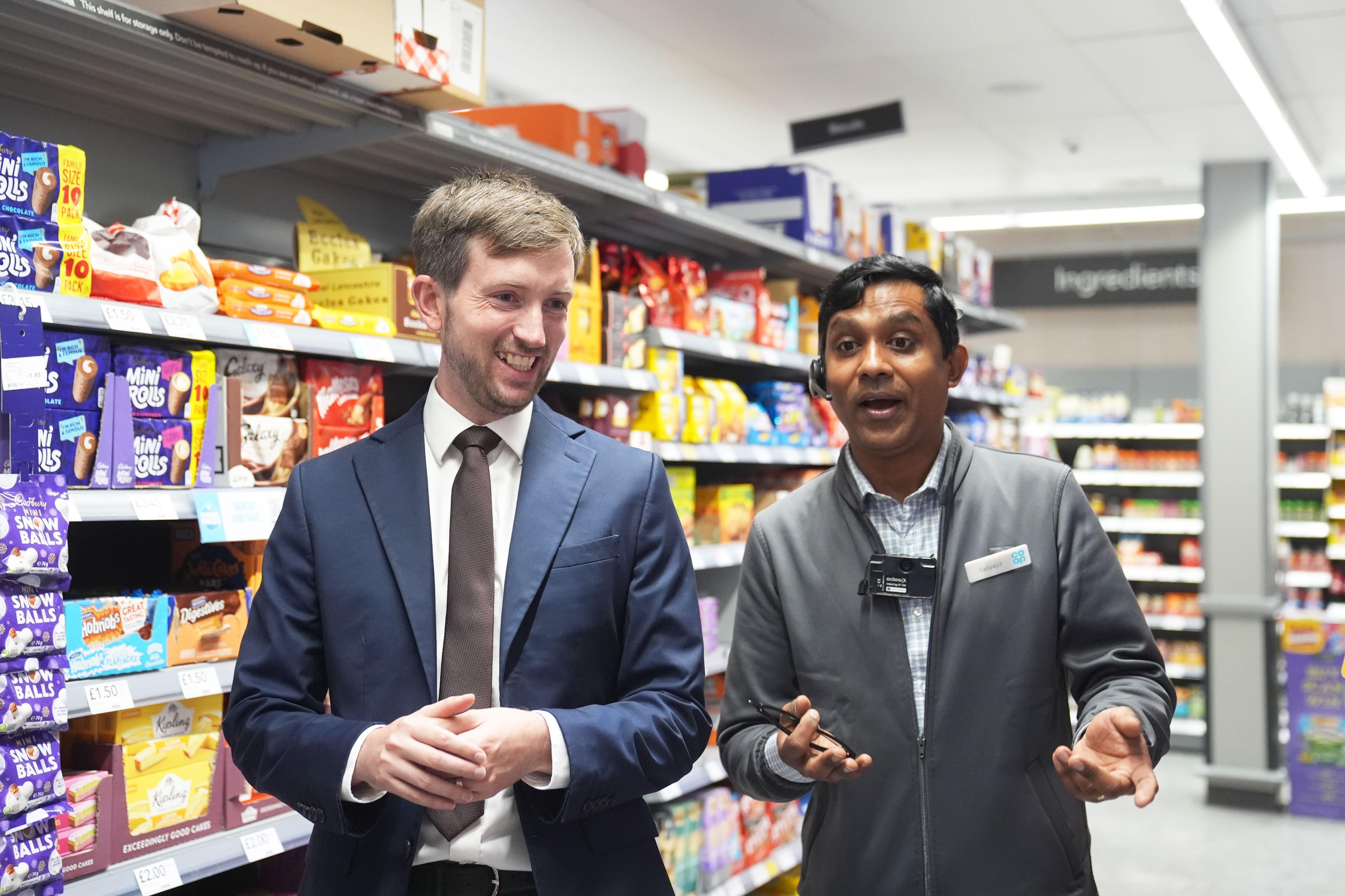 Dan Tomlinson visits a Co-op branch | Alamy
The day before the announcement the Treasury had dispatched Exchequer Secretary Dan Tomlinson to the Today programme after reports circulated that retailers would be asked to limit price rises in what one source told the Financial Times was a “rubbish, knee-jerk reaction to the SNP”.
No law-change was planned, Tomlinson insisted. But on the question of whether retailers would be asked to sign-up to voluntary action, he could only say that it was “right” for the government to “look very hard at what we can do” to ease household income pressures.
With the UK Government having moved quickly to dismiss Swinney’s policy on “healthy” staples like chicken and cheese – despite the existence of similar schemes in Croatia and Greece – new SNP MSP Alex Kerr said Starmer’s team was “in a complete mess”, asking: “Why did they oppose the SNP on this in the first place?”
For his part, Tomlinson could only tell Today that consideration of broad measures wa s “the right thing to do”.
Meanwhile, Tory peer Lord Stuart Rose, the former chairman of Asda, said the idea was “idiotic”. “It will never work,” he said. “It’ll backfire and it’s impossible to police”.
Rose’s thinking is in line with that of the Scottish Retail Consortium (SRC), which branded the SNP policy – billed as a way to improve public health through diet and set to be introduced in the new administration’s first 100 days – a “potty gimmick” and argued as the BRC did before that government should focus on cutting costs for traders instead to allow them to keep their prices “as low as possible”.
 Former Asda boss Lord Stuart Rose | Alamy
Trade body Prosper – formerly the Scottish Council for Development and Industry – called it “misdirected” and called for a “competitive tax and regulatory environment” to drive up jobs, pay and living standards instead.
Details of what it will all mean in practice are as yet scant, but corner shops and other small retailers are to be excluded in an intervention which focuses on the largest retailers.
SNP insiders know this is one policy idea which requires careful handling if it is to become a reality, not least to avoid unintended market impacts and harmful consequences for farming and food production, which is Scotland’s biggest manufacturing sector.
But they insist that the major chains can afford to take action, with market leader Tesco alone recording pre-tax profits of £2.4bn. “There’s clearly money being made,” says an SNP source. “None of these companies are showing a big decline in revenues, but yet they all talk about how competitive the market is.
“We have genuinely got people coming to us saying ‘we’re really struggling, we can’t afford this’. We saw it when we were knocking doors, especially when we were going to areas where people are less likely to vote.
“We have just got used to the fact we have food banks. Why have we got them?”
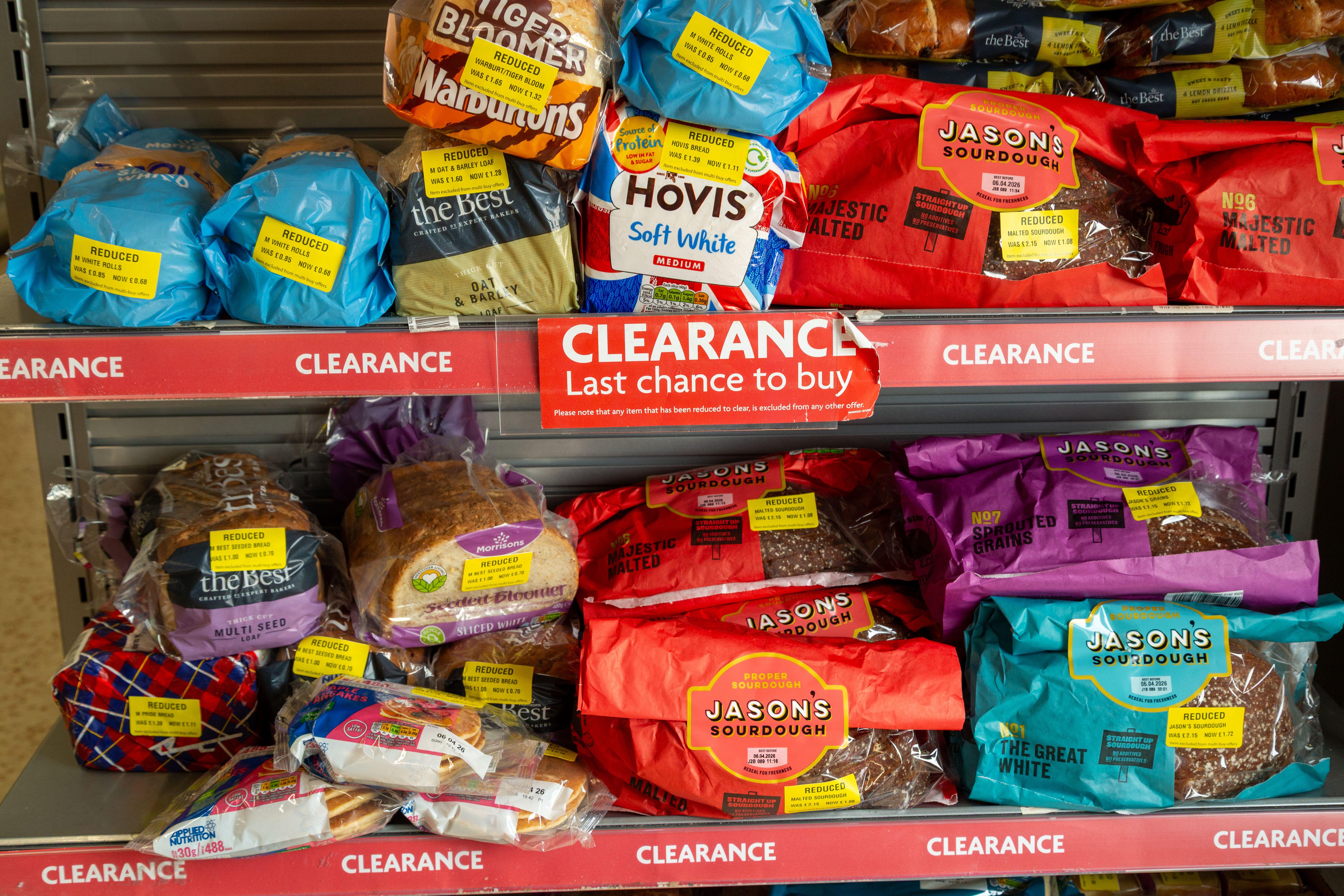
But even the Trussell food bank network – Scotland’s biggest – has shown scepticism. Its senior policy and public affairs manager for Scotland Cara Hilton, a former MSP, says there is “little to show that price caps on food would make a significant difference for people on the lowest incomes”.
The network gave out 240,000 supply packs in Scotland in the year to March 2025, and estimates suggest food inflation could reach 10 per cent by the end of this year.
If that comes true it’ll be a continuation of recent rises that saw the cost of vegetables go up by 2.4 per cent in the year to December 2025, according to the Consumer Prices Index. And that’s at the lower end of the scale, with meat up 6.9 per cent over the same period and coffee and tea up 9.6 per cent.
And though independents and smaller operators play an important role in the grocery sector, the big brands – Tesco, Morrisons, Asda, Sainsbury’s – still command a huge share of the market and therefore have considerable sway over prices.
Hilton says increasing incomes is “one of the best ways to protect people from hunger and hardship” and suggests “urgent investment” in welfare measures like the Scottish Child Payment should be put in place.
But Scotland’s social security bill is already projected to be £1.2bn more than its share of UK welfare spending within five years and Fraser of Allander Institute economists have warned of “really difficult” choices ahead for ministers. And so further cash for social security may be difficult to find.
That doesn’t mean, though, that this policy is an easier option. Indeed, launching the SNP manifesto, Swinney acknowledged that it could fall foul of the UK Internal Market Act (IMA) – that same post-Brexit domestic trade legislation that saw the deposit return scheme shelved.
That could be the case regardless of any other changes by the Treasury.
Swinney has said he’s “not interested” in a fight with Westminster on the matter, insisting that acting on public health grounds, as happened with Minimum Unit Pricing (MUP) on alcohol, means the Scottish Parliament has the power here.
According to constitutional law expert Dr Nicola McEwen, the UK Government could refer a Scottish price cap to the Supreme Court on the basis that it strays into reserved powers. And a market player could also mount a legal challenge, as happened with MUP.
Moves to implement such a change would “test the limits of the Labour government’s new approach to managing the internal market through intergovernmental cooperation”, McEwen says, and the law change would be “a resource-intensive, lengthy process with an uncertain outcome, raising questions about whether there may be more immediate and certain policy responses to the cost-of-living crisis”.
Scottish voters certainly don’t seem to think it will happen. Polling by Norstat found just nine per cent of people said it would “definitely” be delivered, with 28 per cent saying it would “definitely not”.
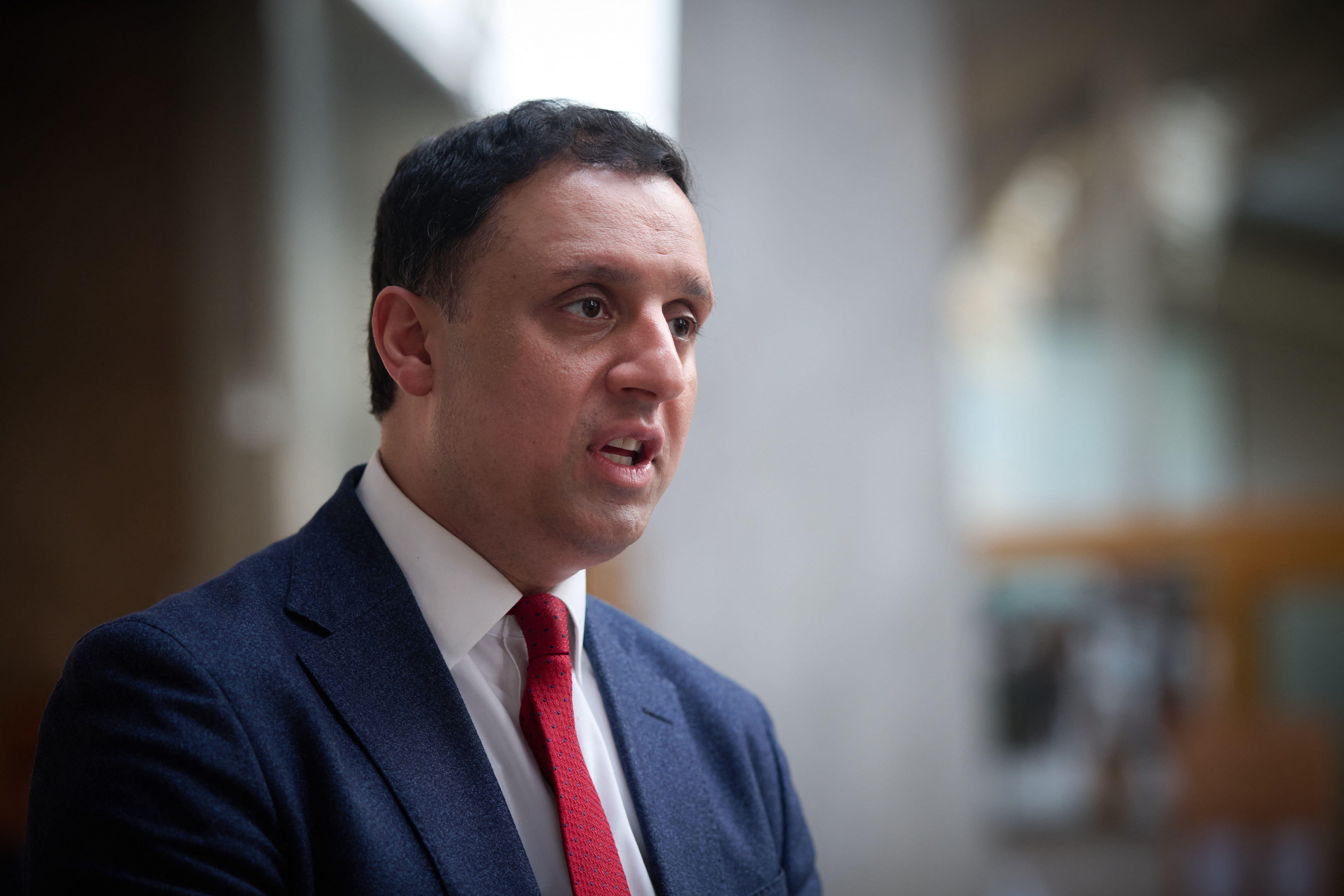
Scottish Labour leader Anas Sarwar | Alamy
“Polling in April found that nearly half of Scots (46 per cent) find that even the cheapest ‘value’ ranges of food staples in the supermarkets are too expensive for them,” pollster Mark Diffley of the Diffley Partnership says. “Despite this, there is considerable scepticism among voters about the SNP’s manifesto plan to introduce a legal cap on staple food and drink products in supermarkets.”
Even before the Treasury news, the SNP’s policy wasn’t miles away from Scottish Labour’s. In his pitch to voters, Anas Sarwar’s party said it wanted to “convene a summit with supermarkets and other partners to drive down the cost of staple items and help protect family budgets in the face of continued instability”. “Leadership is about finding solutions to problems,” Sarwar said, pledging to “use the power of government to maximise people’s incomes so families get the support they are entitled to and do not miss out on help at the very moment they need it most”.
Still, the SNP is prepared for this one to get “politically nasty”, with pushback against the policy and, it is suggested, those it is intended to help. “The Tories will come back and say all these people have big tellies and mobile phones,” a source claims.
As for boosting nutrition and health, Professor Alexandra Johnstone says it’s hard to assess how effective the policy would be without further detail. But it’s an attempt, she says, to do something very difficult.
Johnstone, an expert at Aberdeen University’s Rowett Institute, says just 0.1 per cent of the population follows the NHS Eatwell Guide which advises, amongst other things, the consumption of at least five portions of fruit and vegetables a day, two portions of fish every week and a maximum of 150ml of fruit juice, smoothies or other sugary beverages per day.
Families could be helped by an extension of the Best Start Foods scheme, she suggests. The initiative helps low-income pregnant women and mothers with young children buy milk and fruit. And she says raising maternity pay to the minimum wage level – something outwith the Scottish Parliament’s gift – would also provide better support for breastfeeding women.
Poverty limits not only budget choices but bandwidth, Johnstone says, constraining the way those on lower incomes interact with food. “We know what the advice is. Behaviour change is a problem; poverty contributes towards that problem. You are at over 50 per cent greater risk of living with overweight or obesity if you are living in an area of deprivation.
“The food system is very complicated and that means not one solution is going to fit all. If you think about the parts of the system from fork to farm, one solution is unlikely to meet the needs of all moving parts.
“Chicken alone doesn’t provide a meal solution because you need money to cook and to serve it with things that the family are going to eat. That’s what makes it complex. Promotions only offer a temporary solution and so I welcome the ethos that this is a really important problem to try and tackle.
“It would go a huge way to achieve long-term public health goals,” she says of the price cap.
“I’d like to think it was achievable. Embracing this challenge is the first step.”
Holyrood Newsletters
Holyrood provides comprehensive coverage of Scottish politics, offering award-winning reporting and analysis: Subscribe