'I was a waste of space, a scumbag, and pure junkie... I had been inside for so long I didn’t know how to adapt to outside any more'
Connie has just found out she will be provided with housing when she’s released from prison in less than a month.
Standing outside one of the kitchens in HMP Grampian, where she’s been working as part of the Greene King employment programme, she’s smiling from ear to ear. It means she’ll have both a place to call home and a job as soon as she leaves the prison gates.
“I’m chuffed, really happy. I’m actually proud of myself for the first time in a long time,” she says. Still, there is a sense of trepidation about the future. She’s coming to the end of her first ever prison sentence, a short-term one, but she’s been in and out of the justice system for years, mostly on remand. Is she nervous?
“I’d be lying if I said I wasn’t – but not so much as I used to be, because I’ve got all this set up,” she replies. When she’s previously been released from remand, she’s gone out with little support. Inevitably, that led her to repeat the same mistakes again and again. She hopes this time will be different.
It’s like your Britain’s Got Talent moment almost, it is their chance to shine... And the majority of them grasp it
HMP Grampian became the home of Scotland’s first prison-based Greene King Training Academy two years ago.
Prisoners are invited to take part in a training programme, delivered by professional chefs in a replica Greene King kitchen, which helps to build their skills and obtain an SVQ-accredited qualification. Many are then offered a job at a Greene King restaurant on release.
“The job has given me experience and structure,” says Connie. “It’s keeping me going. It’s a good feeling, it’s preparing your brain to keep doing it [after release]… It’s giving me the incentive to keep going. I really want to change my life and just turn it back around. I think this is it.”
While the Scottish Prison Service (SPS) has long offered education programmes like this, there has been a gap between that and what happens on the outside. Darren Traves, who has worked as a catering officer for SPS for 18 years, says this lack of “onward movement” after getting a qualification meant the time often went to waste.
Traves continues: “It was probably ticking boxes for the parole board and progression, but there was nothing further once they were released. Now with the training academy, it’s coming up for two years and we’re starting to see the results. Folks are getting employed and not returning, which is what the desire is at the end of the day. We need to make these guys parts of their community. That’s the big step.”
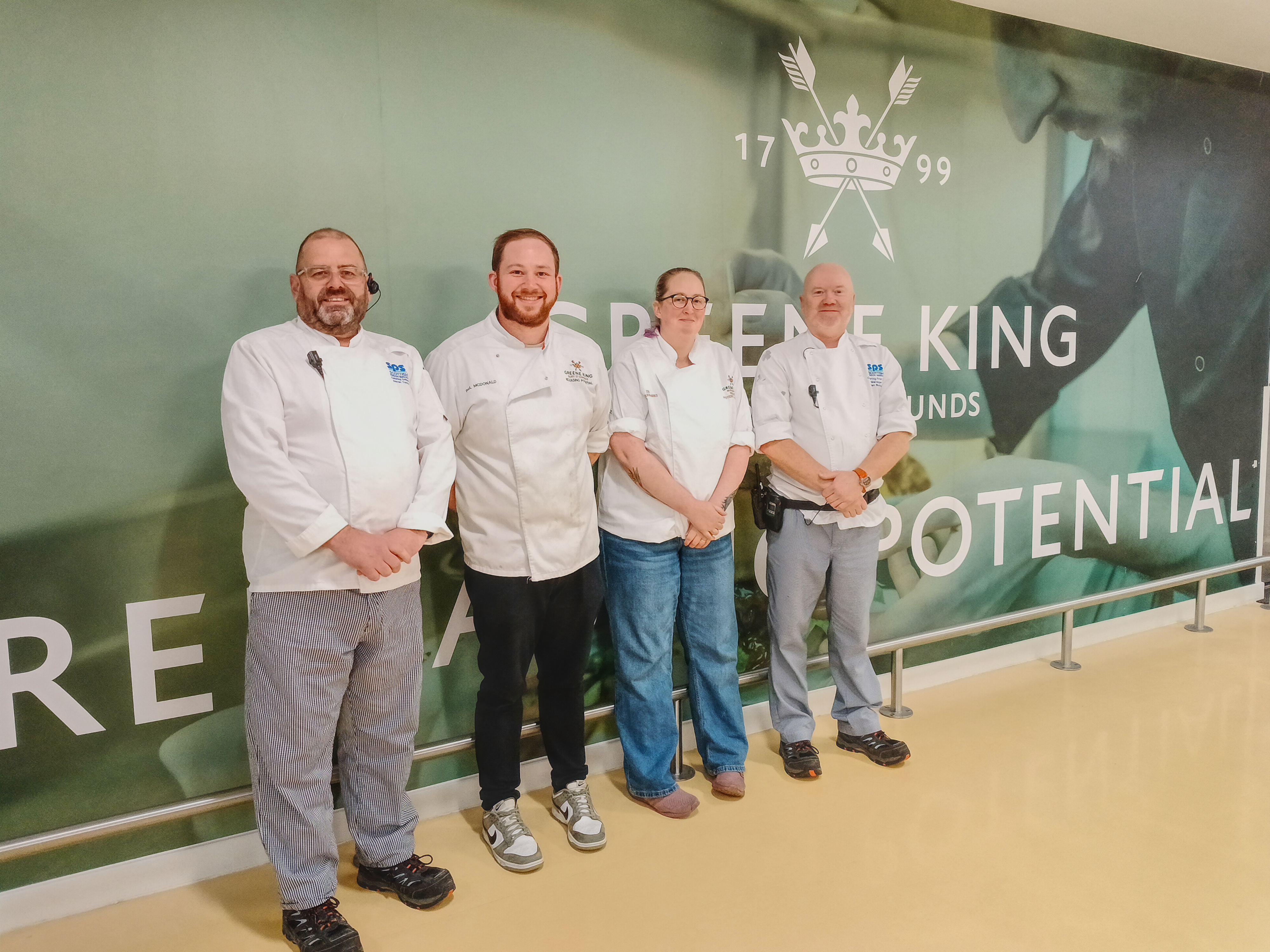
The success has “created a really good buzz” around HMP Grampian and prisoners are asking to be let onto the course, he says. It’s about taking a chance on people who might often get passed over due to previous lifestyles. “It’s like your Britain’s Got Talent moment almost, it is their chance to shine in front of the judges. So it’s a golden opportunity for them. And the majority of them grasp it.”
The programme has seen 342 former prisoners secure employment at Greene King venues across the UK since its inception. Some of them remain with the company, while others have gone on to get jobs elsewhere.
It is all part of wider efforts to improve the rehabilitation and reintegration offer in prisons. The aim of SPS’s new Prisoner Pathway programme is not just to ensure people don’t return to custody, but to help them flourish beyond the prison gates.
Currently still in its scoping phase, Prisoner Pathway will see every inmate in Scotland receive one tailored plan to support their reintegration on release. At present, prisoners can have multiple different plans depending on their needs – for example one for mental health and another for general case management – which aren’t necessarily integrated.
Jennifer Stoddart, deputy director of policy at SPS, explains: “One of the big focuses in the pathway work is to develop streamlined and individualised pathways that manage and address people’s risk, but look equally at their needs, how we can support their rehabilitation, how we make sure that we’re giving them as many opportunities as possible to rehabilitate and also to really support reintegration.”
I’m better than this. I want to do something better than this, but I do need help, support and guidance
The work has become necessary as the service deals with increasingly complex cases. Prison populations are getting older, there are more people serving long-term sentences, and more people are jailed for sexual offences.
Last September, the Scottish Human Rights Commission warned that the demands this changing population is placing on prisons may mean people are remaining in custody for longer than they should be because they cannot access rehabilitation programmes.
A report from the Prison Reform Trust, published around the same time, said those on Orders for Lifelong Restriction often see their progression through prison “stalled” by “systemic barriers and waiting lists”. This limits prisoners’ ability to demonstrate they are suitable for release when assessed by the parole board.
Prisoner Pathway hopes to see every person in custody move to less secure conditions as early as is appropriate, which in turn helps reintegration. Stoddart says: “As an organisation we want to make sure we’re doing everything we can to make sure people are as ready as they possibly can be when they are in front of the [parole] board.”
The programme will move to delivery phase from March and will run until mid-2028. Stoddart says this time will provide room to “evaluate and tweak it and make sure that the final product works for everybody”. “We will have to try things and we won’t get it right first time,” she adds. After that period, it is hoped the pathway will be fully embedded across SPS.
Deciding how to measure success, however, has been difficult to pin down. “At a high level the measure of success is people don’t come back,” Stoddart explains. “But some people will because their lives are incredibly difficult and chaotic. However, they might stay out for longer, and that for them is a success.”
One case in point is Mikey, who is also in custody at HMP Grampian. He has spent most of his adult life in and out of prison, largely because of a drug addiction. He was determined to break the cycle and so, ahead of his last release, he was placed on the Prison to Rehabilitation (P2R) protocol.
“I don’t think there was anybody made aware, coming up to my last liberation day, what I was going out to,” he says. “I was going back to the stresses of it, whether it’s the housing, the lack of family, the lack of support. I knew if I had the experiences in the past… well, I thought, no, let’s try and do something different. I’m better than this. I want to do something better than this, but I do need help, support and guidance. The rehab for me was a must.”
Support started in prison itself, with staff working with Mikey to prepare him for release into a residential rehab. He was there for four months, longer than anything he’d managed previously, and at the end of his stint was even able to sign a permanent tenancy agreement for the first time in his life. That gave him his first taste of what his life could be.
“I began to value my freedom a lot more, on a day-to-day basis. It’s not a case of ‘my life is great’ – I had stresses and struggles – but there were days when I was waking up in the morning with a smile on my face because I wasn’t waking up with an addiction and a sense of, shit, I need to go and get drugs or money. I wasn’t addicted or habitually using drugs and, for the first time ever, I was getting up and not running to the chemists.”
Unfortunately things didn’t go to plan and his former lifestyle caught up with him. He admits to feeling like he “let a lot of people down because I’ve come back to prison”. But one of the prison officers, Graeme Young, steps in to remind him that managing to stay out of prison for longer than he’s managed before is not a failure.
“No, you’re right, definitely,” Mikey replies. “When I look back, I wouldn’t have lasted that long without help and support and stuff… I’ve been in prison most of my life. So, I shouldn’t, and I don’t see it as a failure, going to rehab and landing back in prison. It’s a massive learning curve that I will learn through and move forward. I want to be a success. I believe I’m better than the life that I’ve lived. I think I’m capable and able to contribute to something in society.”
There are too many people in too few prisons, preventing the service from fulfilling its core duties to keep people safe and support rehabilitation
Working with external stakeholders and utilising the experience of those outside SPS has become a hallmark of its modern approach to rehabilitation. HMP Grampian’s governor Martin Milne admits that has not always been the case. “I remember, quite a few years ago now, when the prison service thought that we didn’t need the support of anybody else. We would do things on our own. It was like there was a big wall to keep people out, as well as keep people in.
“We’ve really changed and we’re more humble now and realised we can’t do this alone. It doesn’t make sense to do it alone. We’ve got partners that are better skilled at doing this than us and we want to engage with them, and it’s all about making Scotland safer,” he says.
The location of his prison on the outskirts of Peterhead has been a real benefit as it reshapes its rehabilitation offer, he says, because the close-knit community helps to forge better links. He describes HMP Grampian as the “local prison” because more often than not those housed here are from the local area, as are those who provide support to prisoners both before release and after. The aim is to make the transition “seamless”.
While HMP Grampian may benefit from its location, these same lessons are being applied across Scotland and are the thinking behind the relatively new Upside programme. This is the national prison throughcare service, formally launched in April last year, to help those on short-term sentences or on remand.
Upside roughly replaces the Throughcare service, which was suspended back in 2019 due to resource constraints. An SPS spokeswoman at the time said dedicated Throughcare staff had to be “deployed where they are needed most” while prisons were “stretched”. She said the service would be relaunched “when it makes operational sense to do so”.
Kieran was an early beneficiary of Upside upon its launch. Like Mikey, he has been caught in the revolving door of prison. On previous releases, he has only engaged with social workers who he says did not provide the holistic support he required. That changed when he met Pixie, one of Upside’s community workers.
He met Pixie before his release and felt immediately she had “enough time to give”. She could help him with anything from arranging medical appointments to just checking in. And the big difference was knowing her beforehand.
“You know the person a bit so they’re easier to talk to instead of walking in a room with a stranger, and then you can have your back up. You’re not meant to judge a book by its cover, but sometimes you do and it can start off a bad relationship and then it’s not going to work out, you’re not going to get the help you need… You don’t know them at all, which can be nerve-racking or put you off going.”
He ended up back in prison after making a “simple mistake”, he says, but he still considers the time he managed to spend out – longer than previous attempts – to have been a success. “A short success, because I didn’t manage to stay out longer, but yeah, a success.” He’s hopeful he’ll manage even longer, with Pixie’s continued support, when his next release date comes.
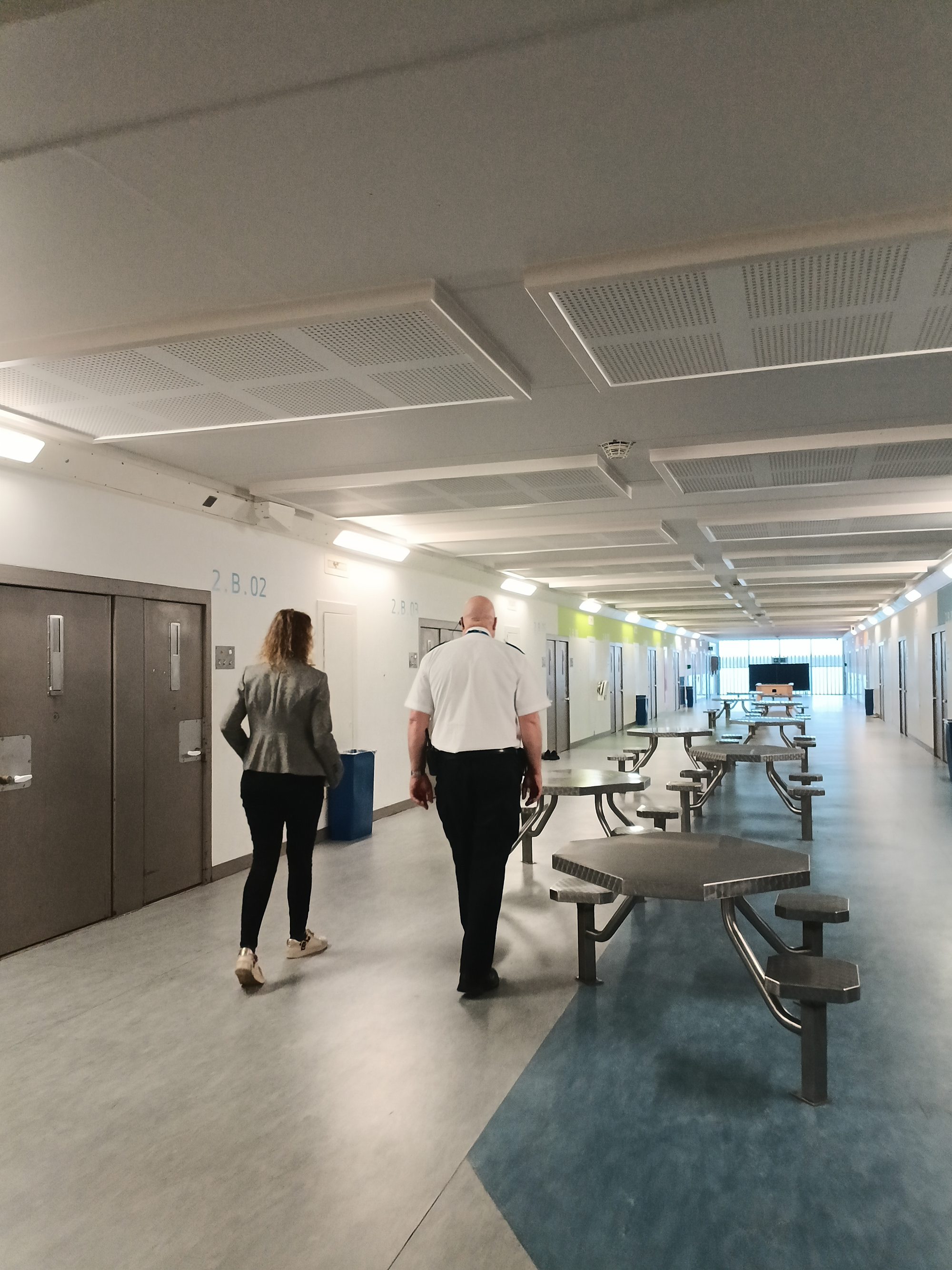
However, the resource issues that ended the Throughcare service have not gone away. In the last few months, the size of the prison population has reached a record high. While numbers fluctuate daily, Scotland’s prisons are consistently well over capacity, housing hundreds more people than the estate is designed for.
HMP Grampian, while not as under-pressure as prisons in the central belt, is “not immune” to this issue, Milne says. And throughout conversations with numerous prison staff, the elephant in the room is the limit this overcrowding is placing on their ability to do as much as they can for the people in their care.
This has been picked up in recent reports by the prisons’ inspectorate. “All positive work is put in jeopardy by the pressures in the system which are not within the gift of the Scottish Prison Service to do anything about. Put simply, there are too many people in too few prisons, preventing the service from fulfilling its core duties to keep people safe and support rehabilitation,” a report concluded in November.
The Prisoner Pathway model will alleviate some of this pressure by helping to streamline some processes and avoiding duplication, Stoddart argues. This will free up staff time to be able to do more of the rehabilitation and reintegration work.
But in the meantime, overcrowding is having a real impact on staff morale. Phil Fairlie, assistant general secretary of the Prison Officers Association, says: “They didn’t become prison officers to warehouse human beings. That’s not why they joined. They came in hoping they were going to make a difference, that they could change people’s lives and they could have a positive, genuine impact on society. And we’re not getting to do that. We’re not able to see our efforts resulting in that outcome.
“It is incredibly frustrating, and it does affect the morale of staff because an awful lot of what they’re doing every day is just churn. And that’s pretty soul-destroying and demeaning for the staff and the prisoners.”
When staff are prevented from doing reintegration work it is not just a “minor inconvenience”, he says. It makes Scotland less safe. “It has a significant impact on the ability to do the stuff that from the public’s perspective really matters the most, which is making sure that when the people come back out of prison, they’re far better prepared to come out and give a positive contribution to society rather than go back to crime and offending. It’s the bit that the public are probably least aware of but should be most concerned about.”
They helped me when me and everyone else thought I was a lost cause
Recidivism in Scotland has dropped over the last decade, yet the reconviction rate for those released from custody remains high. Of those release in 2021-22, the latest figures available, 42.8 per cent were reconvicted within a year. Yet the small successes of Mikey and Keiran speaks to a bigger picture – while they have landed back in prison, they have done so after a longer time outside than they’ve had in years.
And there have been even bigger success stories. Before I leave HMP Grampian, I’m handed an email from Steven*, a former inmate who was put on the same P2R protocol as William. Steven was 19 when he developed a drug addiction, and he was in and out of prison for committing hundreds of offences, largely shoplifting to fund his habit. Over the course eight years, the longest period of time he spent outside of prison was seven weeks.
“I was a waste of space, a scumbag, and pure junkie. Hadn’t left jail in years,” he wrote. “I had had enough of it all, even life, and tried to kill myself every time I got out of jail by self-harm or overdose. I had been inside for so long I didn’t know how to adapt outside anymore.”
P2R was his last chance. He admits to being sceptical about it first, but he managed to stay in rehab for nine months. Steven was released in December 2022 and he’s never been back. He’s still in touch with some of the prison staff, but now as friends – and it’s clear they could not be prouder of him.
Steven continues: “I’m grateful that Outreach started when it did, because I think I’d be dead or in prison for a long time [without it].
“I think they can help a lot of other people. No – I know they can because they helped me when me and everyone else thought I was a lost cause.”
*not his real name
Holyrood Newsletters
Holyrood provides comprehensive coverage of Scottish politics, offering award-winning reporting and analysis: Subscribe