Strengthening transport connectivity across Orkney’s island communities
Orkney Islands Council
Maintaining vital air and sea links requires complex and coordinated joint working
For island communities, transport is far more than a means of travelling from one place to another. It is a fundamental component of sustainable communities, supporting access to healthcare, education, employment, essential services and economic opportunity. Reliable transport connections help people remain connected with family, friends and wider support networks while enabling businesses and public services to operate effectively.
In Orkney, maintaining these vital links presents unique challenges. The geography of the archipelago means that ferry and air services provide lifeline connections between islands, requiring significant ongoing investment to ensure services remain reliable, accessible and resilient.
Heather Woodbridge is the leader of Orkney Islands Council. She said: “In recent years, collaboration between Orkney Islands Council and the Scottish Government has helped strengthen the foundations for future transport connectivity. Through revenue and capital funding, support for the Ferries Taskforce, investment in infrastructure and backing for the Ferry Replacement Programme, progress has been made towards developing a more sustainable and resilient transport network for island communities.
“This support has come at an important time. Like many island authorities, Orkney operates transport services that are essential to residents but costly to maintain. The inter-island ferry fleet is ageing, air services are experiencing rising demand, and communities require transport systems that can continue to meet changing needs into the future.”
Recognising these challenges, a recent allocation of £2m in capital funding from the Scottish Government has enabled a programme of strategic investments aimed at strengthening resilience across Orkney’s transport network. These include the purchase of a Britten-Norman Islander aircraft for the inter-island air service, the acquisition of the MV Toplander to support ferry operations, and investment in equipment to assist with airfield maintenance.
The acquisition of an additional aircraft is expected to enhance the resilience and capacity of Orkney’s inter-island air service. For many of the outer islands, air travel provides an essential connection to healthcare, education and other public services. Communities including North Ronaldsay and Papa Westray rely heavily on these links. Increased capacity and improved operational flexibility will help support service reliability while creating opportunities for more responsive scheduling and future service development.
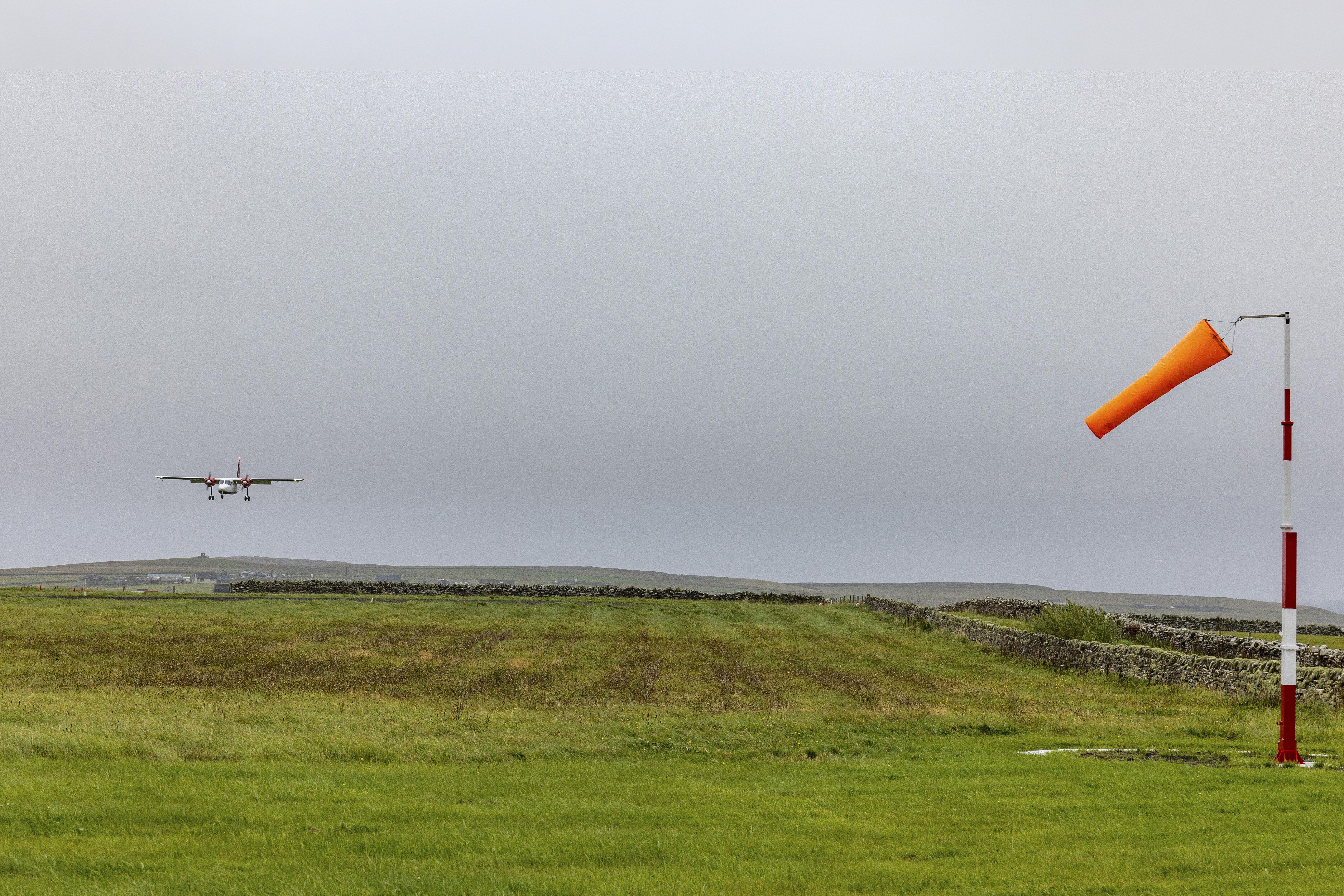
Image provided by Orkney Islands Council
Alongside aviation investment, funding has also enabled the purchase of the MV Toplander. Although not a replacement passenger ferry, the vessel provides additional operational resilience within the wider network. It supports freight movements and can help maintain continuity of service during vessel breakdowns, maintenance periods or refits. With much of the existing fleet reaching an advanced age, resilience measures of this nature play an increasingly important role in sustaining island connectivity.
Investment has also been directed towards supporting airfield infrastructure across the North Isles. A new runway roller will assist local teams in carrying out maintenance work more efficiently, helping licensed airfields continue to meet required safety standards while improving operational independence.
While these projects provide immediate benefits, the long-term focus remains on fleet renewal through the Ferry Replacement Programme, one of the most significant infrastructure programmes undertaken by Orkney Islands Council. Many vessels currently operating within the internal ferry network are more than 35 years old, increasing maintenance requirements and placing greater pressure on service reliability.
The Ferries Taskforce, established in 2022, has played a key role in bringing together the Council and Scottish Government to develop an approach to fleet renewal. Funding support has enabled work to progress on business case development, vessel design, operational planning and funding arrangements, helping move the programme from concept towards delivery.
A significant milestone was reached when additional flexibility was introduced to inter-island connectivity funding arrangements, helping create a more sustainable financial framework for investment in replacement vessels while maintaining essential services. Further progress was achieved through confirmation of funding support for Phase 1 of the Ferry Replacement Programme.
Phase 1 will focus on replacing vessels serving Eday, Sanday, Stronsay and Westray. Developed through engagement with island communities, ferry crews and stakeholders, the proposed vessels are designed to provide improved passenger facilities, enhanced accessibility and increased carrying capacity. Planned features include lift access, dedicated wheelchair facilities, Changing Places provision, family-friendly spaces and flexible energy platforms that can support future technological developments.
The programme highlights the importance of long-term planning and partnership working in addressing the transport needs of island communities. Connectivity challenges are complex and require coordinated action across multiple organisations to ensure solutions are both practical and sustainable.
Councillor Woodbridge, commenting on the positive collaboration with the Scottish Government, said: “Investment in transport infrastructure delivers benefits that extend well beyond the transport sector itself. Effective connectivity supports local economies by enabling businesses to access markets, services and customers. It contributes to population retention by improving access to education, employment and healthcare, while also supporting tourism, community resilience and wider efforts to address depopulation.
“For Orkney’s islands, transport connectivity remains central to long-term sustainability and prosperity. Although significant work remains ahead, including future phases of ferry replacement and continued infrastructure investment, recent progress demonstrates the impact that strategic planning, collaborative working and targeted investment can achieve.
“Through ongoing investment and partnership, Orkney is working towards a transport network that is more resilient, accessible and capable of supporting island communities for generations to come.”
This article is sponsored by Orkney Islands Council
www.orkney.gov.uk
Holyrood Newsletters
Holyrood provides comprehensive coverage of Scottish politics, offering award-winning reporting and analysis: Subscribe