'Whatever happens in the election, we must see continuity of purpose on climate change'
On the penultimate day of session six of the Scottish Parliament, climate secretary Gillian Martin unveiled the long-awaited Climate Change Plan.
It is, she said, “more than a plan to meet our moral and statutory obligations” on reaching net zero; it is a “route map to realising the economic and social gains for people across the whole of Scotland as part of a fair and just transition”.
It has taken time to get to this point. A draft was published last autumn, opened to consultation, and Scottish Parliament committees invited to offer their input.
But before even that was published, the government had to reckon with its past mistakes on setting climate targets. The previous approach, adopted first in the landmark 2009 Climate Change Act and subsequently amended in 2019, had been to set milestone targets on emissions reductions. But after a series of missed annual climate targets, followed by a Climate Change Committee (CCC) intervention two years ago that the 2030 interim target was “no longer credible”, there was a clear need to change tack.
Why should we believe that those are credible pathways?
The Climate Change (Emissions Reduction Targets) Act 2024 was the consequence. While the overall 2045 target to reach net zero remains in place, interim targets were scrapped in favour of carbon budgets. These are legally binding caps on total emissions across five years, and mirror the same approach taken elsewhere in the UK.
That legislation, according to CCC chair Nigel Topping, was a “significant reset” in Scotland’s journey to net zero. And now having reviewed the draft Climate Change Plan for its annual progress report, the CCC says the Scottish Government has a “credible plan” in place, at least when it comes to the first carbon budget for 2026-2030.
Topping welcomes the shift from the over-ambitious and details-light approach of the previous targets that had become too common. The new plan allows society, citizens and industry to engage with the details, while people like him can use it to take stock of “what’s working well and what’s not working so well”. “Without that reset, we weren’t really able to have that conversation,” he adds.
The final version of the Climate Change Plan won’t be reviewed by the CCC until next year’s annual report, when the advisory body will also look at what progress has been made in its first 12 months. In particular it will be interested in what ministers do in woodland and peatland restoration – an area with some risk attached but that is “resolvable fairly quickly”.
.jpg)
“It’s really about funding, consistent funding, because we know the deployment capabilities there, but if [funding] doubles and then halves and doubles and halves, it’s also not good for investment or for jobs or for landowners,” Topping explains.
While content with ambitions for the next five years, the CCC has raised concerns about the lack of detail beyond 2031. The two biggest areas of risk relate to the decarbonisation of heating – a topic Scottish ministers tried and failed to get to grips within the last session of parliament – and a “significant level of reliance” on new negative emissions technologies (NETs).
On the former, Topping explains the CCC is concerned Scottish Government modelling “may not be realistic” – with it estimating the majority of homes would move away from fossil fuel heating systems after 2035. Similarly on NETs, the CCC says government appears to be “confident that it can go significantly faster than we recommended”.
“We’re very relaxed about the fact that the government doesn’t follow our advice to the letter,” Topping says. “It’s advice and it is for the government to make the judgement call on what to follow and what to tweak. We’re not grumbling that the government hasn’t followed our advice. We think there are more things at play in policy decision-making than just the advice that we give – but it’s the lack of detail.
“Why should we believe that those are credible pathways? If we can’t see the detail and we can’t say we’re confident, then that starts to be quite high risk.”
It doesn’t feel like we’re that much further forward than we were five years ago
Topping, who spoke to Holyrood before the final plan was published, said he didn’t expect these issues to be addressed immediately given the amount of policy work involved.
This proved to be the case, with the main changes to the plan relating to monitoring and evaluating delivery. This was called for by the parliament’s Net Zero, Energy and Transport Committee, whose report said the plan would benefit from a “comprehensive mix of performance indicators”, including the possibility of a “public-facing dashboard communicating progress (or delay) in key policy areas”.
Various environmental groups expressed frustration with the limited changes between the draft and final plans. WWF Scotland said it was “extremely disappointing not to see stronger action”; Friends of the Earth Scotland said it was built on “rotten foundations”; and Stop Climate Chaos Scotland pointed to “shortcomings” in key policy areas.
And responding to Martin’s statement in the chamber, Patrick Harvie of the Scottish Greens accused the government of spending “the last two years delaying, ditching or downgrading climate action”. In particular, he was referring to the heat in buildings programme – the area he had responsibility for when in government, but which was kicked into the long grass twice by the SNP over concerns about cost.
 Credit: Alamy
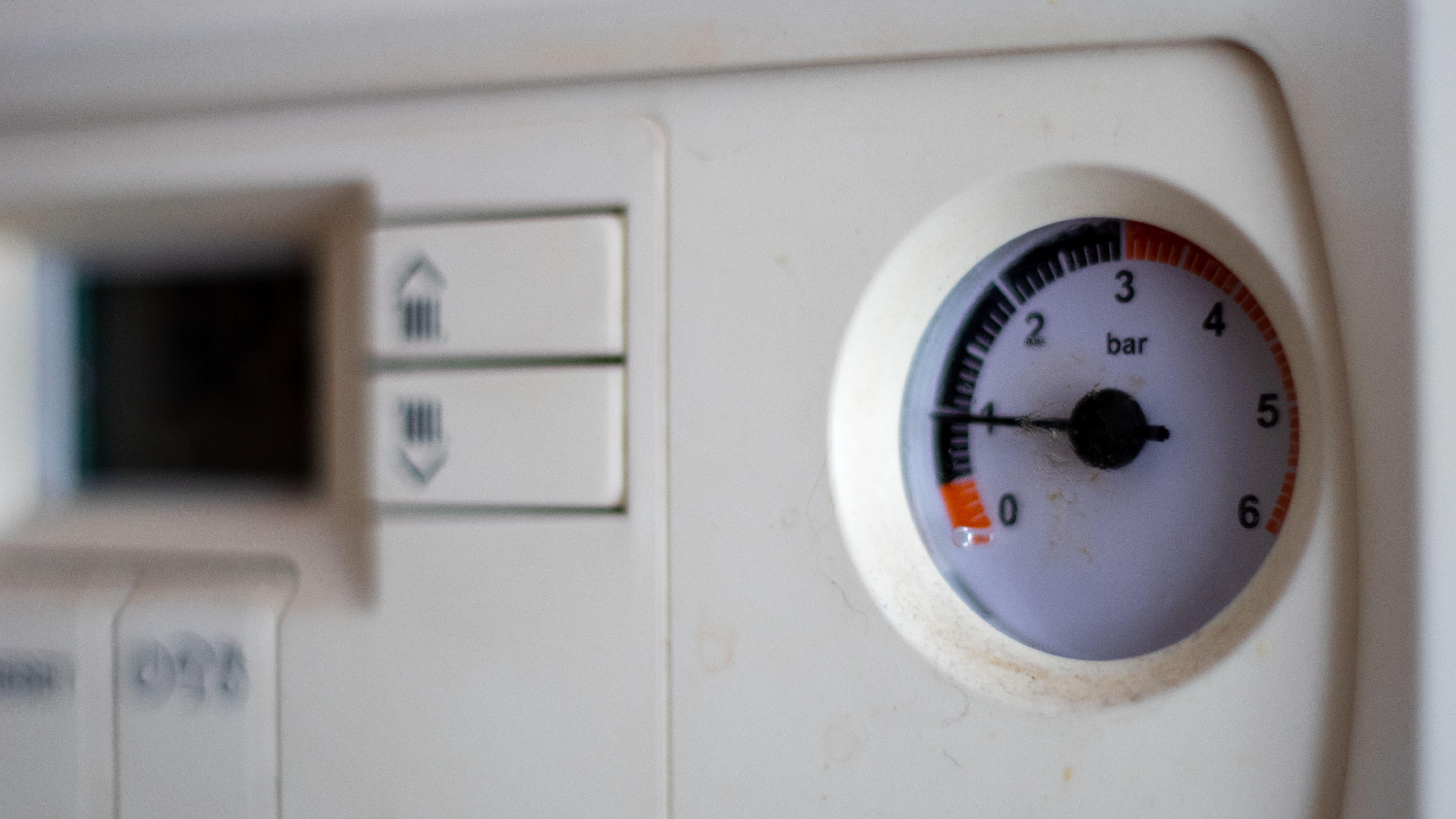
What the plan does include is a commitment to a revised heat and building strategy and delivery plan by the end of 2026. Gillian Campbell, director of the Existing Homes Alliance Scotland, says this will be “absolutely critical” moving forward, as it will set out expectations on homeowners, landlords and industry.
But Campbell has been frustrated with the repeated delays to the Heat in Buildings Bill. She argues it is vital the next government takes leadership early on in the new session, including “early sight of regulations so people know what they need to do and by when”. But like the CCC, she is concerned the delay until the late 2030s will create a “bottleneck of demand”.
“What we really need is a phased implementation that gives industry and supply chains time to grow to meet the demand throughout the 2030s. If we just have this single target of 2045 and we don’t start seeing a phased increase before 2035, then we’ve not given businesses the opportunity to grow and develop the skills that we need. We’ll just end up where we are now, but in 10 years’ time.”
The Scottish Government published a draft of the bill last November, with a commitment to bringing it forward as early as possible after the election if the SNP remains in power. But importantly it did not contain measures to force homeowners to switch to green heating soon after buying a home, as was the original proposal.
Martin said at the time this was because such a measure would “make people poorer”. She added: “I’m going to introduce a Heat in Buildings Bill when I can be satisfied that those interventions within it will decrease fuel poverty at the same time as decarbonising houses.”
While Campbell agrees with the sentiment, saying both elements must be “taken forward hand in hand”, she says in order to do this, existing fuel poverty schemes must be “massively ramped up to meet the demand”. And she also argues that for costs to come down, policy certainty is vital.
“At the start of the last parliament there was a lot of optimism and a lot of hope about making really strong progress on heat decarbonisation and fuel poverty,” she says. “Now it doesn’t feel like we’re that much further forward than we were five years ago.
“If we have the right plan introduced next year, then there’s no reason why we can’t be making great strides over the next five to 10 years. But it does need leadership from the Scottish Government.
“We have got a lot of the building blocks in place. There has been a lot of good work over the last parliament, although sometimes it feels like we’ve not made a huge amount of progress… We’ve got a draft bill that, yes, we think is too weak, but there’s the bones of the regulation there that we can build on early in the next parliament.”
The fundamental point is [NETs] are a little bit of wishful thinking
While there is disagreement on the how of heat decarbonisation, there is at least a clear path. The same cannot be said for the other area the CCC flagged as a risk: NETs.
These are technologies that seek to remove and store carbon dioxide directly from the atmosphere and are hoped to be the solution for sectors and industries where full decarbonisation is considered difficult and costly. The problem is that much of this technology is yet to be proven at scale.
Carbon capture and storage is the main type of NET the Scottish Government is relying on.
The Acorn project at Peterhead and linked Scottish cluster is central to these plans – but question marks remain over its delivery. Storegga, one of the UK Government’s key partners, pulled out of the project late last year.
Energy minister Michael Shanks has said progress was still being made despite the setback, and the government was “doing everything possible to make sure it stays on track”. But a final investment decision is not expected until 2028 at the earliest.
My hope would be that whatever happens in the election, we see continuity of purpose
Dr Mike Robinson, chair of Stop Climate Chaos Scotland, is wary of ministers relying too heavily on what is still unproven technology. “The fundamental point is [NETs] are a little bit of wishful thinking. It’s as if we’ve recognised that some emissions reductions are going to be quite difficult, but rather than specify how we’re actually going to bring those about, we’re sort of saying, ‘hopefully NETs will do that’.”
In the meantime, he says, ministers are not engaging in alternatives. “It’s a distraction from things we could just be getting on with and therefore it’s in danger, in a very tightened financial environment, of using up any money that is available for things that might not even work when you could be making a difference in the short term.”
NETs form such a significant strand of meeting later carbon budgets, yet Robinson says they have been used essentially to plug any gaps in the Climate Change Plan. He worries this means alternative solutions aren’t being thoroughly considered.
“If you want to know where the failures are, have a look at where the NETs are. It’s pretty much that simple,” he says. “What industry needs is clarity, certainty and long-term vision. As soon as you start to deliver that, you then drive investment and innovation in the key spaces where you need it. But as long as you don’t do that, then you’re not seeing those changes.”
Despite these risks, Topping said the 2045 target is still “very achievable”. Asked what his key message would be to the next Scottish Parliament and the government, whatever happens in May, he says it is important to “keep staying the course” and ignore those voices who argue the transition is unaffordable.
“If we continue the course now, we’ll have to spend a little bit more money, about £4bn a year, across the UK,” he says. “At the end of this, we have got rid of our dependency on fossil fuels, we’ve got significantly lower debt, we’ve got much better balance of payments, of trade, and we’ve got much cleaner air, and we’ve got more jobs.
“We can afford it. It’s front-loaded like any investment; you have to spend money before you get [a return]… My hope would be that whatever happens in the election, we see continuity of purpose with each government setting its own particular flavour, but not in a way which starts to flip-flop and spook investors and jeopardise not just the transition, but energy security and the jobs and the lower debt levels that would result from making that transition smoothly.”
Holyrood Newsletters
Holyrood provides comprehensive coverage of Scottish politics, offering award-winning reporting and analysis: Subscribe