Staying afloat: If Scotland's getting free swimming lessons, it needs pools too
It’s 15C in Gourock, but you wouldn’t know it.
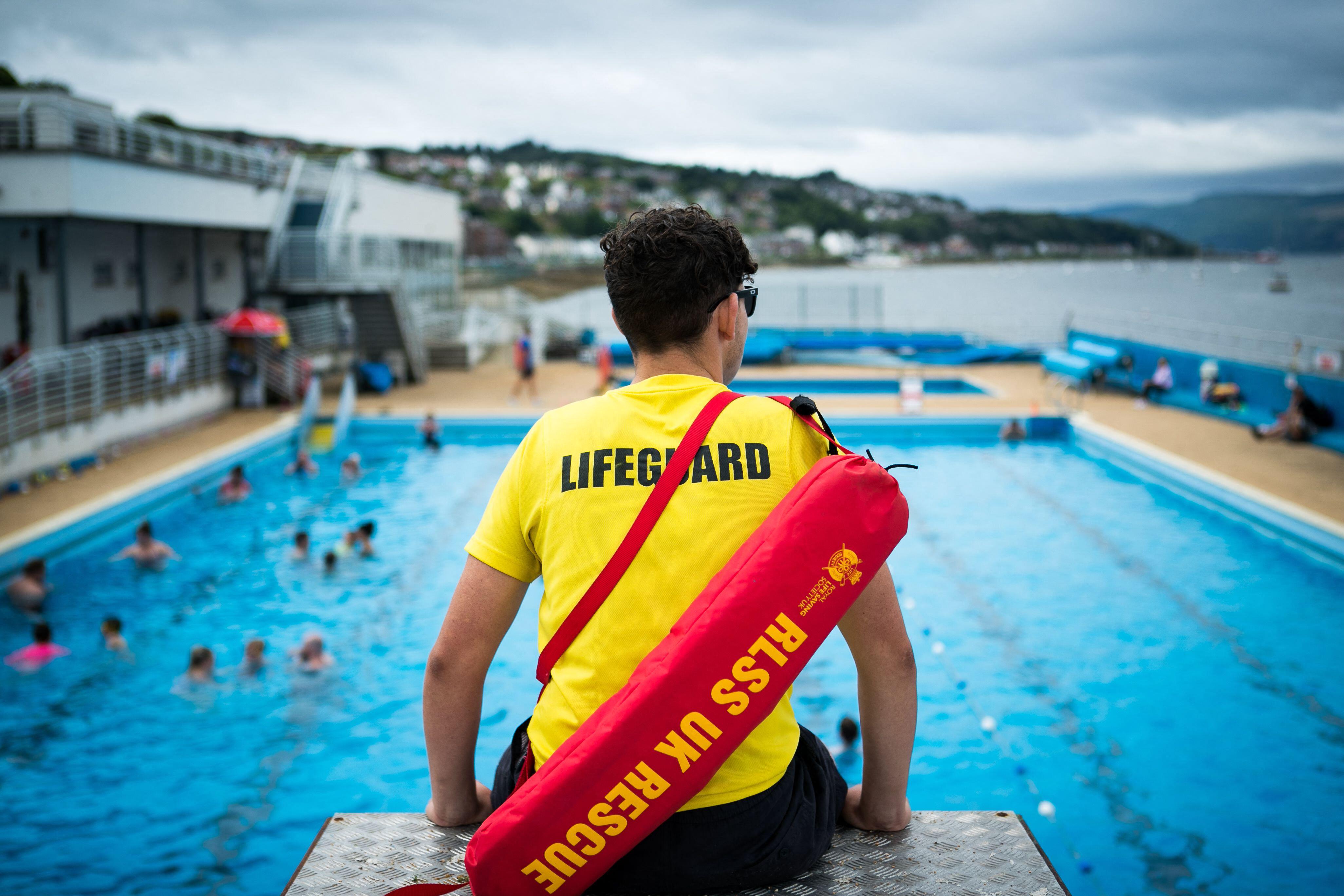
The town’s outdoor pool, the oldest of its kind in Scotland, has reopened for the summer season but conditions are such that the lifeguards observing the swimmers are huddled against the wind in long yellow coats. One has grabbed a patio umbrella for extra shelter, and a banner advertising ice cream is fighting for its life against the strong winds whipping up the adjacent River Clyde. Small boats moored nearby bob wildly. “You picked some day for it,” says the woman at the ticket booth.
But this place is an institution – a public baths so beloved it has its own souvenir T-shirts and hoodies, not to mention featuring on the last Blur album. The Ballad of Darren is emblazoned with an image of a lone swimmer in the heated saltwater pool on a day much like today, its brilliant blue surfaces contrasted against a heavy grey sky, foam-flecked river and the brooding Argyllshire hills opposite.
But there is no shortage of swimmers nipping out from the changing rooms and into the 29C lido: pals, families, folk on their own. A group of five men in the lanes takes a break, gabbing about mental health; a young child resists attempts to be taught to swim. A return customer passes staff her water bottle and it’s brought back to her refilled. “We’re brave,” chuckles an older woman to her pal. As the wind rises again, overhead bunting looks ready to take off and a heavy salt spray is whipped up from the pool. The swimmers wince as it is blown directly into their faces.
At close to 120 years old, this facility is one of three public pools in the region, spread out across its three towns. There’s a big emphasis on swimming here – there has to be, says Councillor Jim Clocherty, Inverclyde Council’s convener of education and communities: “We’re surrounded by water. We’ve got reservoirs, Loch Thom, the river – you can’t go half a mile without running into it. It’s extremely important for young people to learn to swim.”
With that ethos, local children are not only offered free swimming sessions in the school holidays, but all primary fours are also given gratis lessons to keep them safe in the water.
 Gourock's lido in better weather | Alamy
And now, with the promise of a share of £2m of Scottish Government funding for free swimming lessons for the nation’s children, Inverclyde Council is preparing to do more, allowing kids into the baths for free every Saturday from 10am-10pm, year-round. “We’ve not got that buttoned down yet,” said Clocherty, “but our officers are working on it.”
Free swimming lessons are one of the SNP administration’s big offers to the public. The measure was unveiled as part of the latest budget and represents one facet of a broader £40.5m investment in physical activity over 2026-27. The government’s “Summer of Sport” initiative, which seeks to harness interest in big-ticket events like the Commonwealth Games and World Cup to encourage more of the public to get active, is currently underway.
The swimming sum, it has said, could expand in the future, providing a service many councils may not be able to provide on their own. This month, the Accounts Commission warned Scotland’s 32 local authorities face a budget gap of around £500m in this financial year, with some potentially becoming financially unsustainable over three to five years.
“We believe that every child, regardless of their background, should be given the opportunity to learn to swim – a core skill that can save lives,” sports minister Maree Todd commented at the time of launch. “There is no better time to offer them that chance than now.
“We are preparing for a spectacular summer of sport which will see Scotland welcome some of the world’s best swimmers to Glasgow and having elite sportsmen and women competing live on our doorstep is an experience which can only serve to inspire.”
One of those elite sportspeople, eight-time Olympic medallist Duncan Scott, welcomed the spend, saying he was “delighted to see this Scottish Government commitment and investment in school swimming to keep children safer and more confident in, on and around water”. “As an island nation with so much access to water it’s critical that primary school children have access to basic swimming and water-safety skills,” he said.
Indeed, Scotland’s coastline runs to around 6,000 miles, and there are around 30,000 inland water bodies.
There were 39 accidental water-related deaths in 2025, with cases up almost 15 per cent year-on-year and most incidents taking place inland. That’s according to figures from Water Safety Scotland and the National Water Safety Forum, which put Scotland’s rate of accidental drownings at more than double that of the UK as a whole.
And already this year young lives have been lost in just such circumstances. Denny High School pupil Charlie Noble, 16, died at Bracklinn Falls near Callander at the end of May. Benjamin Glen, from Dumfries, died after entering the River Nith one month earlier. He had celebrated his 18th birthday just eight days beforehand and his family has called for greater awareness of outdoor swimming dangers like undercurrents and cold water temperatures, even on hot days.
Glen’s death occurred on the same day as the body of paddleboarder Oakley Coveney, 17, was recovered from Lochindorb near Grantown-on-Spey. The Forres Academy pupil had been with friends there the day prior, when emergency services were called to a report that he had got into difficulty on the water. “Words can’t describe the hole that has been left in our hearts,” his mother Chantelle said. “It’s gut-wrenching, it’s heartbreaking and tears me inside out.”
Ensuring access to safe swimming facilities is a laudable aim and produces results that are potentially lifesaving. But in a time of high energy costs and straitened public finances, owners and operators face tough choices about how to spend their budgets.
According to Scottish Swimming, there are 396 public baths in the country, with most of these – 56 per cent – more than 30 years old. Condition alone is thought to put 200 at risk of closure by 2030 and it’s thought that maintaining existing provision would require the building of five new pools every year at an estimated cost of at least £40.5m. Coincidentally, that’s the entire sum committed to this year’s national “Summer of Sport” activity.
And several facilities have recently been lost, including Armadale Pool in West Lothian, which was deemed no longer financially viable for operator Xcite more than two years ago. A demolition order was made for Bo’ness Recreation Centre several years after “serious structural failings” – including corrosion in the pool’s concrete walls – were first identified. Shuttered over unaffordable upgrade and operating costs in 2021, Alloa Leisure Bowl in Clackmannanshire was razed two years later. In Shetland, Scalloway pool closed in March after a funding bid was rejected.
Closures are often not due to lack of users. The 2021 Scottish Household Survey found 11 per cent of adults had been swimming at least once in the four weeks preceding the data collection.
At 12 per cent to 10 per cent, the rate of participation is slightly higher for women than men, and specialist lifts and hydrotherapy pools at many facilities provide access to activity for people with a range of disabilities, chronic illnesses and injuries.
But the National Benchmarking Overview Report 2021-22 showed council spending on leisure and culture services, including pools, dropped by almost 24 per cent between 2010-11 and 2021-22.
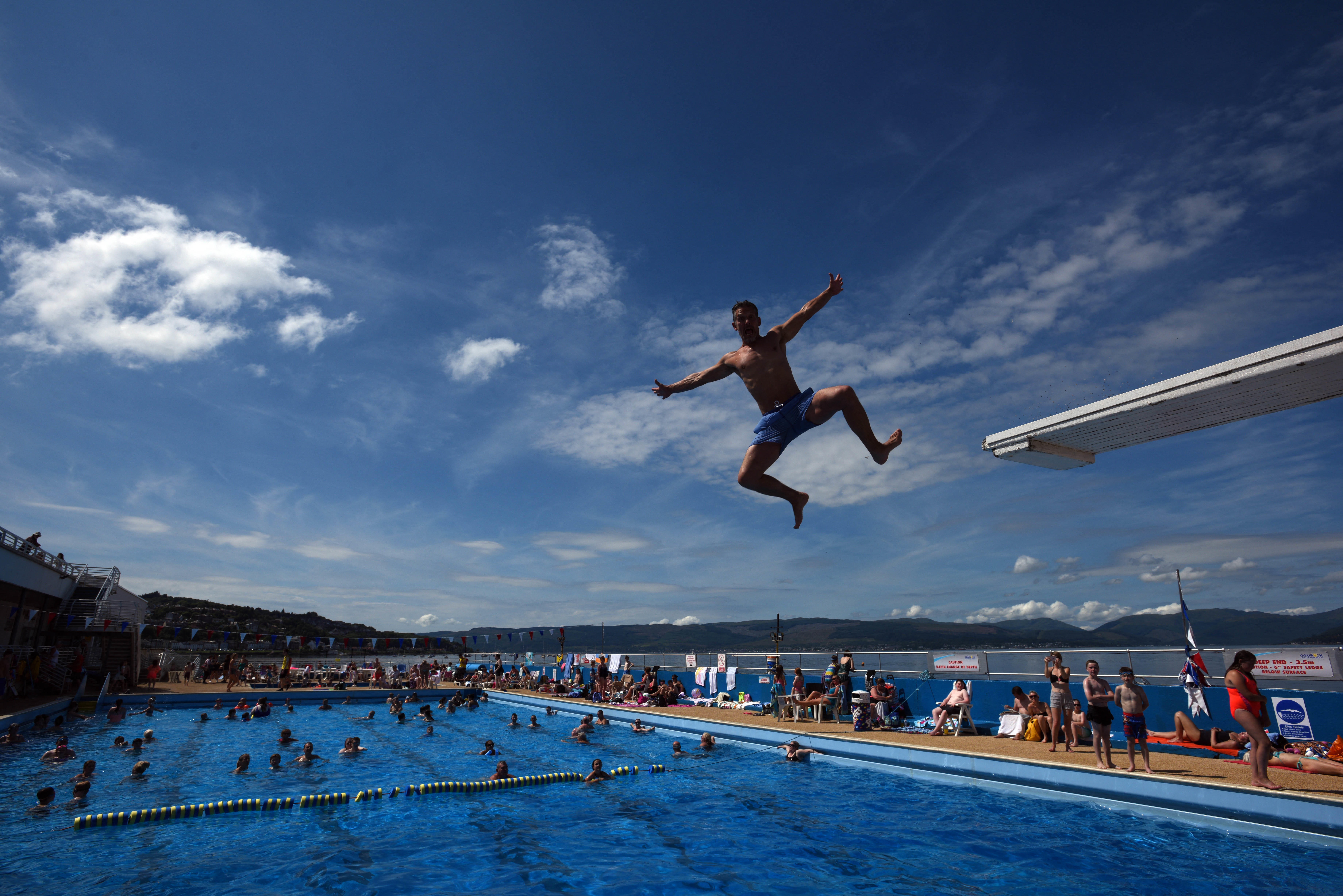
At some centres where services have continued, there have been uncomfortable compromises. Take Ayr, for instance, where the only dive pool in the west has been repurposed as part of a savings drive. Olympian Tom Daley was amongst those to join the campaign against the move, which reduces the number of surviving dive pools in Scotland to three.
It’s partly age that’s done for Ayr’s dive pool, which rather than closing completely will now be used for swimming lessons. The tank-style set-up is approaching 70 years old and was “never designed as a modern permanent diving facility,” according to Councillor Chris Cullen, South Ayrshire Council’s sports lead. Ongoing use meant having the tank “repeatedly overfilled beyond its intended design limits”, he said, causing damage and deterioration on the building and plant systems.
Ayr MSP Siobhian Brown, a government minister, told parliament that was “up to South Ayrshire Council”, but “conversations” about the future were taking place. “I recently met with a constituent who was concerned about this local closure,” she said, “and she told me about her son, who didn’t have much confidence, and she said, ‘Siobhan, when I see him on these diving boards he turns into a different boy, he’s on top of the world and he’s got all the confidence in the world’, and that really echoed with me”.
Given all these circumstances, it is perhaps no surprise that Scottish Labour deputy leader Jackie Baillie has called for clarity over progress in the SNP’s free swimming plan. “That has the support of parties across this chamber, and many of us included similar commitments in our manifestos,” she said in a recent debate. “So, we want you to make progress on this, and I want to press the minister on just how this will be delivered, because in my area we currently have a waiting list for swimming lessons. That backlog is actually a hangover from Covid, but there’s also a shortage of swimming teachers and a shortage of facilities, and I know that only 16 per cent of young people from disadvantaged areas take part in swimming lessons, so there is a massive inequality here.”
"We are very lucky that we’ve managed to keep our three pools open,” says Baillie’s partymate Clocherty, whose authority presides over an area with unenviable deprivation levels linked to historical and more recent deindustrialisation. Despite its compact size, it is home to the largest proportion of communities ranked in the country’s poorest 20 per cent. According to the Scottish Index of Multiple Deprivation, Greenock town centre is the absolute worst-off. “We try and stretch things as far as we can,” he says.
Clocherty is not a regular swimmer himself – he says he’s too peely-wally and the sight of him in Gourock Outdoor Pool would cause a safety hazard for planes flying overhead – but he’s an evangelist for the council’s programme, which he argues is a godsend for users.
The local authority currently commits £28,000 to its free tuition programme, £5,000 to weekly ASN-only swim sessions for families, and £155,000 to free access periods for children and young people. The offer is a key part of its poverty alleviation strategy, Clocherty says, considered along with school uniform grants and the universal free meals available at its school canteens. “It’s a whole package. We understand how tough it is for families,” he says. “The kids love the swimming.”
Still, provision must be carefully considered against other local needs. “We fully realise this is council taxpayers’ money,” Clocherty says. “Budgets are tight.
“We are doing these things as choices through our council, but for our parents and young people there’s a good package there.”
Whether that package can be extended in the way the council intends through further government funding remains to be seen.
When Holyrood asked the Scottish Government what progress was being made on delivering the budget commitment, it reiterated that same quote by Todd – the one used at the launch about there being “no better time” and the Commonwealth Games serving to inspire.
“This investment is part of an additional £40m of funding for sport – enabling more people to get active and enjoy the wide-ranging physical and mental health benefits that will last long after this year’s World Cup and Commonwealth Games have come to a close,” the quote went on.
“The School Swimming Working Group, chaired by the Scottish Government and Cosla, has been established, and the Scottish Government is keen to progress those discussions at pace in order to commence the phased school swimming rollout as soon as possible.”
It’s perhaps a reminder of why Inverclyde Council feels it is ahead of the game in some respects, particularly when it comes to its anti-poverty work. In 2023 it became one of the first councils to offer universal school meals to primary school pupils, going further and faster than the government’s offering, which currently ends at primary five. Clocherty feels the swimming offer is in the same lane. “If we waited for the Scottish Government,” he says, “we would still be waiting.”
Holyrood Newsletters
Holyrood provides comprehensive coverage of Scottish politics, offering award-winning reporting and analysis: Subscribe