Back on the world stage
Walking through the main entrance of Hampden Park, into the foyer and down the stairs, the walls tell the story of why we are here. Scott McTominay hangs in the air, acrobatic. Lawrence Shankland taps in from two yards. Kieran Tierney curls one from 25. And, most improbably of all, Kenny McLean scores from inside his own half. Four moments that, together, carried Scotland back to the World Cup for the first time in 28 years.
Blues and yellows mix as do Scottish and Brazilian accents inside one of Europe’s most historic stadiums. It’s April, two months before Scotland is due to meet Brazil – a country the Scots have been drawn against on five occasions over eight appearances at the tournament.
Standing front and centre is Farooq Hussain, a Largs man, a former chief superintendent of Police Scotland, and the current honorary consul of Brazil in Scotland. Hussain, who is half Brazilian, is dressed in the iconic yellow Brazil jersey and a yellow, blue and green kilt.
Fernanda Carvalho Dal Piaz, the deputy consul of the Consulate General of Brazil in Scotland, is dressed in a tartan shawl. Together, they have been working on a project called the Spirit of Brazil, a celebration of 200 years of diplomatic relations between the UK and the South American country.
When Scotland drew Brazil in the group stage of the World Cup, Hussain and Carvalho Dal Paiz saw an opportunity to celebrate the links between Scotland and Brazil through their shared history of football.
Scotland is a founding nation of the modern game, having taken part in the first international match in 1872 – a one-one draw with England in which the Scots are credited with debuting a passing style that was unlike anything seen by the English before. It is lesser known that a Scot introduced the modern game to Brazil and is widely regarded as the father of football in the world’s most successful and iconic footballing nation.
Charles Miller was born in São Paulo in 1874 and was the son of a Scottish railway engineer from Ayrshire. As a child, he was sent to the United Kingdom to attend school, where he learned to play football.
When he returned to Brazil aged 20, he brought more than luggage. In his suitcase were two footballs and a copy of the rules of the game. At the time, football was virtually unknown in Brazil, and Miller began organising matches among British expatriates and local workers, including what is often regarded as the country’s first organised game in São Paulo in April 1895.
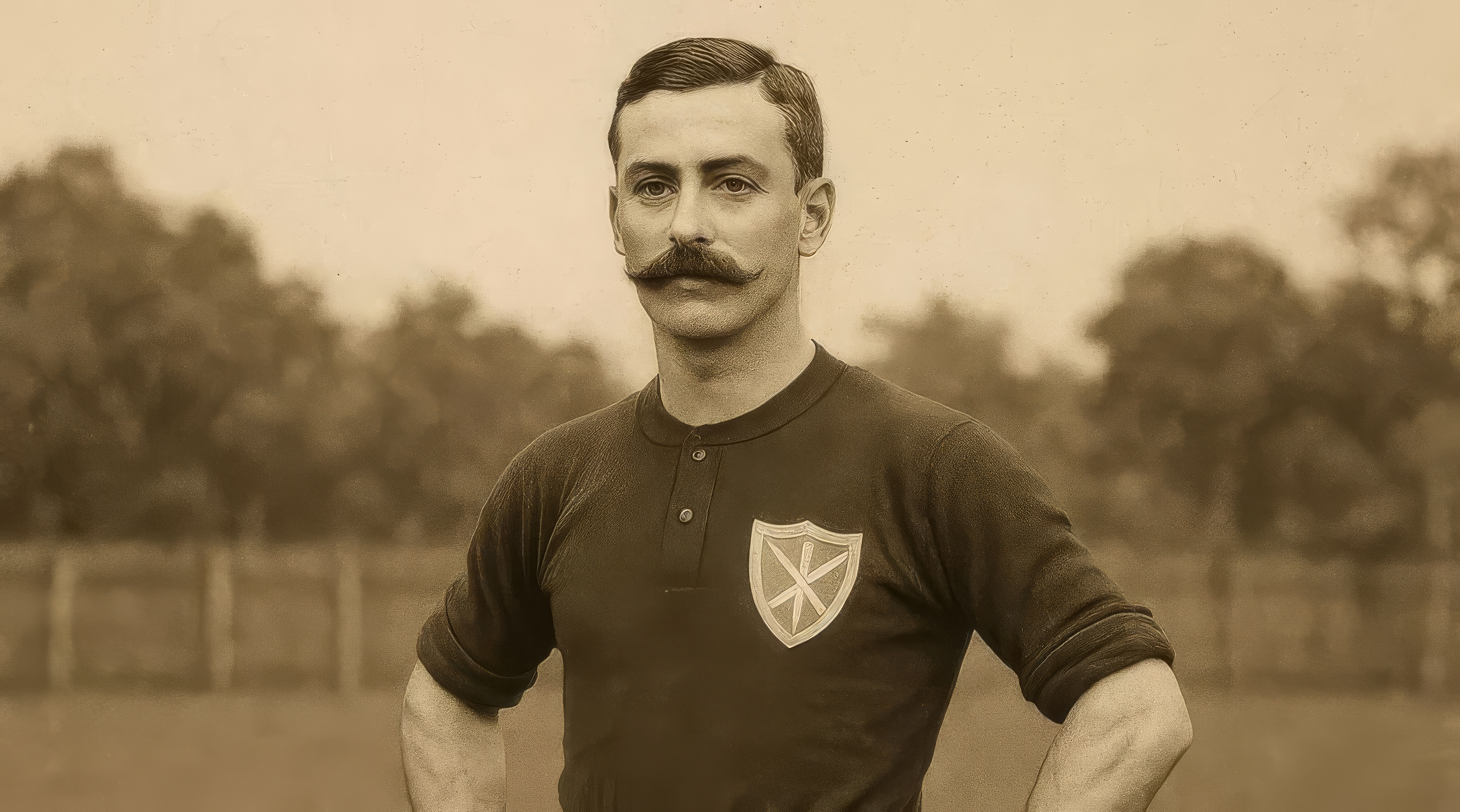
Charles Miller
From these humble beginnings, Miller helped lay the foundations of organised football in the South American country. He was instrumental in establishing the São Paulo Athletic Club, one of the first club teams in the country, as well as the first structured football league. As a player, he also played a central role in the game’s early success, helping his club win the first three league championships in the early 1900s.
Beyond playing, Miller was also a referee, an administrator, and promoter, helping spread football beyond expatriate communities and into wider Brazilian society. Over time, the game he introduced became central to Brazil’s national identity.
Richard McBrearty, curator of the Scottish Football Museum, recalls visiting Sao Paulo and standing in Charles Miller Square. “It gave me a great sense of pride that we have a founder of football in one of the world’s greatest sporting nations,” he says.
“You feel that huge presence of football in Brazil and how important it is, and that’s reflected on us as Scots. We may be a small country, but we have something to offer when it comes to football, particularly when it comes to history and heritage.”
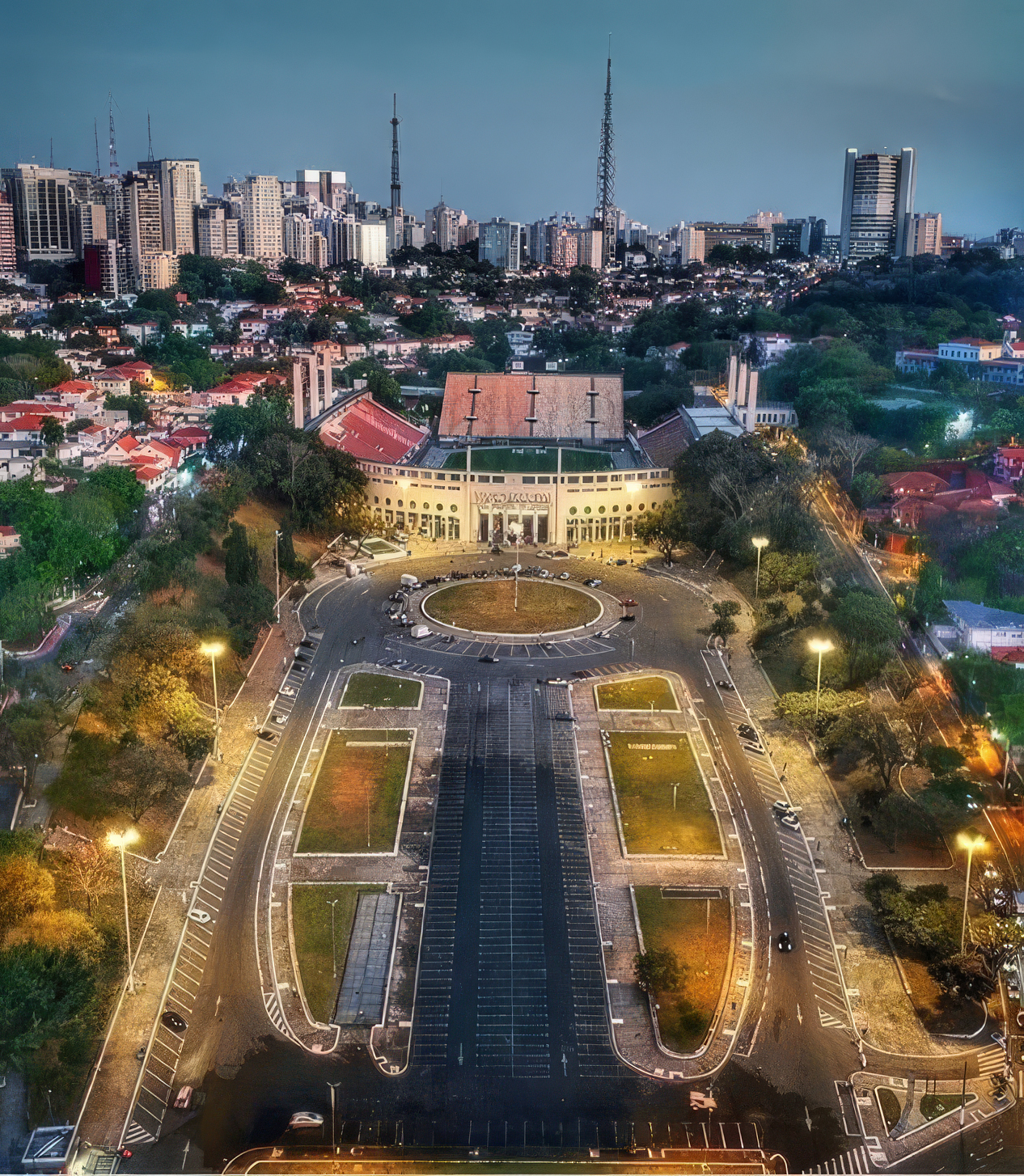
Praca Charles Miller and the Museu do Futebol in Sao Paulo | Alamy
Almost 75 years on from the death of Miller, the Spirit of Brazil looks to build on that soft power between Scotland and Brazil. The consulate, which is the largest of any country by head count and the only South American representative in Scotland, has released several collaborative initiatives and products, which celebrate cultural ties.
The first is a Spirit of Brazil tartan, designed by six-year-old Indie Menzies, a school pupil at Largs Primary, close to where the Miller’s family originate from in Fairlie. It is expected to be showcased in some of the official events in the days before Scotland take on Brazil in Miami. Whisky and Brazil’s national spirit, cachaça, have also been produced as part of the celebration. This includes a single malt Scotch whisky, distilled in 1998, the same year Scotland last faced Brazil in a Fifa World Cup match, as well as a Brazilian single malt whisky produced by Lamas Destilaria, near Belo Horizonte.
BA Robertson, who sang Scotland’s famous We Have a Dream World Cup anthem from 1982, has also recorded a song about how Miller brought the game to Brazil, among many other things. The proceeds of the products will support the International Play Association in Brazil and Scotland.
Hussain tells Holyrood: “We thought with how beautiful the story [of Charles Miller] is, and with the Spirit of Brazil, there is a lot more that we could do with it, giving the proceeds to the International Play Association, and promoting the cultural connections between Scotland and Brazil.”
He hopes that beyond the meeting in Miami in a few days’ time, this will not be the last collaboration between the two countries through the love of football.
“In 2027, the Women’s World Cup is coming to Brazil, and so far, the only bid for 2035 is a joint bid by Scotland, England, Northern Ireland, and Wales, so hopefully this story can continue, because work like this really supports the two nations and generates money for young people in both countries,” Hussain says.
Being drawn alongside Brazil again on football’s biggest stage has given Scotland the opportunity to utilise its shared history of one of the world’s largest economies, but beyond those links, qualification itself was a moment that demonstrated how far Scottish football can reach.
With 97 minutes on the clock, the ball broke to Scotland substitute Kenny McLean. Scotland were seconds from ending 28 years in the wilderness. Denmark, chasing the game, were stretched, and with two defenders and a teammate waiting on either side, McLean led a straightforward three-on-two.
To the surprise of almost everyone, and from inside his own half, more than 50 metres from goal, McLean shot for goal.
One second. Two. Three. The ball sailed over the Danish goalkeeper, stranded on the edge of his box. Four seconds, Hampden erupts. The noise was so intense it reportedly registered as a minor seismic event, an “extremely small earthquake”, some reports said.
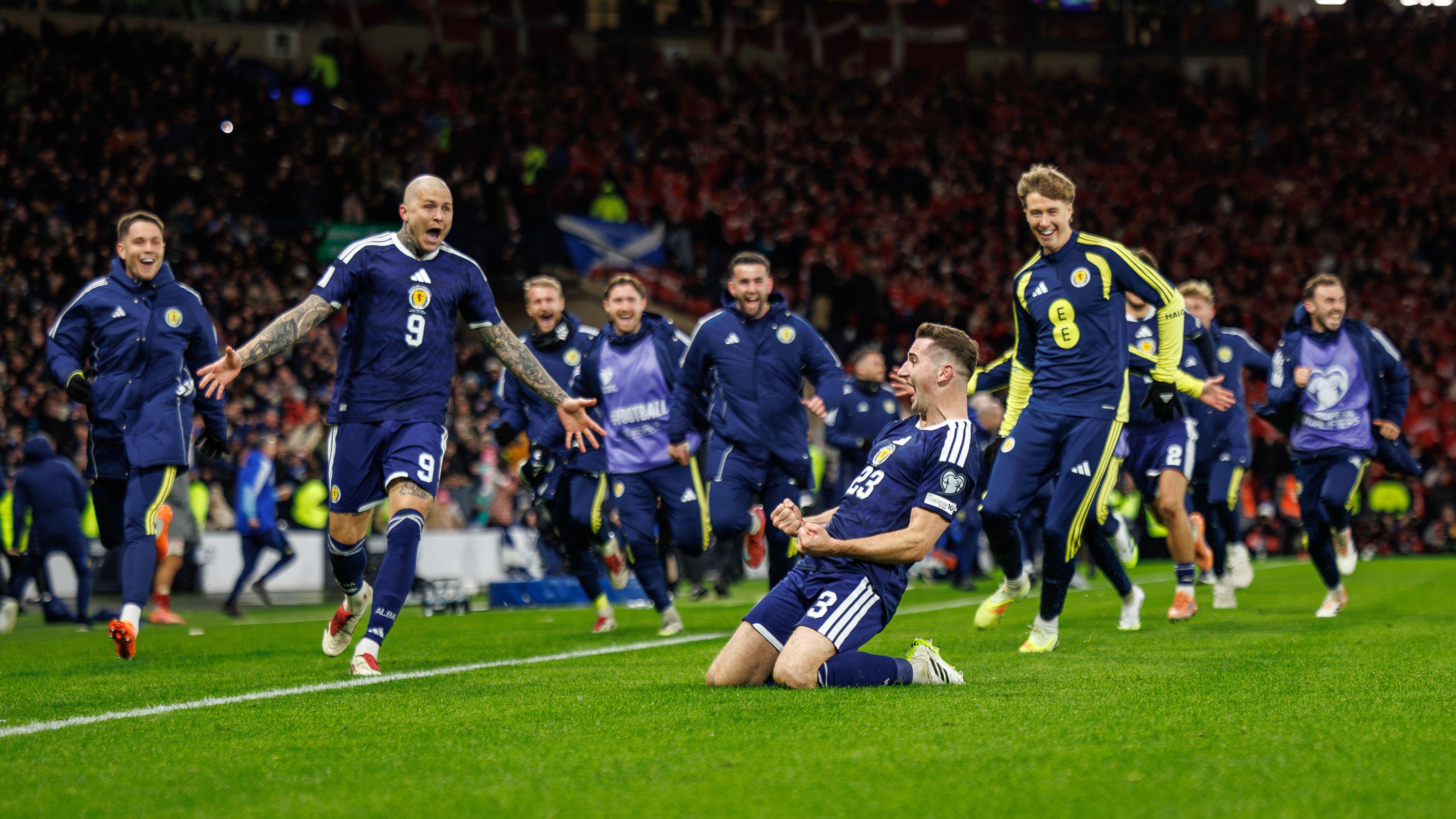
Kenny McLean celebrates goal against Denmark | Alamy
It was a moment that went truly viral, with replays of commentators across the world, from countries like Brazil, South Korea, and Mexico, reacting with as much enthusiasm as the BBC Scotland commentators, achieving millions of views on social media.
Holyrood got a look inside the first team dressing room more than six months later, with the Brazilian Consulate in Scotland. It sits quietly. Shirts hang over lockers marking each of Scotland’s appearances at the World Cup, 1954, 1958, 1974, 1978, 1982, 1986, 1990, 1998, and now 2026. There is a sense of real excitement in the room. One man recalls not feeling this excited for a tournament since 1978, when he was eight years old, and Scotland were a ‘favourite’ to win the tournament.
All over Scotland, the build-up has been huge, fan favourite John McGinn looms large on Irn Bru adverts on city billboards, and Scott McTominay’s image has been printed on a £20 bank note. In America, the Tartan Army has taken over Boston to the surprise of the locals. Social media and local news channels have been awash with the travelling Scotland fans during their stay in Massachusetts. But it is not just the locals who have been embracing Scottish culture – more than 10,000 Scots were estimated to have marched into one of baseball’s most iconic stadiums, Fenway Park, to cheer on the Boston Red Sox between the Haiti and Morocco games. Boston resident Ryan McGreary, who has been documenting the Tartan Army’s stay on social media, described the fans as “the greatest people alive” and that “he’d never seen Boston like this”. One local reporter suggested, “We need a yearly Scottish reunion”. But there is a feeling among some that while the World Cup spirit is in full flow – and unlike Brazil’s efforts in Scotland and the Tartan Army’s in the US – there has been very little visible strategy from the Scottish Government in using the moment created by McLean’s goal – attention a government struggles to create on its own – and use it to promote the country on the world stage.
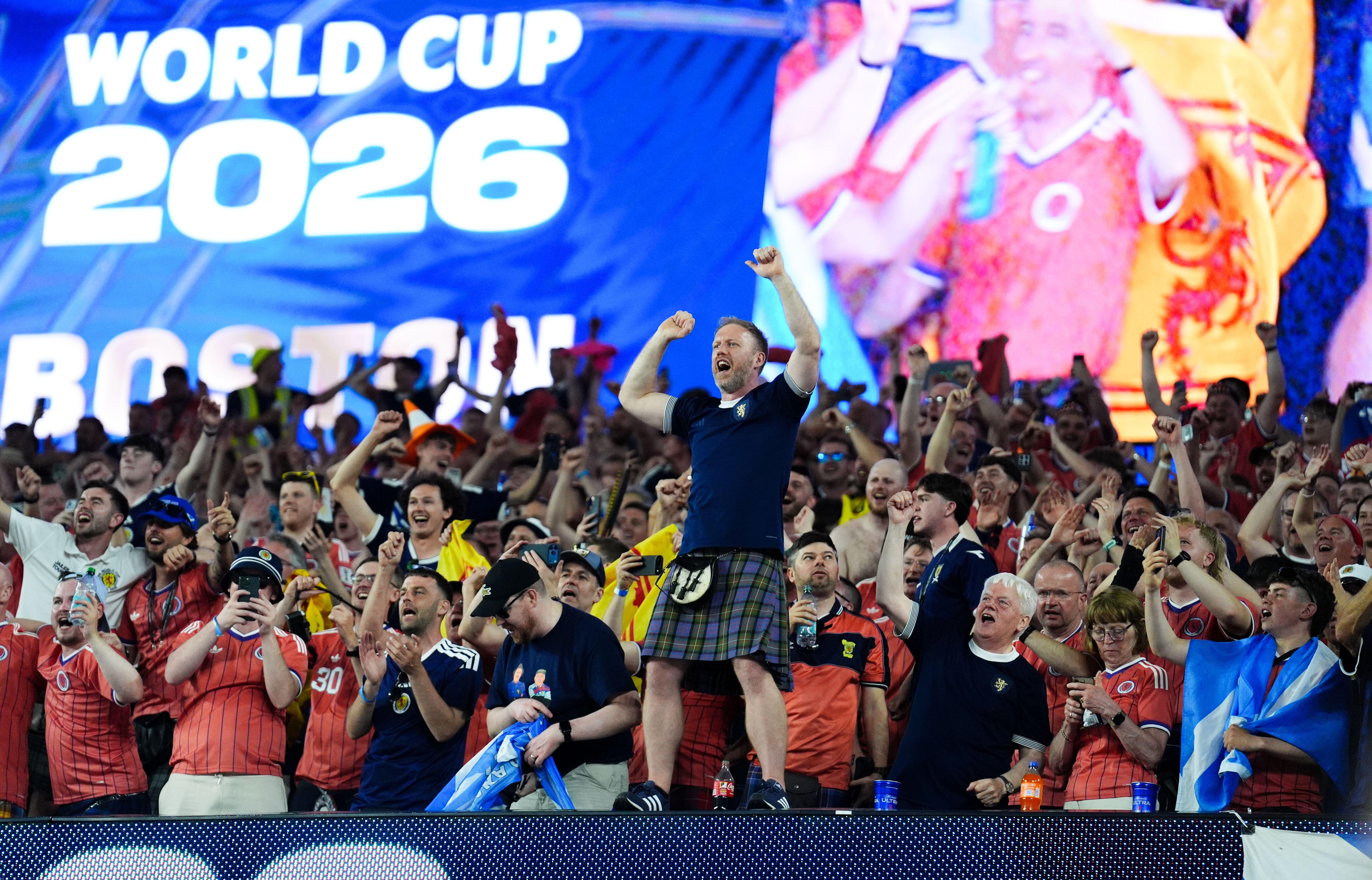
The Tartan Army in the Boston Stadium | Alamy
Grant Jarvie, the University of Edinburgh’s chair and director of the Academy of Sport, shares this view. He says countries like France, Australia, Ireland and Wales have demonstrated in recent years “that football can act as a tool of cultural diplomacy and international influence at relatively low additional cost”.
“Scotland has a diaspora, a global profile, and right now a fantastic moment. On the pitch, we are hoping everything goes well. The data on the impact of the Tartan Army is well documented, but there is an absence of any outward-facing sports diplomacy strategy, and that is the most significant opportunity.
“You can argue Scotland’s position at this time is stronger than any of Wales, Australia or France, having qualified for the World Cup for the first time in 28 years and hosting the Commonwealth Games in a few months’ time. The diplomatic value of this moment by international standards is enormous.”
The Scottish Government launched the Summer of Sport this year, a nationwide initiative offering free and low-cost sporting activities for children and young people, backed by £20m of government funding. Jarvie says that while this is positive, it is “inward looking” and “certainly not strategic”.
He adds that it will be “interesting to know what the outcomes are” from SNP ministers John Swinney, Maree Todd, Stephen Flynn, and Alison Thewliss taking the trip to the US.
“Will those visits have procured trade, business, influence with Brazil, Haiti, and Morocco? We don’t know yet. Take Brazil, it has a huge economy, has a cultural interest akin to Scotland, and there are huge opportunities to promote the country to like-minded nations in terms of football.”
Jarvie points to Ireland’s Sports Diplomacy Strategy as a model Scotland could follow. The strategy has been widely seen as a successful example of how a country similar in size to Scotland can systematically use sport to project influence abroad. It positions sport as a tool of foreign policy, linking major events, elite athletes and diaspora networks to promote Ireland’s image, values and economic interests internationally, and focuses on global promotion, diaspora engagement, international partnerships and economic impact. Irish athletes are actively used as international ambassadors, global sporting events are treated as diplomatic platforms, and diaspora communities are engaged through sport as a form of cultural connection and influence. Jarvie says Ireland is now using sport as “a strategic asset”.
As Scotland prepares to face Brazil again on football’s biggest stage, the Tartan Army will do what it has always done – travel, connect, and leave behind goodwill. The question is whether the country itself is doing the same. Scotland has shown it can capture the world’s attention. What remains unclear is whether the government knows how to
use it.
Holyrood Newsletters
Holyrood provides comprehensive coverage of Scottish politics, offering award-winning reporting and analysis: Subscribe