Paul O'Kane: I felt a weight of responsibility as the first out gay man to be elected as a Scottish Labour MSP
It’s true that as we advance politically, socially and economically, it is easy to forget just how much progress we have made in a relatively short space of time. And in many respects, Paul O’Kane, Labour MSP for West Scotland, manages to embody much of that advancement.
He is, rather shockingly, Labour’s first-ever, and still only, openly gay male MSP. He is married to social worker husband Alan, and they are now also proud parents to an adopted two-year-old son. And though almost all of those things might not have been possible before devolution, O’Kane is acutely aware that while we have made great strides in terms of equality, it is only two generations on from his father’s great uncle, William O’Kane, being shot dead on his way to work in Derry in June 1920 simply for being Catholic.
And it is in his Irish roots and the often-complicated relationships steeped in religious divides that help to explain a deeply ingrained awareness of where intolerance leads us as a society that O’Kane wears like a shield.
Sex, religion and politics might not be topics meant to be raised in ‘polite company’ but O’Kane covers them all in quick succession as he describes the elements that make him who he is. He also unapologetically challenges the adage so famously coined by Tony Blair’s spin doctor, Alastair Campbell, that “we don’t do God”, because without “doing God” O’Kane wouldn’t be O’Kane.
To understand O’Kane, you need to dig deep into his family’s Irish history. Both sets of grandparents arrived in Scotland from Ireland. His maternal grandparents had a more gentle entry, having followed family who had moved to the textile village of Neilston to work in the mills, and they found themselves living in a close-knit Catholic community of Irish immigrants. Some relatives were members of the fledgling immigrant parish of St Thomas the Apostle on the village’s main street, where years later O’Kane would become an altar boy.
However, his paternal grandparents landed in Glasgow from Northern Ireland in the 1950s just before The Troubles really began, albeit their own personal sectarian struggles were already being felt. His great grandfather had remarried after the death of his wife, the mother of O’Kane’s grandfather, and much to the consternation of his family and the small-town community of Derry, he married a Protestant. She managed to secure her new stepson, O’Kane’s grandfather, a job with the RAF, which at the time was an unthinkable thing for a Catholic to do, and the widespread displeasure of his family and close networks to that British military recruitment ultimately led to him and his wife moving to Scotland to escape what was beginning to feel like a powder keg atmosphere.
As O’Kane tells it, his grandparents landed at Anderston Quay and were greeted with slum housing conditions, a room and kitchen, and notices that made clear that the Irish [famously, along with blacks and dogs] were not welcome.
His grandfather became a manual labourer digging the roads and his grandmother worked in a number of houses, cleaning and acting as a housekeeper for wealthier Glaswegians. O’Kane says his grandparents both experienced the “sharp end of religious intolerance”, being frequently spat at in the street, and that feeling of injustice never really went away.
“My granny passed away when I was quite young, but a lot of my memories of my granny are about the way she would express things, and it was really hard for her to let go of that ingrained discrimination that she experienced. And that feeling was passed on in turn, a bit to my dad, and it’s probably my generation, for the first time, that are able to see beyond that. The fact I’m sitting here in this seat, and I’ve said this in parliament before, but generations ago, that would have been unthinkable, and I don’t think my grandparents would have ever been able to countenance the idea that their grandson would be an MSP in the Scottish Parliament – yes, because I was Catholic, and more specifically, because we were from an Irish Catholic background.
“I think when they stood on the quayside at Anderston, they were just met with a barrage of sectarianism that then followed them for a lot of their lives. I suppose that was even inbuilt in their housing prospects. So, you know, they cleared the slums and they moved them into Drumchapel, and then they cleared Drumchapel and moved them to the Vale of Leven, so there was this sort of Irish enclave that kind of moved together and probably collectively hung onto some of the ways they had been treated. But I think in terms of access to jobs, access to opportunities, I guess my grandad probably just accepted that they were restricted because of his religion, and probably my dad felt the sharper end of some of that too. The sort of, ‘what school did you go to?’ and all that sort of stuff which persisted into the 1960s and to some extent still persists today.”
The continued acceptability of such religious intolerance doesn’t sit well with O’Kane, and while daytime murders like that of his great uncle are thankfully a thing of the past, the low-level acceptance of religious bigotry in modern Scotland continues. And while O’Kane rails against that, he is also accepting of the fact that, on a personal level, his own sexuality remains in conflict with his church’s demands for its priests, of which he once wanted to be one, to be both heterosexual and celibate, and also continues to raise objections to so many things which he supports like equal marriage, which meant his own marriage was conducted by a registrar followed by a short service of blessing conducted by family and friends rather than a religious celebrant. He says they played Bach’s Ave Maria to give some nod to Catholicism. Despite it all, he remains a practising Catholic while frequently wrestling with some of the contradictions.
“My faith is quite complicated, and my relationship with my faith is quite complicated, particularly as a gay Catholic, but I can’t be anything else. So, this is about both a faith in God and also the cultural element to my faith, and they are really wedded together. But that also comes with the heritage of how my family were treated because of being Catholic and that also belongs to me. This is what makes me who I am and people will say, ‘why don’t you just leave and become an Episcopalian?’ but I don’t want to be Episcopalian, I’m not going to cede the ground of the heritage of faith that belongs to me. But don’t get me wrong, that means I butt up against people quite a lot. There’s something about a personal journey of faith that is full of circles still to be squared, but it is my faith and who I am and I’m not letting that go.
“That is then coupled with all of what I want to do in the public sphere and how I want to use my faith and my politics to serve. My whole reason for having faith, if you’ll excuse the pun, in the power of politics is about social justice, and that comes from a sort of Catholic social teaching which is very, very strong on concern for the poor, and what we do about the world that we want to leave to our children. And so that’s my focus.
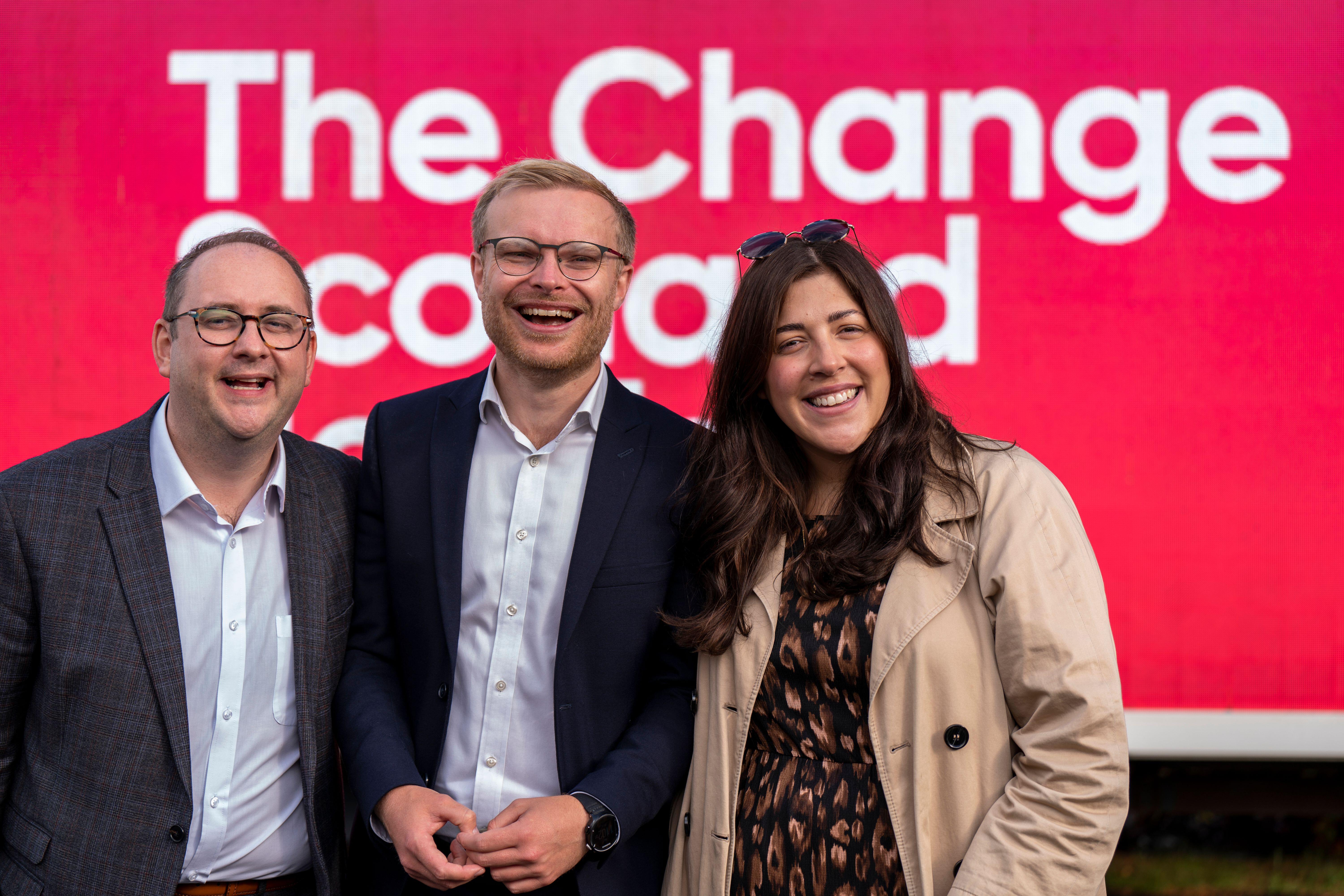 O'Kane with friend and Labour MP Michael Shanks | Alamy
“Where I think there is a problem, is that people just see folk who have faith as being sort of all of the one flavour or of the one view, and I think that’s quite problematic. So, for me, that’s why views expressed by Kate Forbes [a member of the Free Church of Scotland who confirmed during her party leadership contest that she would not have voted for equal marriage and does not agree with abortion] jarred because I wouldn’t consider them to be mainstream views within Christianity.
“And yet, there are a lot of MSPs in this place, including the first minister, who do have a faith but maybe the encounter between people of faith in this place hasn’t been as good as it should be. And actually, did we reach out to one another when Kate was being attacked for her faith and try and have that broader theological debate that could have enriched us all? No, we didn’t. And perhaps I regret that as an opportunity missed to learn from each other and to not see everything as black and white.”
Nuance matters to O’Kane. It’s had to. His whole being is littered with apparent contradictions, and he has wrestled with them all. But he also candidly says that the five years since he was elected in 2021 have been a sharp learning curve that helped him appreciate the point of view of others and in some respects become more tolerant himself.
“I do think that in this parliament, generally, I’ve done a lot of learning – a lot of learning – and I’m probably a very different person from when I came in. I think you come in with very set ideas, and you think you are on the right side of everything all the time. After all, you have basically just won an election by expressing your views and having people vote for you. And learning to listen and to encounter and to engage with opinions you find challenging or you disagree with, that’s tough, but I suppose you sort of learn as you go along.
“And as this session comes to an end, and I hear what you are saying about the toxicity of it, I recognise that we do need to do a bit more of that. I suppose, ironically, maybe it’s taken me the five years of my first parliamentary term to be ready for a second and to see that we’re at our best when we try and find common ground, even when it’s difficult, and if we can find it, great; if we can’t, then we also need to look at how we disagree better.
“I think I’ve learned the importance of seeing another person’s view, of not trying to apply broad generalisations to whole groups of people that you have a disagreement with, and that the use of pejorative terms has been really problematic, throughout this parliament and through a range of issues. But also, until you’ve sat down and had an encounter with someone that, on the face of it, you disagree with and hear what they have to say, you’re not going to know what they can bring. And the regrets I have are about not doing more of that.
“My political hero is John Hume, and it comes back to that connection to Northern Ireland. John Hume was somebody who had experienced real hardship in his life and experienced the discrimination that I talk about as an Irish Catholic nationalist, but he said, ‘if you don’t respect difference and you don’t understand it, and you don’t try to engage and encounter it, you’re never going to find agreement’. And my learning, I think, of these last five years about issues on whatever it was, is, if we don’t try and encounter and we shut ourselves off to views that are widely held, then it becomes problematic.”
Without explicitly expressing it, what O’Kane describes so clearly is about how the Gender Recognition Reform Bill passed through this session of parliament, causing so much division and exposing an intolerance to debate that should have had no place in a legislature. O’Kane voted for the bill but both the position of his party and of him has since softened. Scottish Labour leader Anas Sarwar has gone as far to say that if the vote was held again, it would have a different result. And O’Kane has won plaudits for his well-considered response during the attempts to oust Green MSP Maggie Chapman from the equalities committee after she accused the Supreme Court of “bigotry, prejudice and hatred” following its ruling that a woman is defined by her biological sex under the Equality Act. O’Kane gave Chapman every opportunity to withdraw her comments, which he described as “incendiary”, but she refused to do so and only survived expulsion by voting for herself along with two SNP members on the committee.
“There is a lot that I regret about that whole process of the gender reforms. I regret sometimes turning off my critical thinking and allowing that thing to be something that somebody else would deal with, because I’ve got a view and my view’s fine.
“I’ve since tried to take time to engage and I understand that we’re going to have to try and find a way through that recognises the very legitimate concerns that women have and understanding where that comes from, because very often, for a lot of women, it comes from the deep-seated place of their own trauma and I regret not recognising that at the time. I do also feel genuine regret for me doing the whole ‘be kind’ bit, which I know started to piss people off, but that came from a good place and an honest place, but actually it probably ignored the fact that there was kindness needed over in this space as well.
“So, I think when it got to the Maggie Chapman thing, I just recognised that you cannot get yourself into situations where you are quite happy to be loose with the language around the rule of law, around judges and around the respect and esteem we hold for the Supreme Court’s independence. And this isn’t America. I wanted to give her the opportunity to bring clarity to what she had said, and she wouldn’t do it which was disappointing. So, yeah, that was difficult, but I think it was important to do it and to have that discussion in public as well so that people could hear for themselves and make their own judgement.”
I ask O’Kane whether he had felt naively as a gay man that it was his responsibility to push through legislation that was often being equated to the same battle that there had been for equal marriage.
“Yes, I think as the only gay member of the group, the Labour group, and the first gay man for the party elected to Holyrood, I did feel that there was a whole weight of pressure on me, on a whole range of issues. I think I did come in with a set view of who I needed to be within the Labour group and, candidly, I probably didn’t do a huge amount of critical thinking at times on the GRR bill and perhaps didn’t engage until the end. So, I kind of said that I think this bill needs to be better balanced, and I regret not doing that earlier in the process, because I brought amendments but maybe too late on.
“I remember at one in the morning talking about the Promissory Oaths Act of 1871 or whatever, because we were trying to work out how do you get someone to make a declaration that is legal and you can have some comeback on if it’s a lie, and all that sort of stuff. And it was only maybe at the end of the process I started to get into some of that, which were sort of pragmatic steps that would protect, hopefully, lots of different people, if this was legislation we were going forward with.
“So I do feel there was a pressure on me as a gay man to act in a certain way and I was trying to do the right thing, but as I say, I wish I’d engaged more fully with all the facets of debate, rather than perhaps allowing that view to be held that there was just a group of people not to be engaged with.
“And there’s the point about critical thinking and, yes, the absence of it, but we did big amendments, that’s clear. But should we have then made the final decision to vote for a bill that we acknowledged had problems? I think that’s now open to discussion. I think we are in a different place now, but I think it was really challenging and then again, there are just things you couldn’t ignore.
“I think Isla Bryson was clearly a moment of clarity for people. Something like the prison estate is a really simple, straightforward thing to think about and I think the Isla Bryson case offered that sudden and clear realisation of what this meant. There was no way we could have defended that – who would defend that, although I remember Humza Yousaf getting himself tied in knots, trying to define Isla Bryson as anything other than a man. So yes, regrets and all of that. But also, a sort of disappointment in the SNP for leading everybody up the garden path saying everything was going to be fine. It all goes back to trauma again, doesn’t it, women’s trauma in particular, and not appreciating the consequences of some of that.”
There’s no doubting O’Kane’s intellect and his ability to reflect and think deeply about issues. It could also be why he has been tasked by his party leadership with picking up some of the harder issues around social security, equalities and now education having been handed that brief after his colleague Pam Duncan-Glancy was forced out of the role for her ongoing friendship with a convicted paedophile. O’Kane is clearly pained by the whole issue on a personal level, but also describes Duncan-Glancy’s apparent withholding information from the party leadership on the details of the “depth and detail” of the offenses that had been committed as “inexplicable”.
“I sometimes think I’m the John Reid [former MP for Motherwell North and Secretary of State for Scotland] of the Scottish Labour Party in the sense that ‘here’s a problem, Paul, you can have it’. You know, writing a course on equality, sorting us out on social security when it was really difficult at UK level, and then now doing education after the challenge of Pam. So, you know, I’m up for all of that, but do I have leadership ambitions, is that what you are asking? Well, firstly, I like and value loyalty. I like to take time to recognise in other people what their strengths are. And I like to be a team player. I think the job that Anas does is so tough, and he is a great leader. He’s got a great mix of being thoughtful, talented, charismatic, and he’s resilient.
Do I think I’ve got enough of that? Probably not at this point but, you know, everything’s a journey.”
There’s a goodness about O’Kane which is similar to that of his best friend Michael Shanks, for whom he acted as campaign manager during the Rutherglen and Hamilton West by-election which Shanks won. And it’s perhaps no coincidence that both share that same depth of faith, albeit Shanks is an Episcopalian. O’Kane is also something of an over-achiever – he was head boy at secondary school, chair of the Labour Club at university, and deputy leader of East Renfrewshire Council as well as leader of the Scottish Labour group on the council before standing down as a councillor at the 2022 local election. On top of that, he worked for both Jim Murphy MP and Gemma Doyle MP. And prior to his election to Holyrood, he worked as a policy manager in the charitable sector, working with the disabled.
Given his commitment to public service, he would also likely have made a very good priest. As a young teenager and before he went to university he spent summer holidays in Lourdes, which he describes as being like “Club 18-30 for Catholics” and where he spent his days helping sick and disabled people who were on pilgrimage. He describes those summers as his “most fulfilling”.
It was at the University of Glasgow, where he studied English literature and politics, that party politics really took hold, and he could see that he could effect change and serve people in a different way to the priesthood. But he also says his sexuality had already put the lid on that ambition.
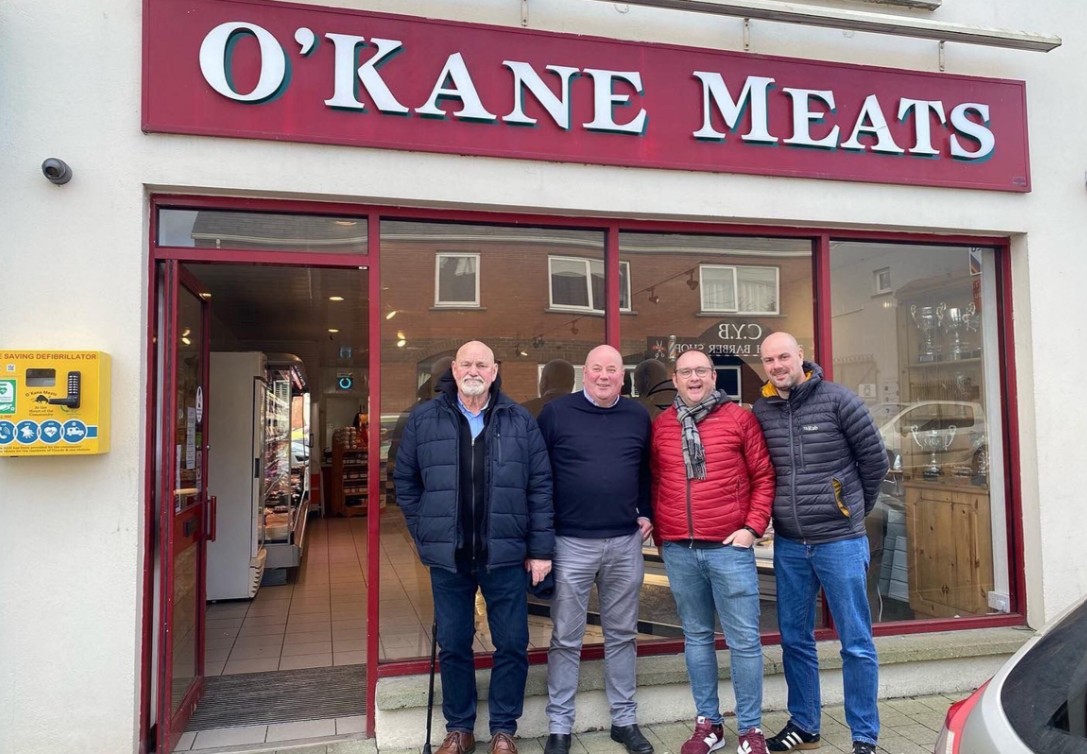 O'Kane with his father and brother on a visit to Derry | Contributed
“There was a growing sense that I didn’t want to go into the priesthood and sort of have to live a lie which would be a double lie because essentially, you’d have to be celibate, potentially straight and celibate. And I thought, I’m not going to do that, so I came out when I was 15 or 16, and made that line in the sand which said, ‘this is who I am’.
“I had a very close group of friends, all boys, and I came out to them, and they were all remarkably supportive. There was some bullying, but it was a small school and things were made quite easy for me. My mum, funnily enough, was the one who reacted, at the time more negatively than my dad, who was bit like ‘oh, aye, fine’, whereas for my mum it was about concern for me that I think was very maternal and about the society she grew up in and the gay men that she knew about who had ended up living quite sad and tragic lives, so she was just worried for me. But that was a different era. She is now the biggest supporter of me and Alan and is a wonderful grandmother to our son.
“I remember saying at my wedding that when I was a kid, I never thought [marriage] was for me. I just didn’t think there would be a society where that would be open to someone like me. And I think in the darkest moments of when you realise you’re gay and you’re like, ‘oh good God’, that’s what terrifies you. It’s about how do I live in a society where these are the things I want in my life and I’m never going to have them?
“And on our wedding day we raised a glass to all those who’d gone before, who hadn’t lived a life where they could have what we were doing that day, because we do stand on the shoulders of everyone who went before us. But it’s the sad stories I think of, those men and women who lived their lives not being able to be their true selves. So yeah, as a young gay teenager of faith, I definitely thought to myself ‘what will life be like for me?’ and here I am.”
O’Kane would undoubtedly be a sad loss to the Scottish Parliament if not re-elected in May. He is considered one of the more able debaters, a deep thinker, and someone that I tease didn’t win Holyrood’s One to Watch award at our political awards first time around but did win it last year.
“Maybe that’s the story, though, of my five years, that those first years were about working out where I was going and working out how to do this better. And maybe by the time we got to last year, it was right that people were noticing some of that. I got good advice when I came into parliament about not jumping up and down trying to be noticed, and about actually finding your footing and finding out how it works and where you fit and just letting that take its course naturally. And I feel that coming to the end of five years, that has happened. I think the recognition is organic, rather than forced, and ironically, I’m more ready now for all of this than I might have been back then.”
Holyrood Newsletters
Holyrood provides comprehensive coverage of Scottish politics, offering award-winning reporting and analysis: Subscribe