John Swinney steadied the SNP ship, but is he still the right man for the job?
As John Swinney heads into his third party conference in his second stint at being party leader, the undertone could not be more different to the last two.
Back in 2024, the SNP was fresh off its general election defeat; the mood was introspective and humbled. A year later, the party was back riding high in the polls and Swinney entered the conference hall with fresh confidence. Yet this year, despite winning an historic fifth election just five months ago, questions are being asked about his future.
Not only does this new Scottish Government have a series of difficult policy questions to answer, as well as its own record to defend, it also has to contend with a new prime minister who appears comfortable tackling many of the issues Westminster has so long avoided: the pension triple lock; social care; Brexit; electoral reform; and the future of the UK.
I’m going to use this job to build the kind of Britain my dad wanted to see, and fight with everything I’ve got to keep it together
In his own speech to the Labour Party conference in Liverpool at the end of September, Andy Burnham reiterated his commitment to “rewire” the UK. That included a defence of the Union.
“Britain is not perfect,” he said. “It can be better and we will make it so. But it still stands for something worth saving, worth fighting for. And we will always be stronger facing a changing world together, rather than separating. So I’m going to use this job to build the kind of Britain my dad wanted to see, and fight with everything I’ve got to keep it together.”
That followed a slip-up by Burnham in the weeks prior when, under questioning from the SNP’s Chris Law at PMQs, he seemed to soften the UK Government’s stance on a second independence referendum. Swinney moved, immediately writing to the prime minister to seek a meeting on establishing a “legal mechanism” for delivering another vote. Other Unionist parties, too, leapt on the comments to argue Labour was not a strong defender of the Union. For a brief moment, it all seemed to play into the SNP’s hands.
But his conference speech put paid to that. And more than that, Burnham was perhaps the first prime minister since the last referendum to be able to inject emotion into the argument for retaining the Union. He made it personal and he made it about a collective endeavour, a cogent case for staying together that was bound up in the personal about what the UK has achieved as a collective for individuals like the prime minister’s father, not least the NHS.
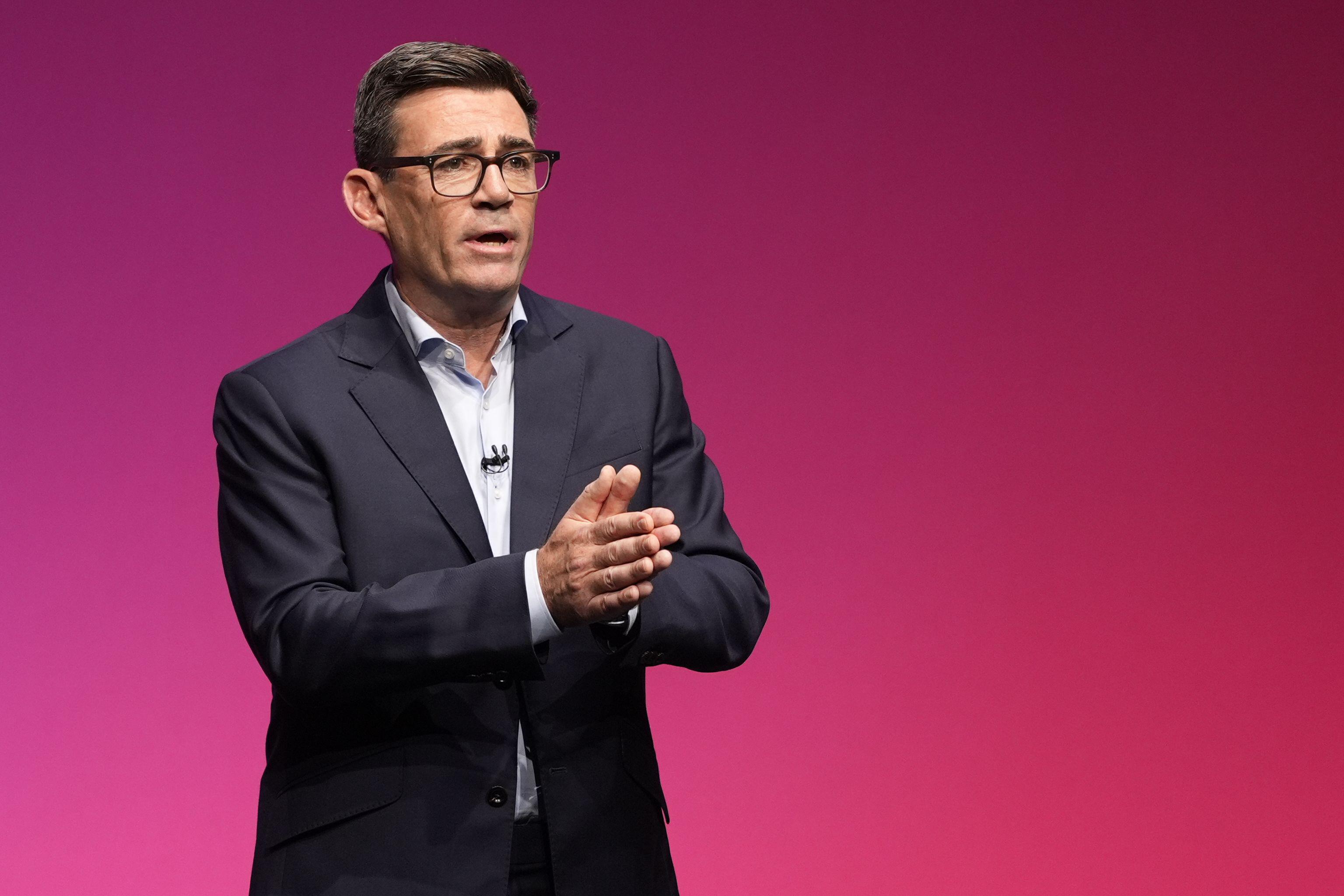 Burnham speaking at Labour's conference last month | Alamy
In that moment, Swinney’s belief that a referendum was ever closer melted. He had overplayed his hand.
And so once again SNP members will gather in Aberdeen for the party’s annual conference with their defining mission no further forward. Swinney is left insisting the UK Government’s position cannot hold, despite his own party not reaching its ambition of a parliamentary majority. He argues instead that the largest cohort of pro-independence MSPs ever in Holyrood is enough. His secret plan – teased this time last year during the 2025 conference when he told delegates “nobody knows what tactics I will deploy” to get a referendum – has gone nowhere.
It is surely no wonder the SNP’s grassroots are getting restless, with reports of a schism between the leadership and ordinary members. The first day of conference will include a debate on independence, but for many it is not the debate they wanted.
The resolution, tabled by the party’s youth wing, does not address the current stalemate. Instead, it argues that the case for independence must be “built and communicated with the public over time”. There is little in the resolution for members to disagree with.
His rhetoric has been noticeably warmer towards Scottish Labour this parliament than the last
Yet more than 50 branches reportedly backed an amendment which would have called for a consensus on securing independence, including launching a national campaign and using the next general election as a vote on the “right to choose”. This was blocked from making it onto the agenda by the party’s Conference Committee.
Several anonymous members aired their dissatisfaction with the decision in the press. One insider described the resolution as the “weakest one imaginable” in The National, while another member told The Herald that the leadership was “deprioritising independence”. And the frustration goes both ways. The Herald also reported that Swinney and depute leader Keith Brown expressed their dismay at members publicly criticising the perceived lack of action.
Meanwhile further tensions have surfaced over the decision to invite Scottish Greens co-leader Gillian Mackay to attend. She is set to take part in a panel discussion on Saturday about the “pathway to independence”. The argument for her inclusion is that the independence movement goes beyond the SNP, but for her to be given a speaking a slot from the main stage has set some alarm bells ringing for many members who still feel the bruises of the Bute House Agreement. That the conference is taking place in a city still reliant on oil and gas only further adds to concerns that party will look too close to the Greens.
The first minister has been upfront in his calls to other parties to work with the SNP for the duration of this parliament. Part of that is the reality of being a minority government, but his rhetoric has been noticeably warmer towards Scottish Labour this parliament than the last.
Labour is the only party never to have done a budget deal with the SNP – indeed, under Anas Sarwar it boycotted the process entirely, with MSPs whipped to abstain. That decision came under criticism during the recent election campaign which saw Michael Marra – who had previously been finance spokesperson – become the new leader. This sparked a rethink on party strategy and Marra seems to be more open to doing a deal than any of his predecessors.
This – or a deal with the Lib Dems, who worked with the SNP on the last few budgets – may seem more appealing to Swinney so he can move away from what some of his party see as a toxic reliance on the Greens.
Such cross-party working will be necessary not just for the upcoming budget, but for pushing through the public service reform agenda which has become a priority. Some of the decisions that require to be taken are unlikely to win Swinney friends, both across parties and internally. The failure to bring the National Care Service to fruition no doubt weighs on the first minister as he seeks to build support for the reforms.
Interestingly, none of the resolutions to be debated at the party’s conference make mention of public service reform, despite the government’s plans to reduce health board numbers and make sweeping changes to local government likely to be among the biggest changes Holyrood has ever made to the public sector.
Behind the scenes, there are concerns about the outsized role of special advisers
Yet the announcement about local government changes, in particular, has gone down poorly, with council leaders not convinced by the plan (or rather, lack thereof). Eric Drysdale, the SNP leader of Perth and Kinross Council, was one of the first out the gates. While he said he would keep an “open mind” about the changes, he also urged national leaders to ensure local views were “represented in a balanced, constructive and informed way”. Reading between the lines, it’s clear there seems to have been little engagement or forewarning with those who will be most impacted by these changes. An open revolt could yet prove the undoing of Swinney’s premiership.
There are also continuing questions around how long he will want to continue in the role of FM on a personal level. Since he took over in May 2024, he’s done what he set out to do: steady the ship. But he had been expected to retire from frontline politics at the last election and, despite claims that he intends to serve the full term, few would be surprised if he handed over the keys to Bute House well ahead of May 2031.
At the same time, he appears to be relishing the role, putting himself front and centre of almost every policy announcement in recent months. This may be an attempt to project confidence about his government’s agenda, but it would equally mean he becomes the face of policy failures.
Behind the scenes, there are concerns about the outsized role of special advisers. Just four months into this new government, Swinney has lost one minister in Ben Macpherson. An experienced and well-regarded MSP, he left government citing health reasons, but Holyrood has spoken to others expressing disquiet about advisers not including ministers in decision making on their own briefs.
While Macpherson was replaced with an experienced parliamentarian, former MP and MEP Alyn Smith, that Swinney had to promote someone so new to Holyrood (Smith is a first-time MSP) highlights how few cards he has to reshuffle. Perhaps that is why he leapt to the defence of transport secretary Stephen Flynn after a disastrous appearance before parliament’s transport committee where Flynn was wholly unprepared for questions about a ferry gas leak.
This also speaks to the lack of succession planning within the SNP. There is still scant idea of who would take over after Swinney, a problem that has persisted since Nicola Sturgeon’s time in office. Indeed, the bitter leadership race that followed her resignation in 2023 spoke to a party unclear of its direction – and it is instructive that none of the candidates in that contest are now in parliament at all.
The three people often spoken of as possible future leaders – Flynn, finance secretary Jenny Gilruth, and education secretary Mairi McAllan – have all been floundering.
But even overlooking the serious questions about suitability for the role at first minister, it is unclear whether any of these choices would be able to unite the SNP membership behind them. A Gilruth or McAllan premiership would likely alienate members on the right of the party, both of them representing similar politics to Sturgeon. Yet a Flynn leadership would not go down well with the party’s left-wing, particularly those who would have their reservations about his approach to the North Sea.
He realises he has got to prove that he will not be the last prime minister of the United Kingdom
As a result, it might be that Swinney’s undoubted duty to his party may see him hold on for longer. But the longer he stays in office, the more fumbles he makes of his own.
Most recently that was the disinformation around Burnham’s pensions announcement. The first minister claimed in parliament that people would “lose [their] pensions”. Challenged by the media and by MSPs, rather than admitting fault he has doubled down on the comments. There have been calls for him to be investigated under the ministerial code for misleading parliament, but Swinney has since said advisors concluded there was nothing to investigate.
But this is not the first time he had been accused of being misleading. There was the row over his claim that there was “no evidence of external pressure” on Glasgow’s health board to open the Queen Elizabeth University Hospital before it was ready. What the submission to the hospitals inquiry actually said was there was “pressure in the sense that it would be a good idea to meet the target” but not “earlier than was planned”. There have also been false claims about renewable energy, such as his suggestion that Scotland was “100 per cent” self-sufficient for electricity requirements or the oft-repeated claim that Scotland has 25 per cent of Europe’s potential for offshore wind and tidal power.
And that’s not to mention some of the questionable pre-election commitments, such as the introduction of a food price cap, the unsubstantiated claim that an independent Scotland would enjoy lower energy bills, or indeed his secret plan for securing a referendum.
Speaking to Laura Kuenssberg ahead of his party’s conference, Swinney said Burnham’s speech was evidence the prime minister “realises he has got to prove that he will not be the last prime minister of the United Kingdom”. “I think the only way that he can do that is by enabling the people of Scotland to have a choice about their own constitutional future, and that means he has to agree to a referendum on independence,” he added.
But amid the growing schism with the SNP, mounting policy problems, and a growing number of Scots who believe the country is going “in the wrong direction”, it seems that Swinney may have even more to prove.
Holyrood Newsletters
Holyrood provides comprehensive coverage of Scottish politics, offering award-winning reporting and analysis: Subscribe