Anthony Seldon: Keir Starmer was like a surgeon who knew nothing about the patient
For a historian concerned with the office of prime minister, the past decade has been a busy time. Since 2016, the year of the vote to leave the European Union, there have been seven occupants of 10 Downing Street. When you consider there was a total of 20 PMs in the whole of the last century, it gives an idea of the level of political tumult we’ve experienced since Brexit.
Anthony Seldon, already a prolific chronicler of Westminster politics, is just about keeping up. He’s written books on David Cameron, Theresa May, Boris Johnson, Liz Truss (subtitled How not to be Prime Minister) and has works coming on both Rishi Sunak and Keir Starmer, who exited Downing Street last month just over two years since the general election, declaring perhaps somewhat misleadingly, “my work is done”. But while Seldon’s assessment of the recently defenestrated Labour PM is withering, he’s clear who the worst leader of the past decade was.
“I think the worst prime minister was Boris Johnson,” he says. “He chose to come down on the Brexit side for reasons of his own political career. There’s a perfectly good case for Brexit, but if you’re going to make it happen you have to have a very clear plan, and he did not have that. That’s on him – doubly on him because he was the person who tipped the scales in favour of Leave and secondly because he was the prime minister who drove Brexit through the House of Commons...”
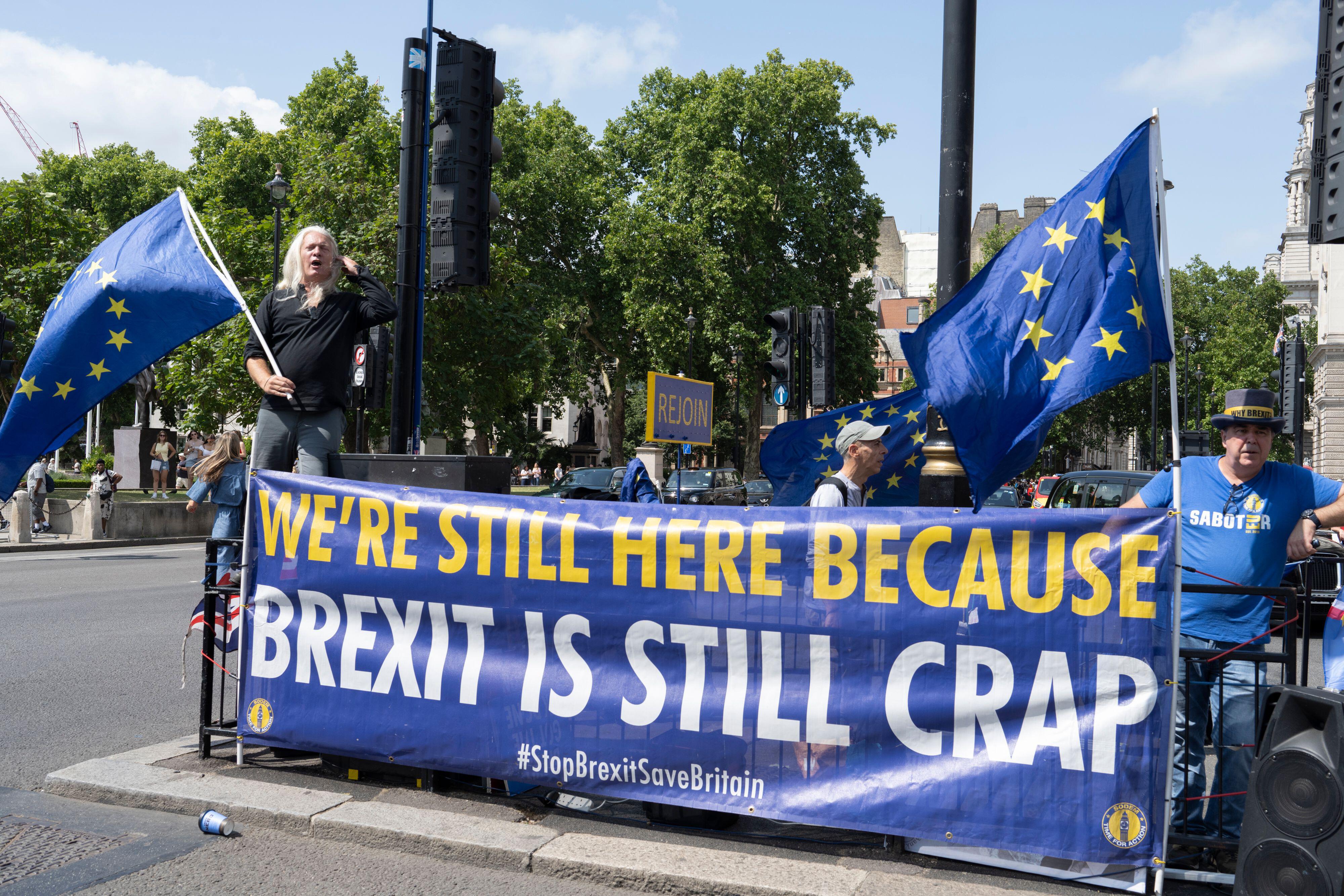 Anti-Brexit protesters in July | Alamy
Seldon’s most recent project was editing a book of essays, The Brexit Effect, which was published to mark a decade since the vote and was discussed last week during his appearance at the Edinburgh International Book Festival. It includes contributions from politicians, journalists and academics on both sides of the debate, including John Curtice, Labour MP Emily Thornberry, former Ukip MP Douglas Carswell, the former Archbishop of Canterbury Rowan Williams and former permanent secretary Simon Case, who served during Johnson’s time as prime minister.
In his own essay, a series of conclusions which ends the book, Seldon argues it’s still too soon to assess whether leaving the EU has been a success or not, a contentious point in its own right. Indeed, it seems many voters have already made up their own minds, with polling showing a narrow majority of Brits would like to reverse the decision and rejoin.
“There’s a value in instant judgement,” Seldon says, “but things look different over time when it’s so multi-layered with implications about the future of the United Kingdom. We can assess it on the morning after or at 10 years on, but as more comes to light, different pictures will emerge.”
The new book contains just one essay on Scotland, by constitutional law expert Aileen McHarg, who argues that rather than amplifying the country’s voice within the Union, Brexit has diminished it while at the same time polarising the debate around Scotland’s own constitutional future. Seldon refuses to be drawn on whether former first minister Nicola Sturgeon (Scotland’s leader during the Brexit referendum) had the qualities to be a good prime minister, but he argues she got her strategy wrong after the 2016 vote.
“She had an extraordinary opportunity post-Brexit to lead Scotland back into the EU and to have secured a deal with the EU,” he says. “On that basis, she could have called a second referendum which, even if it was advisory, would have put impossible pressure on the British government not to have acceded to it.
“Scotland has always been a European country and has always had close links with Europe. Had she put that on the agenda, had that been her strategy, she might well have got separation from the United Kingdom and back into the EU, but she didn’t do that.”
Having written about a succession of Conservative prime ministers, Seldon has recently turned his attentions to Starmer, who was succeeded by former Manchester mayor Andy Burnham last month, demitting office just over two years on from an emphatic election victory. Seldon – who has compared Starmer’s first year in power to that of Anthony Eden, who resigned after less than two years in post amid the Suez crisis – is unimpressed.
“Keir Starmer had no authority, he had no charisma, he had no credibility. Starmer was like a surgeon who turned up in an operating theatre without knowing who the patient was – he didn’t know what he was doing and didn’t have the right people around him. He was completely clueless about what he had to do.”
Even on foreign policy, one area where Starmer is generally accepted to have done well, Seldon says the credit should go to Jonathan Powell, the PM’s national security adviser who previously served as Tony Blair’s chief-of-staff during his time in Downing Street. “[Starmer] was good at taking advice,” Seldon concedes.
“I think Starmer is a thoroughly decent, honourable person. He was hard-working, he was capable, he just didn’t understand the job and never was willing to ask people or learn how to be prime minister. When he took over from Rishi Sunak, he was 18 years older – and it showed.”
Perhaps surprisingly, Seldon appears to have formed quite a positive opinion of Sunak, the former chancellor who lost a leadership race to Truss and was then thrust into the limelight when the latter resigned after just 45 days in office following the disastrous ‘mini’ Budget. Seldon says Sunak had a “much harder inheritance” than Starmer and did more with it.
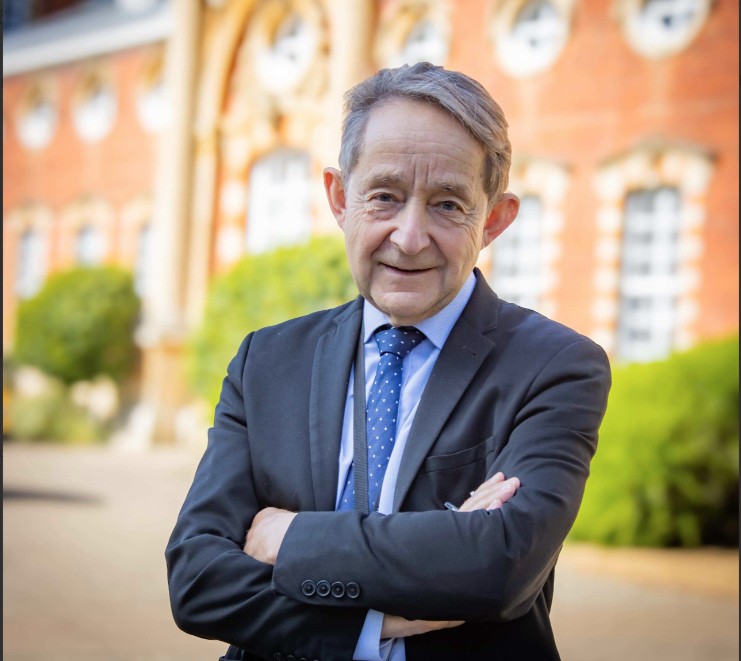 Anthony Seldon | Contributed
Born in 1953, Anthony Seldon began his career as a teacher in the early 1980s, eventually becoming headmaster at fee-paying Brighton College in the late 1990s, a position he held until joining Wellington College in 2006, a school which counts George Orwell, impressionist Rory Bremner and pop star Will Young among a storied list of former pupils. All the while, he was writing books on Britain’s leaders, including Winston Churchill, John Major, Tony Blair, Gordon Brown and every PM since.
Following the death of his wife Joanna from cancer in 2017, Seldon undertook perhaps his most ambitious project to date, a 600-mile trek along the Western Front through France. The resulting book, The Path of Peace, was inspired by a letter sent by a young Second Lieutenant, Douglas Gillespie of the Argyll and Sutherland Highlanders, who was killed during the First World War but had written home about his wish to create a kind of pilgrimage route, a Via Sacra, to remember the fallen after the conflict had ended. Seldon followed it up with last year’s Path of Light, where aged 70, he walked 800 miles from where the Western Front begins to Auschwitz in Poland, home to the Second World War’s most notorious concentration camp.
Seldon was preparing for the walk when he agreed to become head of Epsom College following the death of headteacher Emma Pattison, whose husband shot her and their seven-year-daughter before turning the gun on himself.
Since the start of this decade, Seldon has published six books and edited many more, as well as producing countless piece of journalism and continuing to work in education, having returned to Wellington College to head up the school’s international educational activities. But he’s not interested in analysing what drives him or what’s behind his prodigious output.
“What motivates me? I’ve got no idea what motivates me. Is it in a [English poet] WE Henley-sense, fear of the dark that drives my soul on and on? I really don’t know. There are so many things I’m trying to do to create a better world, to help young people with mental health and help all of us to lead lives which are flourishing.
“The message of Brexit is about what we share in common rather than what divides us. I’m much more interested in how we can work together now to make the best of it rather than have another referendum that will rip the country to shreds. On the Via Sacra, I’m trying to get young people of all ages, all nationalities, all backgrounds to walk together and find out what they share in common.”
As someone who has spent his life working in schools, does Seldon have any views on how to tackle Scotland’s poverty-related attainment gap, which has remained stubbornly fixed despite huge amounts of money and effort being expended on attempting to close it?
“I think education is part of it,” he says, “but more could have been learned from the English system and the drive for excellence – schools with discipline and an uncompromising expectation of high standards. But you also need jobs, you need to get families back into work because if young people can see they have a future, it gives them an incentive to want to work. We have to create that virtuous circle.
“The best parents are not the ones who smother their kids – it’s the ones who are demanding, who say, ‘You’ve fallen over, c’mon get back on your feet’. We need an education system and a welfare system that does that.”
Seldon also has concerns about the growth of AI and its potential to heighten inequality by putting more people out of work. It’s something he’s thought a great deal about, having conceived AI in Education, a cross-sector initiative which seeks to maximise the opportunities of the technology while attempting to mitigate the risks it poses to young people’s education.
Earlier this year he warned we are “sleepwalking into AI disaster”, creating a generation that is “less curious, knowledgeable and intelligent, and more insecure and work-averse”.
As someone who has followed the careers of our recent prime ministers closer than most, does he have advice for the current incumbent of Number 10 when it comes to improving young people’s life chances and social mobility?
“He’s got to get growth back into the economy. He derided the 1980s, but many working people did extremely well in the 1980s – they were able to set up their own companies, buy their own homes… It’s the private sector that creates growth and not everyone in Scotland is going to love me for saying that.”
Like the best political autobiographies, Seldon says Burnham must be candid about the challenges the country faces.
“But he also needs to say that we’ll get through it and come out the other side.”
Holyrood Newsletters
Holyrood provides comprehensive coverage of Scottish politics, offering award-winning reporting and analysis: Subscribe