'I was misdiagnosed for five years. There was no support, no help, no treatment'
Morven-May MacCallum, the Lib Dem MSP for the Highlands and Islands, does not recall being bitten by the tick that would significantly impact her life, but she knows when her symptoms started.
She went from being a 14-year-old who went up Munros, enjoyed horse-riding and “did all these crazy outdoor things” to being “housebound and bedbound” for the latter part of her teens. And worse still, when she turned to the NHS for support she was met with little help.
“I was misdiagnosed for five years with a variety of different illnesses,” she tells Holyrood. “I was essentially, at the end of those five years, labelled as having ME/CFS and basically, they washed their hands. There was nothing there. There was no support, no help, no treatment.”
Her health continued “spiralling downwards”, she says, and her mum – a nurse – was dogged in her determination to figure out what was happening to her daughter. Even when she went to the NHS with the suggestion it could be Lyme disease, the family were turned away because MacCallum had already been tested and the result was negative – despite the fact this blood test is not always accurate, particularly in the early stages of the condition.
We were forced to go private because there was no other option
Ultimately, the family opted to go down the private route, where she was “immediately” diagnosed – after more than eight years struggling with the condition. This was confirmed by blood tests. “I’ve been undergoing private treatment for my Lyme disease ever since,” she says.
“That’s how I ended up where I am now, in terms of managing to get some of my health back. But it was a huge struggle for a very long time, to try and get anything with the NHS – and we didn’t get anything. We were forced to go private because there was no other option.”
It was an early and brutal lesson for MacCallum as to how little attention and resource is given to chronic illnesses. She was frequently dismissed, belittled and made to feel like it was all in her head – a common theme for many patients who present with symptoms like hers.
Now an MSP, she’s in a position to do something about it. She’s keen to engage with the Scottish Government on improving care for people with less-known chronic illnesses, and an early focus will be the forthcoming Long-Term Conditions Framework.
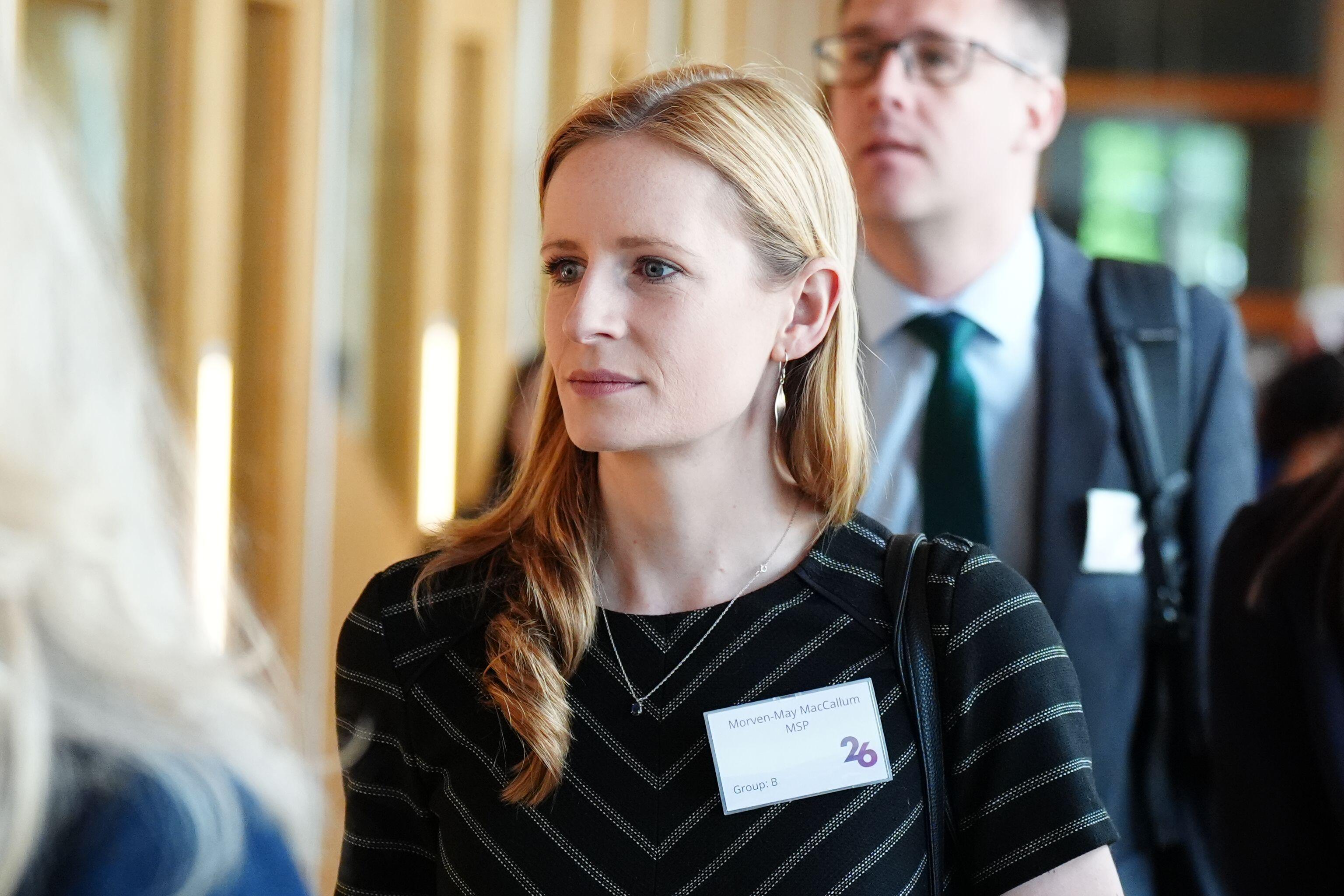 MacCallum was elected to parliament in May | Alamy
This framework, the government says, is part of a move away from condition-specific strategies which have dominated healthcare policy. The aim is to create a more joined-up system, one in which resources are used more efficiently.
“While there are areas that will always benefit from a condition-specific focus, we also know there are opportunities to integrate common themes from our existing policies and frameworks to form a cross-cutting policy framework for long-term conditions,” reads the ministerial foreword of a consultation published last year.
The framework was supposed to be published at the end of 2025, but in a letter to stakeholders in December then-health minister Jenny Minto confirmed it was to be delayed to allow for “more time to work with the third sector, clinicians and others”.
That followed a mixed response to the consultation. One-fifth of those who responded disagreed with the proposal, and even among the 80 per cent who were supportive, many of them raised significant concerns about what the framework would mean for condition-specific work, and personalised and tailored care.
It’s so frustrating that this is taking such a long time because people are suffering
Earlier this year, the government set up a number of advisory groups to find a way forward. These groups have now handed their recommendations to ministers, though no new date has been confirmed for when the framework might surface.
MacCallum hopes the new framework will “put illnesses on an equal playing field”. “We all recognise there needs to be change. Something needs to be done because this condition-specific way of addressing people’s illnesses is not working. Certain illnesses are dominating over others, and that means that illnesses that are not as well-known are being massively neglected and therefore people are being denied access to diagnosis, treatment, specialist care. And that’s not acceptable.”
She’s hesitant to be too critical of the government’s approach. Without seeing the framework, “it’s real hard to know where the gaps are and where the benefits are”.
“We can’t really judge until we’ve actually seen it, which is why it’s so frustrating that this is taking such a long time because people are suffering, people’s lives are being ripped apart. They’ve been given a wee glimmer of hope, only for it to be snatched away.”
But she knows what she would like to see, based on her own experience. The first is an acknowledgement that if, after repeated visits to a GP, a patient does not have answers, “there needs to be a referral to somebody who is more specialised”. “That is often a really big stumbling block for people: that they can’t get beyond their GP to get to anyone who might have more information,” she says.
Her second ask is for compassion from those involved in care. “That comes from doctors, nurses, carers actually having the time to be able to give that compassion in the first place. At the moment, they’re so overstretched, they have so much demand on them that there isn’t space for that human element, and quite often that’s what’s needed in these long-term conditions.”
Without clear action and adequate financial backing, there is a risk that progress will stall
Giving healthcare professionals more time with patients is part of the argument for having an umbrella strategy for long-term conditions. Dealing with the forecast growth in the burden of disease will require new ways of delivering healthcare, including better support for self-management and more of a focus on prevention (especially as people with long-term conditions are more at risk of developing comorbidities). If done well, this will free up doctor time.
Many in the third sector have, however, warned against moving completely away from condition-specific strategies. “While taking a person-centred approach is the correct vision for the NHS, we do not believe that the correct route to this goal is the prioritisation of holistic services above the delivery and improvement of the specialist services that provide care for people with long-term conditions,” said BHF Scotland in its consultation response. “Crucial services for the diagnosis and treatment of these conditions are, by necessity, highly specialised to ensure that patients receive optimal care.”
A similar point was made by Chest, Heart and Stroke Scotland. A more person-centred approach is something the charity has “long championed”, it said, but “without clear action and adequate financial backing, there is a risk that progress will stall, particularly for certain conditions. We remain wary that this framework could risk overlooking the real challenges of funding and staffing specialist services.”
These concerns are even more acute for those who represent conditions that are already overlooked. There is a “real danger” that chronic illnesses “will be lost in this huge panorama of long-term conditions,” Janet Sylvester of ME Action says.
Sylvester has been involved in one of the advisory groups convened earlier this year, looking specifically at how to make it work for Long Covid, ME and similar conditions. She explains ME Action was “very against the initial idea” of a framework, but she praises ministers for listening to concerns and attempting to bridge the gap with these groups.
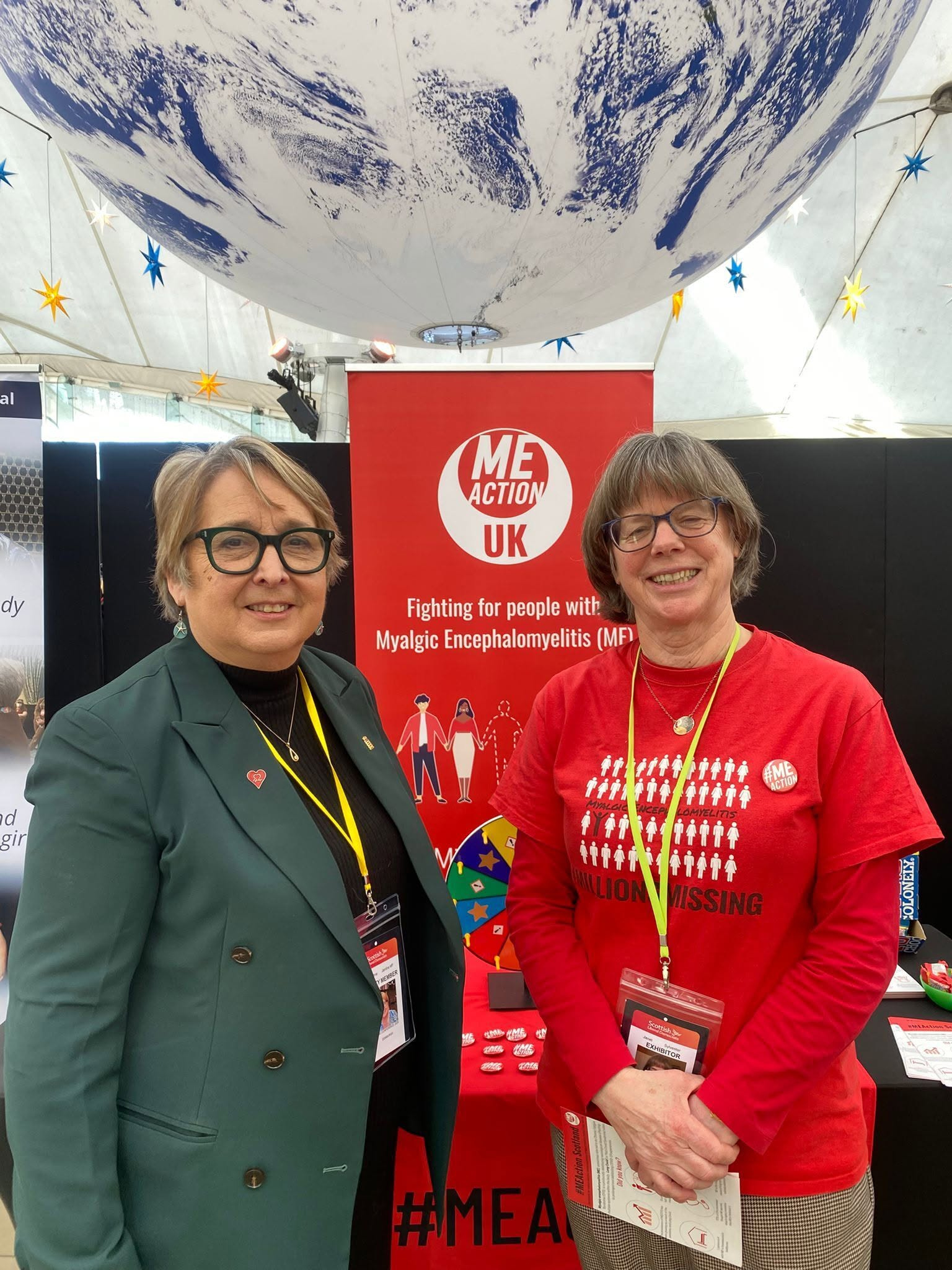 Janet Sylvester of ME Action has been working cross-party | Alamy
While she remains unconvinced an umbrella strategy is the right approach – she’d rather see a framework for neurological conditions – she says “pragmatically, I can’t see the government backing down on it”. And if the recommendations from the advisory group are taken forward, that would “really transform care” for these patients.
Even so, she is aware that creating something that everyone will be happy with is a big ask. “What civil servants are facing, the issue of trying to bring together six very disparate advisory group reports into one framework, I absolutely take my hat off to them if they’re capable or able to do that.”
Reform MSP Helen McDade has similar concerns. “I always worry about a broad-brush approach to difficult problems,” she says. McDade’s daughter – who has asked not to be named – struggled with ME for much of her childhood. And like MacCallum, the McDade family struggled to find sufficient support in the NHS.
McDade recalls being repeatedly dismissed by doctors. It was only after kicking up a lot of fuss over multiple years that they “managed to get referred to the only paediatrician in the UK who was diagnosing it… He just took one look at her case history and said, ‘yes, she’s got ME’.”
That was 20 years ago. “Now, people say things are improved. I don’t see evidence of that. [Doctors have] learnt to talk about it slightly differently,” McDade says. That, she says, is despite research into ME making significant progress in that time.
How do we make sure that we really are involving people and involving the organisations that deliver so much of this non-medical support?
“The jury’s out on how [the framework is] brought forward. It is great that they’ve looked at this, but my real concern is you cannot treat everybody the same,” McDade says. She points to guidelines on graded exercise as an example. For many long-term conditions gentle exercise can be highly beneficial, but for those with ME it can make matters worse due to post-exertional malaise. Any framework document which talks about supporting patients to self-manage through exercise must therefore also acknowledge the exceptions, she argues.
This is what many in the sector mean by ensuring care is person-centred. Sara Redmond, chief officer of development at Health and Social Care Alliance Scotland, says that engagement with any part of the system must be “empowering”. A framework would be a “helpful intervention” if it is more about setting standards and principles, rather than what a particular health board delivers or what particular diagnosis a person has.
“It should be much more about your experience of the health and social care system, and we should work with you in a way that recognises you are also an expert in your life and in your health,” Redmond says.
This will often be about improvements to supported self-management, including greater access to and signposting of non-medical support. “Healthcare professionals need to feel ready and able to work with [patients] in that enabling way,” she adds. “They need to recognise their role in that good conversation and setting out what the options are, setting out what other sources of support can be available, working in partnership with the person. And importantly the system needs to allow information to flow better, there needs to be information sharing across primary care and secondary care.”
One of the greatest concerns to come from the government’s consultation was about self-management being used as a cost-saving measure or replacing more formal interventions. But there is room for the pooling of resources around management of secondary symptoms, such as pain management or fatigue, the Alliance believes.
Redmond says: “For me, success would also look like the system recognising where there needs to be clear pathways between the health services, community support, and the non-medical sources of support, and probably a greater funding flow between them so that those activities are invested in as part of that pathway of care.”
Ultimately, she argues much of the pushback against the framework is less about the “direction of travel” and more about implementation. “Implementation is absolutely key. How do we make sure that we really are involving people and involving the organisations that deliver so much of this non-medical support? That will be where we are trying to get some clarity from the Scottish Government.”
But that all comes back to the push for person-centred care. “We’d be quite concerned if – not necessarily the Long-Term Conditions Framework was dropped – but there was a loss of focus on the need for a much more person-centred set of reforms.”
Despite all the concerns aired about the framework, there is still plenty of optimism that if done right it could change things for the two in five Scots who say their long-term condition limits their activities. And there is cross-party support for making sure that is the case.
MacCallum says: “I’m itching to see this draft because I really want to know what it is that they’re proposing and to feed into it.
“I think as somebody who has got lived experience of illness, that’s a benefit and I would like to be able to support what they’re doing so that when this does come out, it’s going to be as beneficial to as many people as possible.”
Holyrood Newsletters
Holyrood provides comprehensive coverage of Scottish politics, offering award-winning reporting and analysis: Subscribe