Stuart Cosgrove: Douglas Ross' Off the Ball appearance led to unprecedented levels of audience 'feedback'
For more than 30 years Stuart Cosgrove and his co-presenter Tam Cowan have been fixtures not only of the BBC Radio Scotland schedules but of football match day itself. Across three decades which have seen huge changes to the sport and the way it’s covered by the media, their Saturday lunchtime show Off the Ball has endured, proudly describing itself as the “most petty and ill-informed sports programme on radio”. Positively ancient in broadcast terms, it was even on air the last time Scotland’s men reached a World Cup finals, back in the pre-podcast, pre-YouTube, pre-almost everything days of 1998.
The self-described “odd couple of Scottish football”, the pair both come from working-class backgrounds – Cosgrove grew up in a single parent family from the age of eight after his father was killed in a car accident – but while Cowan started out writing sketches for radio and acts such as Little and Large, his fellow presenter – who is 16 years his senior – began life in academia, completing a PhD on left-wing theatre movements before joining Channel 4 where he worked as a commissioning editor.
“One of the advantages we both have is that we support what are referred to as ‘diddy teams’,” Cosgrove says as we sit in his garden in the unseasonably warm sunshine of late May. Cowan is a Motherwell fan, while Cosgrove, who hails from Perth, supports St Johnstone. He says that helped the show in its early stages after a previous iteration involving comedians and Celtic supporters Greg Hemphill and Sanjeev Kohli. “We didn’t have a dog in the fight when it came to Celtic or Rangers – they were equally people we could satirise and particularly the pomposity that surrounds them.”
Cosgrove says that in the early days of Off the Ball it was about “cranking up the differences” between the two presenters, Cowan the salt-of-the-earth everyman in contrast to his own fictionalised silver spoon upbringing in Perth, “Ravenscraig versus the posh Tories”, he says, helping the show find its identity, a partnership which has remained popular with listeners ever since.
“Our relationship has changed over the years,” Cosgrove says. “To begin with, I was coming up to do the show from Channel 4 and had the London media thing, so it was easy for Tam to satirise my lifestyle and all the rest of it. Over the years, I’ve moved home permanently and he’s much more of a media darling than I am and hangs about with Rod Stewart and people like that.”
While Scottish football takes itself far less seriously than its wealthier, more successful English counterpart, there is still plenty to satirise. Cosgrove points to a newspaper report that described Scotland striker Lawrence Shankland “jetting in” from Edinburgh to sign for Rangers as a recent noteworthy example. But despite being the most exciting season of Scottish football in years, there has nevertheless been plenty of controversy too amid dodgy refereeing decisions and a pitch invasion which marred Celtic’s dramatic title win over Hearts. Cosgrove says he doesn’t subscribe to the notion there’s some sort of refereeing conspiracy in favour of the Glasgow club and says that there are too many people “looking for simple explanations to complex problems,” something which is “true of Scottish life in general”.
For someone with a TV background, it’s perhaps not surprising he has thoughts on how football – and sport more generally – is televised. In the most recent season, games involving Scottish teams were shown on Sky, TNT Sports, Premier Sports, Amazon Prime and the BBC. Ahead of the Champions League final, Arsenal fan Keir Starmer appealed to TNT, which is owned by BT and Warner Brothers, to make the game free to air. The broadcaster declined, making it the first time the fixture has been shown behind a paywall in its 34-year history. Nearly four million people are reported to have watched the match between the English champions and Paris Saint-Germain on illegal streams in the UK.
“The last few games and the accusations of corruption have not necessarily been a good thing [for Scottish football] but by and large, it’s been a really good season with lots of exciting football,” Cosgrove says. “My only worry is about the televising of our game. I think [subscription TV] slightly weakens ordinary fans’ relationship with the game. I believe this across the board, that putting any event behind a paywall has the potential to kill it. I’m quite worried the Commonwealth Games in Glasgow will be behind a paywall. The day-to-day coverage will be on TNT Sports – the main body of people who just want to watch bits of the Commonwealth Games are not going to subscribe for that.
“Sky don’t value Scottish football as much as they value the [English] Premiership, understandably. That means quite a lot of Scottish games get shunted out of the 3pm slot to the extent you don’t even know when the games are on – that can’t be good. The radio rights go to BBC Scotland who then can only use live radio when Sky decide when the game’s going to be played. [Off the Ball] is normally 12 to 2 on a Saturday but we’ve been moved to 5pm and 7pm this season just to accommodate all the big televised games.”
Politicians have been among the guests on Off the Ball over the years, some more knowledgeable about the beautiful game than others, such as former first minister Henry McLeish who played for East Fife. A recent attempt to get Scottish Greens co-leader Gillian Mackay on to talk about her party’s plan to cap the price of football tickets had to be abandoned, however, due to election purdah rules, although former Dundee United and Motherwell striker Owen Coyle who until recently managed Indian side Chennaiyin FC (Q Manivannan’s “hometown club”, according to Cosgrove) was a guest on a recent episode.
Cosgrove picks out Douglas Ross, the former Scottish Conservatives leader who is also an assistant referee and was the subject of a memorable banner at Celtic Park, the details of which cannot be reported in a respectable publication. He says the ex-Tory MSP’s appearance led to unprecedented levels of “feedback” from the audience.
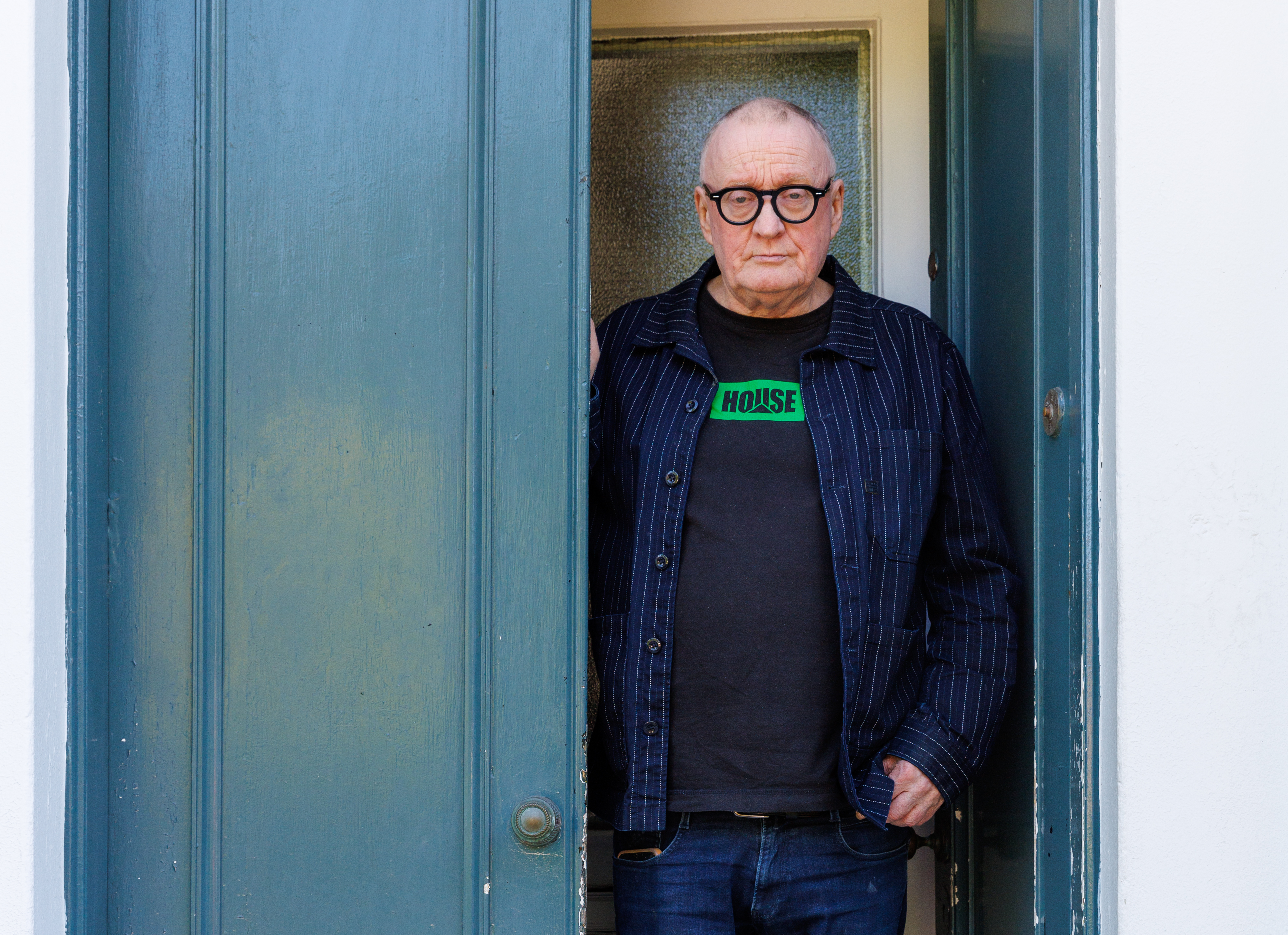 Cosgrove at home in Glasgow | Robert Perry for Holyrood
“He isn’t universally loathed but he’s quite well loathed,” Cosgrove says. “He’s got two things going on – he’s a Tory and he’s a linesman, so he was getting it doubly. But the number of people, and actually pretty smart people, who were asking, ‘What’s he got to do with Scottish football?’ Well, actually, he’s one of the most senior linesmen in the game – he’s got more to do with the game than a helluva lot of the people we have on. Someone needs to work with Douglas Ross on his personality because when he’s in a relaxed environment talking about the game he loves, he’s likable, funny, witty… when you put him into First Minister’s Questions and he’s got that bickering, argumentative, unfriendly tone, it doesn’t do him any favours.
“And I don’t know where they get the idea for [Scottish Labour leader] Anas Sarwar that the more he shouts and interrupts and points, the more he’ll look a better politician – it’s the complete reverse. For Douglas Ross, his personality didn’t work for him in the chamber – he needs a new personality in the chamber. I would say that’s true of [Russell] Findlay and Sarwar as well, but they’re not linesmen.”
But he rails against the idea that politicians can’t be football fans, pointing to the abuse SNP MSP and Dundee United fan Stephen Flynn has received in some quarters for attending the World Cup. “That kind of attitude where people resent politicians just simply because they exist – I don’t like that. He’s every right to go to a football match because I know he cares about his club team and he cares about Scotland, so let him go and enjoy himself.”
Cosgrove won’t, however, be at the World Cup. His co-presenter Cowan joked on a recent episode of Off the Ball that the pair being overlooked for a trip to North America was a “great injustice” only outdone by manager Steve Clarke’s decision not to pick former Motherwell starlet Lennon Miller in the 26-man squad. “Thirty-two years of Off the Ball and not a sniff,” Cowan said.
“I’m delighted that Scotland have qualified,” Cosgrove says. “I love seeing them on the big world stage. I have been to two or three World Cups in the past as a fan, but I find this one a bit of a turnoff. The whole thing about [Fifa president] Infantino giving Donald Trump a peace prize was disgraceful. And extending the halftime entertainment to 25 minutes because they want Shakira or Madonna or whoever, is about making it more like American football where the entertainment is the most talked-about thing about the game. It feels as if it’s being manipulated.”
Cosgrove remains a firm supporter of Scottish independence. When I ask him what Scottish TV would be like “if” there was a Yes vote, he corrects me to “when” there’s a Yes vote. He says leaving the UK would be an opportunity to start “afresh”, with better, more creative programming for a Scottish audience. In the 2013 white paper on independence, the SNP put forward plans for a Scottish Broadcasting Service (SBS), supported by a licence fee, which it said would initially be a “joint venture” with the BBC. But television has changed significantly in the intervening years with the growth of streaming services and increased political pressure on the licence fee itself. Cosgrove is clear that Scottish audiences are currently being let down and contrasts the situation with Ireland, where both the level of output – and the quality – is better.
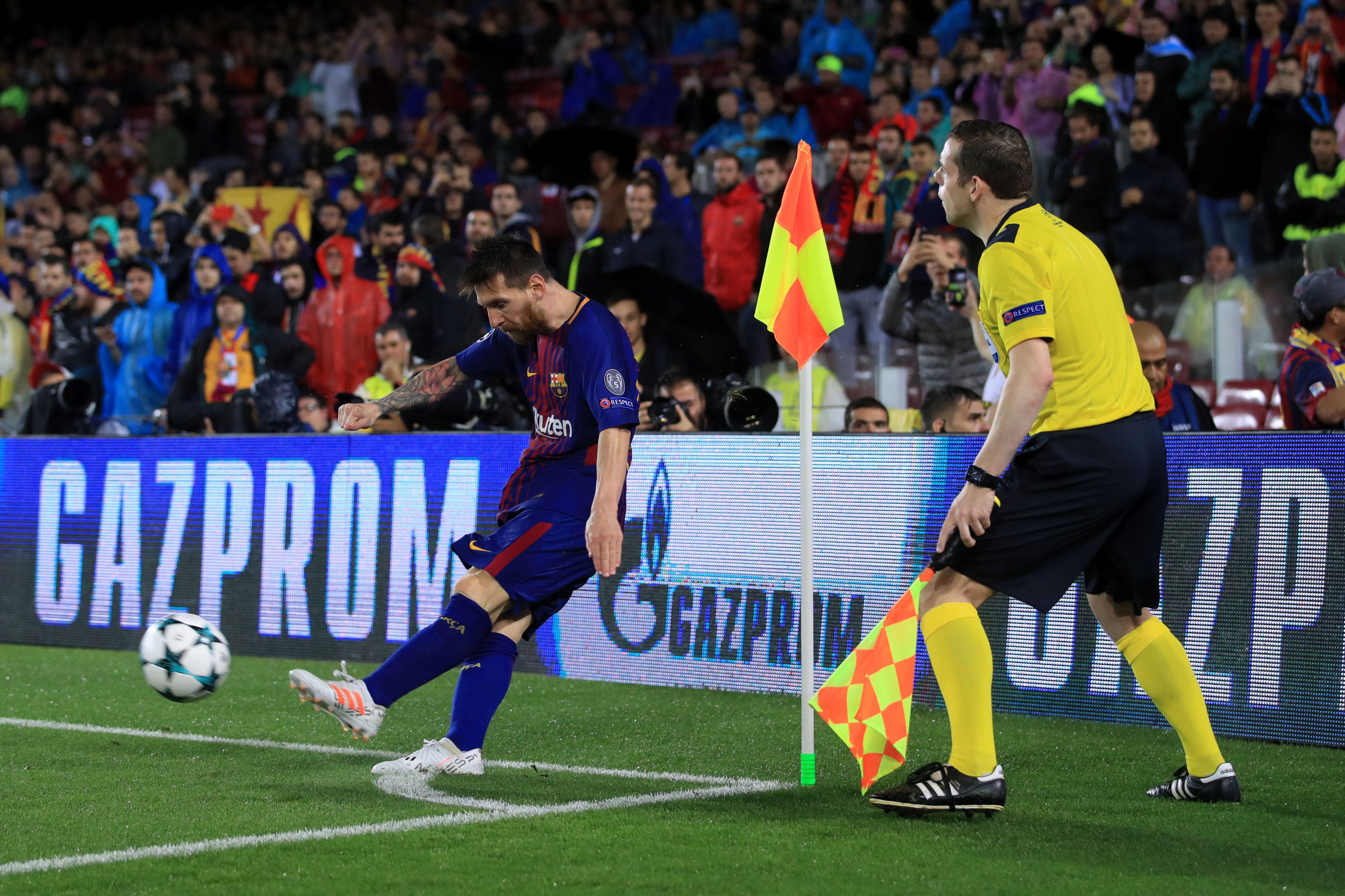 Assistant referee Douglas Ross looks on as Lionel Messi takes a corner for Barcelona | Alamy
“The output in Scotland is very, very poor,” he says. “I have to say I don’t entirely blame BBC Scotland for that. I think they could shake the system a bit more than they do, but a lot of these key decisions are taken by programme planning in London. Once a show becomes a hit, such as The Traitors or Dragon’s Den, they can then move it to Scotland and claim it’s Scottish even if it doesn’t necessarily meet all the [media regulator] Ofcom criteria. I think Ofcom could do a lot more than they currently do in insisting and needing to see the books and all the rest of it.
“[Ireland’s output] is greater, it’s richer, there’s more of it. But remember they’re an independent nation and they’ve got an independent regulator… Scottish culture has been badly let down by recent broadcast culture. I’m interested in the nation I live in; I’m interested in its musicians and its music. Where’s our Kneecap? And by that, I mean the movie as much as the band. Ireland seems to have 20 movies out at any given time…they seem to have a much better independent film sector.”
Cosgrove is also withering in his assessment of the Scottish press which he believes has failed to meet the moment at what looks to be a critical juncture in the country’s political history. He presents his own podcast, Talk Media, which discusses the big stories of the day, most recently looking at Peter Murrell and his embezzlement of £400,000 of SNP funds.
“When’s the Scottish media going to come up with interesting and challenging political and cultural questions about independence,” he asks. “Will this new era of Scottish politics trigger hopefulness or is it doomed from the outset – you get the feeling there are too many people who think it’s doomed.”
If there is a mood of political pessimism in the country, then maybe the World Cup has come along at the right time. A famous win over Brazil in the Miami sunshine would certainly help banish the gloom.
Holyrood Newsletters
Holyrood provides comprehensive coverage of Scottish politics, offering award-winning reporting and analysis: Subscribe